




Kitchen Cabinet Remodel Ideas for North Shore Homes
On this page
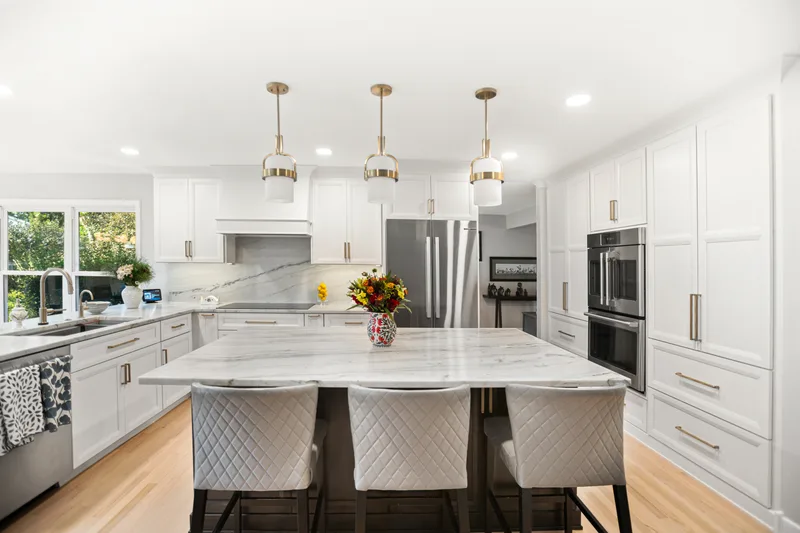
Replacing all the cabinets in a kitchen is a significant investment, typically the largest single line item in a full kitchen remodel, running roughly 29-40% of the total budget. But cabinet boxes themselves rarely fail. What changes is door style, hardware, finish, and how the storage works. In many kitchens, the right approach is updating what exists rather than replacing everything.
This matters differently depending on which part of the North Shore you are in. A Wilmette Colonial from the 1930s, a Northbrook split-level from 1972, and a Glenview builder home from 2004 all have different cabinet conditions, wall substrates, and permit implications. Pre-war homes in Kenilworth, Wilmette, and Winnetka were built heavily between the 1890s and 1940s, and their cabinet walls may contain knob-and-tube wiring, galvanized supply pipes, and plaster-and-lath substrate - conditions that do not affect a hardware swap but matter a great deal if walls open. Post-war homes in Northbrook and Glenview, built predominantly through the 1950s to 1980s, have more predictable wall construction and are much more straightforward candidates for refacing or molding additions. The five methods below range from low-cost changes you can make quickly to more involved modifications worth doing alongside a larger remodel.
If you are still working through the broader design decisions, our kitchen remodel design guide covers layout, materials, and budget prioritization in sequence. Our kitchen remodeling services page covers scope, lead times, and what to expect at each phase of a cabinet-focused project.
1. New Hardware Makes a More Noticeable Difference Than It Should
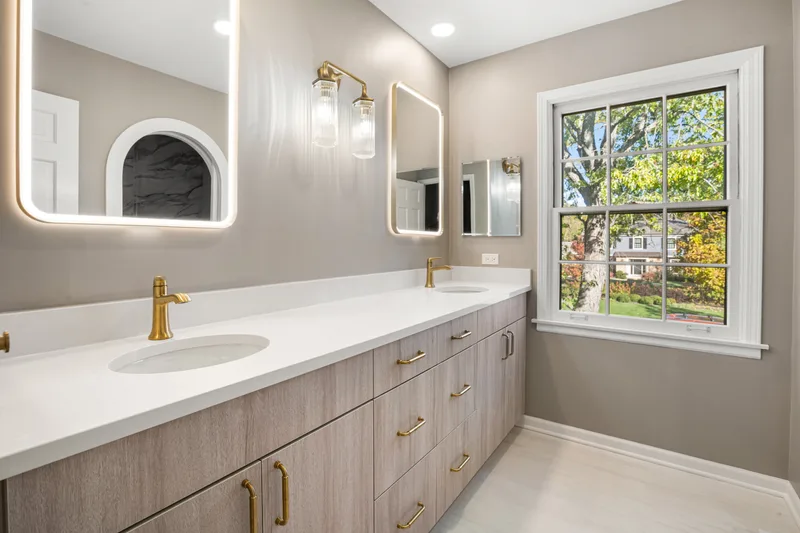
Swapping cabinet hardware is the lowest-cost, highest-visibility change you can make to a kitchen. Hardware is the detail that gives a kitchen its specific character. The difference between a kitchen that feels like it was installed in 2003 and one that looks current is often hardware more than anything else.
Scale matters. Pulls on tall upper cabinets or wide drawers should be proportionally larger. A 3-inch pull on a 30-inch drawer looks undersized. A 5- or 6-inch bar pull on the same drawer looks deliberate.
Finish coordination. Hardware does not need to match every other metal in the kitchen, but it should not clash. Stainless appliances with brushed nickel faucets pair naturally with matte black hardware as a deliberate contrast. Polished brass alongside chrome appliances and nickel faucets creates confusion.
Consistent style. Mixing pull types (cup pulls on some drawers and bar pulls on others) can work if there is a clear logic to it. Matching all hardware throughout is simpler and safer.
Cost runs from a few hundred dollars for standard pulls and knobs to several hundred for a full kitchen with high-specification hardware. Installation is straightforward when existing holes align. If you are switching from knobs to pulls or changing hole spacing, filling and re-drilling adds a small amount of labor.
2. Decorative Molding Changes the Character of Flat Cabinet Faces
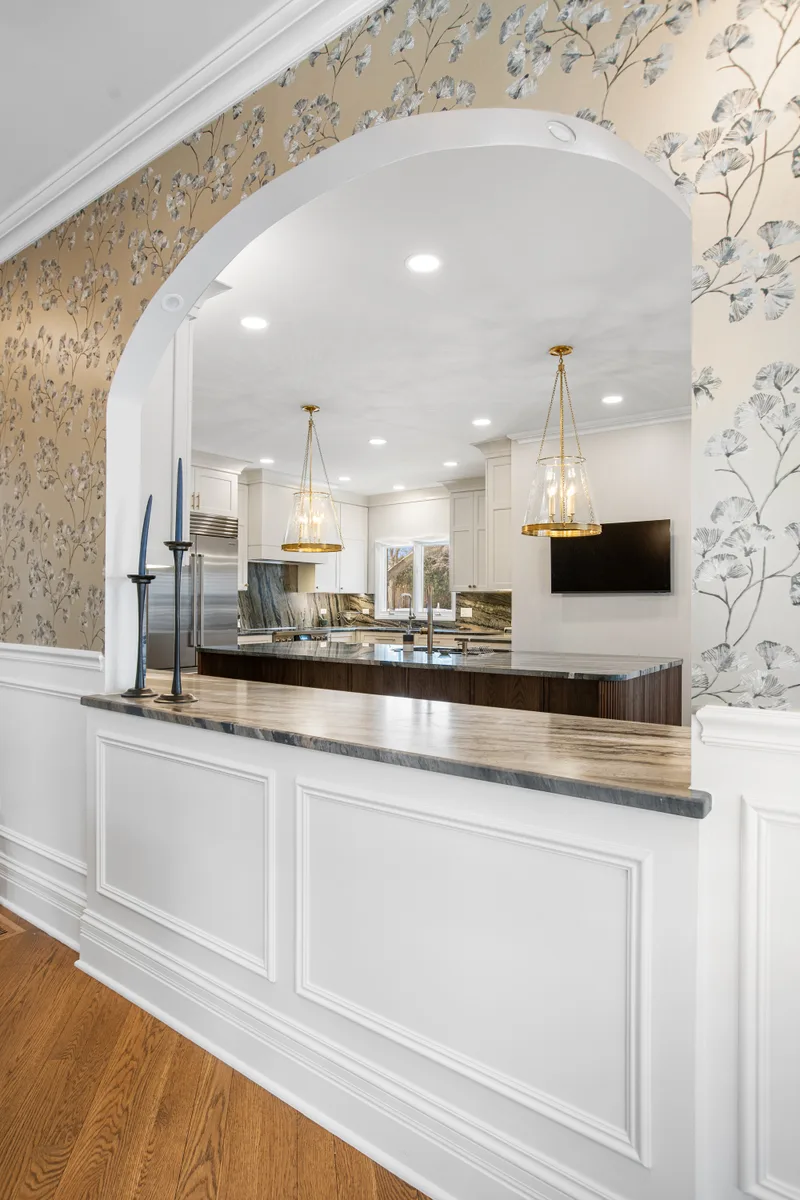
Cabinet doors without any profile detail look exactly as described: flat. Adding crown molding at the top of upper cabinets, light rail molding at the bottom, and door frame overlay trim on flat doors changes the visual character of a kitchen without replacing the cabinets themselves.
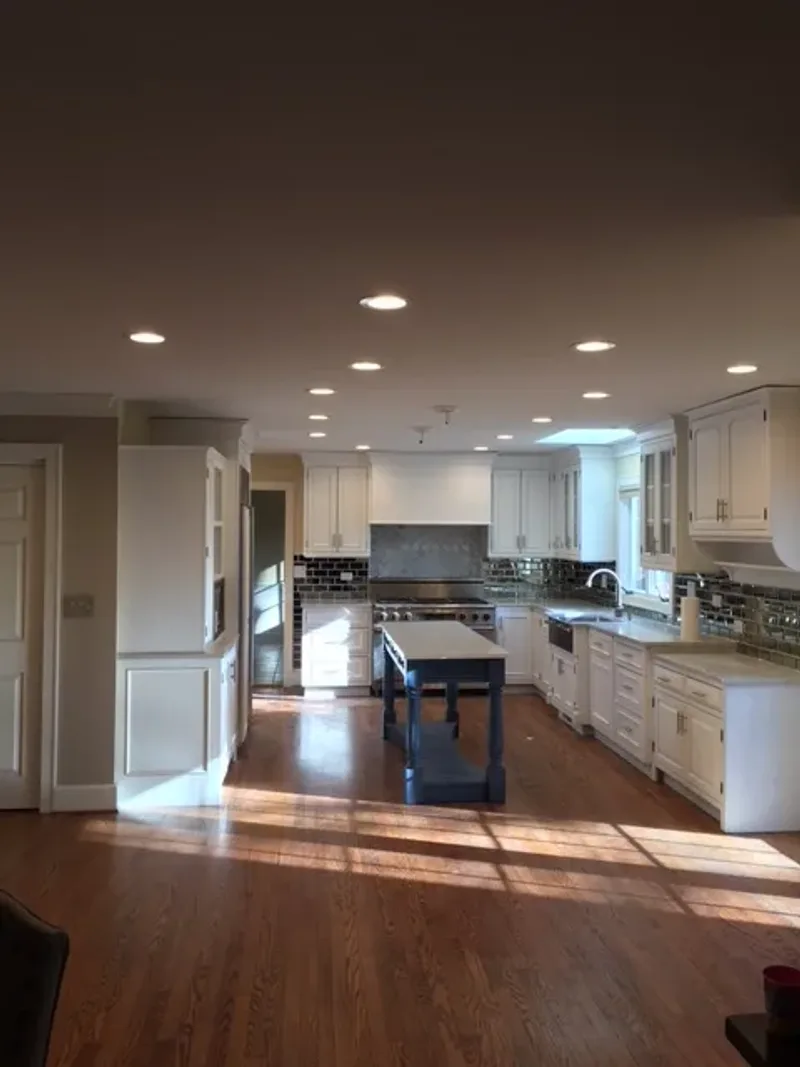
Crown molding at the top of upper cabinets gives a finished, built-in appearance. Many kitchens, particularly in Northbrook ranches and Glenview colonials from the 1960s-80s, have a gap between the top of the upper cabinets and the ceiling that makes the cabinetry look like furniture rather than millwork. Crown molding bridges that gap and integrates the cabinets into the room. Pre-war homes in Wilmette and Winnetka often have ceilings running 9 to 10 feet, so the gap above standard upper cabinets can be significant - crown molding here may need a stacked profile to read proportionally.
Shaker-style door overlays applied to existing flat slab doors create the horizontal and vertical frame profile that defines contemporary kitchen design. If the door surface is in good condition and the core is solid, this is a cost-effective way to achieve a Shaker aesthetic without new doors.
This work requires carpentry skill to execute well. Poorly fitted molding with visible gaps, misaligned miters, or inconsistent paint coverage looks worse than no molding. Done right by an experienced carpenter, it is difficult to distinguish from new cabinetry.
One North Shore consideration: pre-1940 homes in Kenilworth, Wilmette, and Winnetka commonly have plaster-and-lath walls rather than drywall. Anchoring upper cabinet runs and crown molding into plaster-and-lath requires different fastener strategy than drywall installation, and probing for studs in balloon-framed walls is less predictable. Any carpenter working in pre-war homes should understand this before starting.
3. Cabinet Refacing: New Look with the Existing Box
Cabinet refacing replaces the doors, drawer fronts, and exposed cabinet surfaces while keeping the existing cabinet boxes. The box interiors, shelves, and drawer boxes stay in place. New veneer or laminate is applied to the face frames and sides of the cabinets.
This is the most significant update you can make without pulling out and replacing the cabinets entirely. Done properly, a refaced kitchen looks new.
Refacing makes sense when:
- Cabinet boxes are structurally sound: no water damage, no soft spots, hinges mounting properly
- You want to change the door style substantially
- The kitchen layout is working and you do not need to change it
- Budget is a constraint relative to full replacement
Refacing does not make sense when:
- Cabinet boxes have water damage or structural deterioration
- You want to change the layout, add an island, or reconfigure the kitchen significantly
- Drawer boxes are failing or the internal storage organization needs substantial change
On timing with other work: if you are also updating plumbing or electrical (common in pre-1980 North Shore homes where knob-and-tube wiring or galvanized supply pipes may be present behind cabinet walls), it makes more sense to complete that rough-in work before refacing. Opening walls after fresh veneer has been applied creates unnecessary rework.
4. Open Shelving and Glass Doors to Break Up Solid Cabinet Runs
Removing a few upper cabinet doors to create open shelving, or replacing solid doors with glass-insert doors, changes both the visual weight of the kitchen and the way the storage functions.
Open shelving lightens a kitchen that feels enclosed by solid upper cabinets on all walls. It also puts frequently used items within reach without opening doors. The trade-off is visible organization: open shelves show everything, so what is on them needs to be consistently orderly.
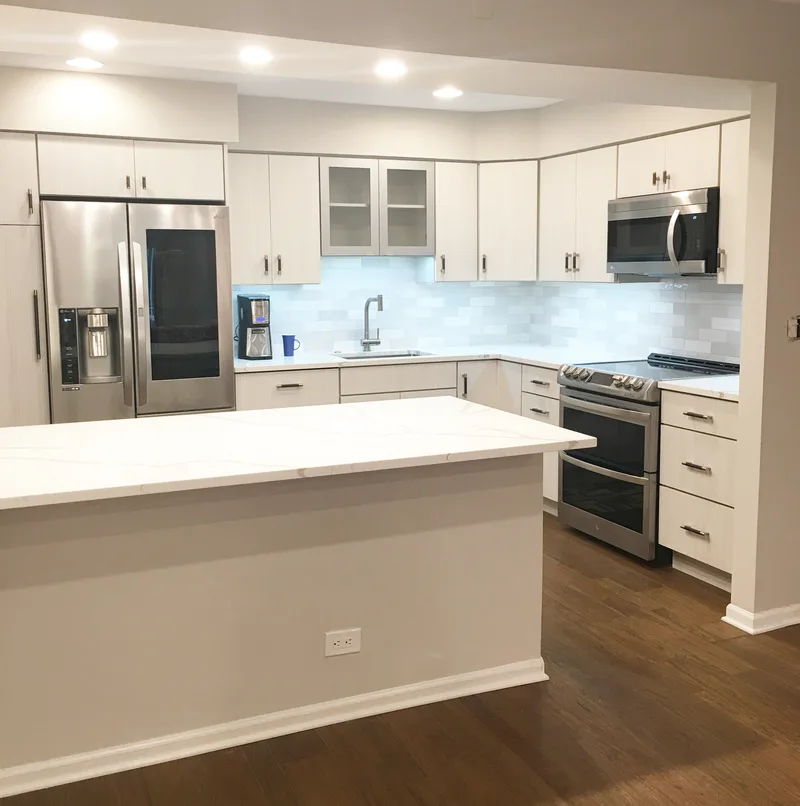
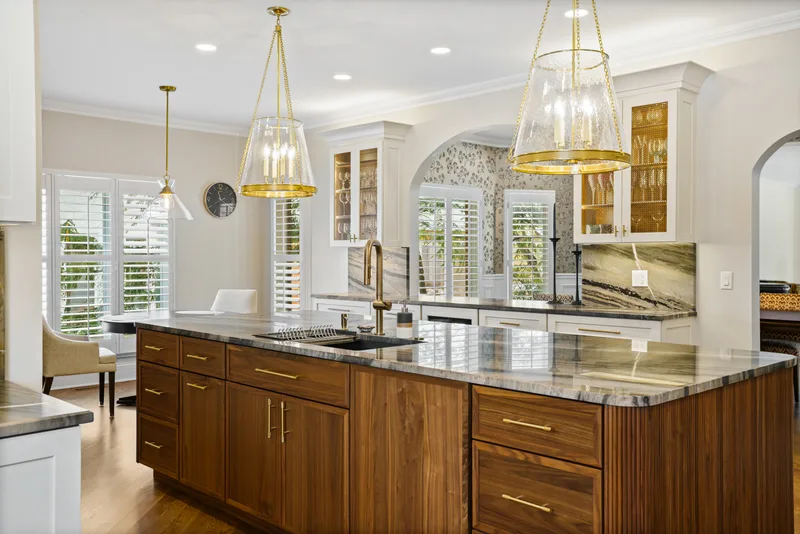
Glass-insert doors provide a middle ground: items are visible but the cabinet is enclosed. This works well for displaying dishware, glassware, or ceramics that are attractive in their own right. Frosted or reeded glass provides visibility without fully exposing the cabinet interior. Pairing glass-front upper cabinets with under-cabinet lighting on the lower shelf creates a layered look that adds warmth across the whole kitchen.
From an installation standpoint, glass inserts require removing the center panel from an existing door and fitting a glass lite in its place, which is standard work for a carpenter. Open shelving requires removing doors and finishing the cabinet interior to a presentable standard.
In transitional-style kitchens, common in Lincolnshire colonials and Deerfield split-levels being updated away from 1990s country styling, a section of glass uppers alongside painted Shaker lowers tends to read well without requiring new boxes. In pre-war Kenilworth and Glencoe kitchens that still have their original leaded glass cabinet inserts, the choice is usually to preserve and restore those inserts rather than replace with new glass - they are original to the home and cannot be matched at any reasonable cost.
5. Interior Storage Organization
The cabinet exterior is what guests see. The interior is what you interact with every day. Improving how the inside of your cabinets works, without necessarily changing how they look from the outside, can make a kitchen significantly more functional.
Pull-out drawer inserts for base cabinets. Standard base cabinet shelves require reaching to the back of a 24-inch deep cabinet. Pull-out drawers bring everything to the front on demand. For pots, pans, and pantry storage, this is one of the most practically useful upgrades available. For a deeper look at storage planning across an entire kitchen, see our guide to kitchen storage solutions.
Drawer dividers for utensil and cutlery storage. A wide drawer with a custom divider insert stores far more than the same drawer with a dropped-in plastic organizer.
Lazy Susans or pull-out shelves in corner cabinets. Corner cabinets are notoriously difficult to access. A well-designed corner solution recovers usable space that is otherwise effectively dead.
Waste and recycling pull-outs. Integrating waste receptacles inside a base cabinet removes them from floor space and keeps the kitchen visually cleaner.
Tray dividers. A cabinet section with vertical dividers for sheet pans, cutting boards, and serving platters is more functional than stacking those items horizontally.
These modifications can be incorporated into existing cabinet boxes during a remodel or as standalone additions. The cost varies by scope but is typically modest relative to the improvement in daily function. NKBA guidelines offer useful benchmarks for cabinet clearances and functional planning at any scope level.
One timing note specific to pre-war North Shore homes: if cabinet interior work is planned alongside any plumbing update - galvanized supply pipe is common behind kitchen walls in Wilmette, Winnetka, and Kenilworth homes built before 1940, and the EPA documents how corroded galvanized pipe traps and releases lead particles in homes that previously had lead service lines - sequence the rough-in work before any new interior fittings are installed in the cabinet boxes.
The right approach for your kitchen depends on the condition of what you currently have and what outcome you are trying to achieve. Some kitchens benefit most from hardware and molding. Others are better served by refacing or selective replacement. A full replacement makes sense when the layout needs to change, the boxes are damaged, or the kitchen is due for a comprehensive overhaul.
Not sure whether a cabinet update or a full gut is the right call? Our cosmetic refresh vs. full gut comparison lays out the trade-offs clearly.
Delta Remodels handles kitchen projects across the full range of scope on the North Shore, including Highland Park, Wilmette, Northbrook, and surrounding communities. Contact us for a consultation, or learn more about our kitchen remodeling services.
Frequently asked questions
What is cabinet refacing and when does it make sense?
Cabinet refacing replaces the doors, drawer fronts, and visible cabinet surfaces while keeping the existing box structure in place. It makes sense when the cabinet boxes are structurally sound, the kitchen layout is working, and you want a significantly updated look without the cost of full replacement. It does not make sense when boxes have water damage, you need to change the layout, or drawer hardware is failing.
How much does new cabinet hardware cost to install?
Hardware costs vary by finish and style, but a typical kitchen runs a few hundred dollars for standard pulls and knobs up to several hundred dollars for high-specification hardware across a full cabinet set. If you are changing from knobs to pulls or changing hole spacing, filling and re-drilling adds a small amount of labor. It is one of the highest-visibility, lowest-cost updates available in a kitchen.
Can I add pull-out drawer inserts to existing cabinets without a full remodel?
Yes. Pull-out drawer inserts for base cabinets can often be retrofitted into existing cabinet boxes without a full gut renovation. The cabinet box interior needs to be in sound condition and the correct width for standard insert sizes. This is a practical upgrade that improves daily function significantly, especially for base cabinets where reaching to the back of a 24-inch shelf is otherwise unavoidable.
What is the difference between painting and refacing cabinets?
Painting cabinets changes the color of the existing doors and face frames but does not alter the door style or box structure. Refacing replaces the doors and drawer fronts entirely, which allows you to change the door style, profile, and material while keeping the original boxes. Painting is less expensive and appropriate when you like the door style but want a color change. Refacing is the better option when the door style itself is dated or no longer suits the kitchen.
Do North Shore villages require permits for cabinet work?
Permit requirements depend on scope. Replacing cabinets in the same locations without moving plumbing or electrical typically does not require a permit in most North Shore municipalities. However, work that opens walls, relocates fixtures, or modifies electrical circuits does. Wilmette requires a permit for projects over $25,000 involving structural work. Northbrook requires Village-issued trade licenses for any plumber or electrician involved. Confirm with your specific village building department before work begins.
Ready to Start Your Project?
Schedule a free consultation. We bring design ideas, material samples, and honest answers.
Get Free Consultation