



Historic Lake Forest Kitchen Cabinets: Styles That Preserve Character & Increase Home Value
On this page
- Why Cabinetry Matters in a Historic Kitchen Remodel?
- 1. Inset Shaker Cabinetry in Kitchens
- 2. Beaded Inset Cabinetry
- 3. Edwardian and Georgian Paneled Cabinetry
- 4. Art Deco-Influenced Millwork
- 5. Glass-Front Hutches and Leaded Glass Cabinets
- 6. Custom Walnut Cabinetry
- 7. Painted Heritage Cabinetry
- 8. Paneled Appliances
- 9. Butler’s Pantries and Sculleries
- Cabinet Details to Avoid in Historic Homes
- Best Cabinetry Style by Lake Forest Home Type
- Lake Forest Historic Review: What to Know
- Final Recommendation
- Planning a Historic Kitchen Remodel in Lake Forest?
- FAQs
- What cabinetry style is best for a historic Lake Forest kitchen?
- Are inset cabinets worth it for historic homes?
- Should historic kitchen cabinets be painted or stained?
- Can a historic kitchen still have modern appliances?
- Does Lake Forest review interior kitchen cabinetry?
Historic Lake Forest Kitchen Cabinets: Styles That Preserve Character & Increase Home Value
Historic Lake Forest kitchen cabinets come in different styles and require a professional skillset as compared to the modern kitchens in newer suburbs. The trim, windows, millwork, fireplaces, and room proportions were carefully considered for the historic kitchens. Therefore when a kitchen is remodeled in that setting, cabinetry is one of the biggest decisions. You have to make sure you are choosing the right material for the right cabitnery styles.

For historic Lake Forest homes, the cabinetry styles that usually work best are inset Shaker, beaded inset, Edwardian or Georgian paneled cabinetry, Art Deco-influenced millwork, glass-front hutches, walnut cabinetry, and custom butler’s pantry cabinetry. These styles feel architectural rather than trend-driven, especially when paired with warm whites, heritage colors, stained wood, brass, polished nickel, and carefully matched trim details.
Why Cabinetry Matters in a Historic Kitchen Remodel?
The cabinets are the part of historic kitchen renovations architecture. Cabinet door profiles, reveals, wood species, hardware, crown details, glass inserts, and appliance panels all affect whether the kitchen feels connected to the rest of the house. This is what you see in most of the kitchen’s in Lake Forest.
A good remodeling company in Lake Forest will understand that your goal is to make the kitchen look timeless and not old. You must hire a company that understands the architectural language of the home and knows what things will work and how it will result. A historic kitchen can include professional appliances, deep drawers, hidden storage, better lighting, and improved workflow, but those modern features should be integrated into cabinetry that feels natural for the house.
Before choosing cabinet colors or hardware, look at the home’s existing details. Study the interior doors, window casing, crown molding, stair rail, fireplace surrounds, original built-ins, and existing hardware. Those details usually reveal what the cabinetry should become.
1. Inset Shaker Cabinetry in Kitchens
Inset Shaker Cabinetry is a staple in Historic Lake Forest kitchens. The shaker keeps the design clean and the inset construction gives cabinetry depth.

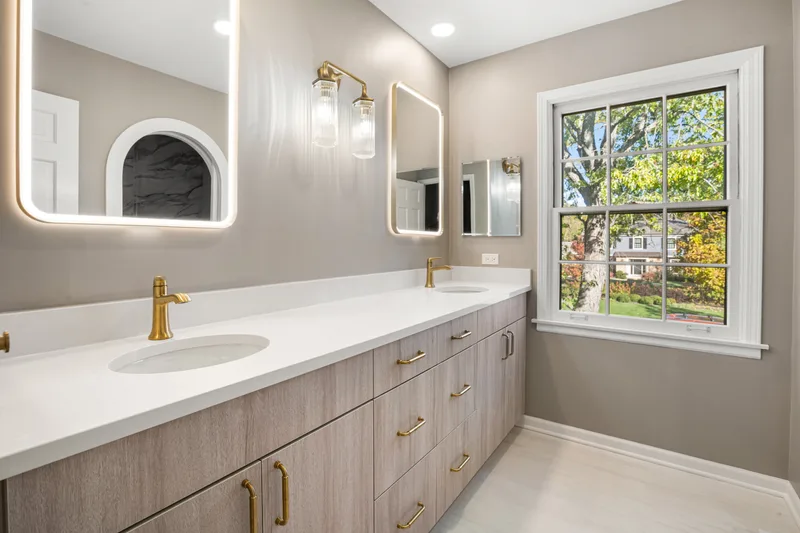
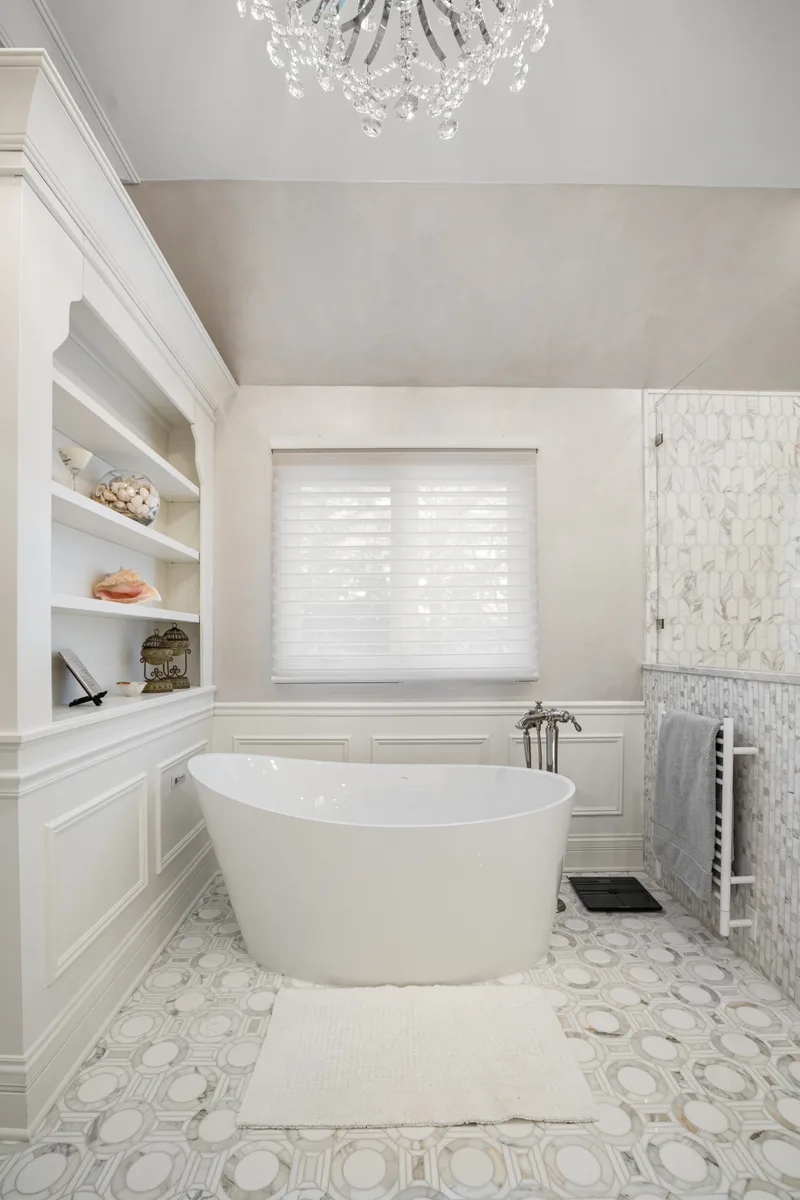
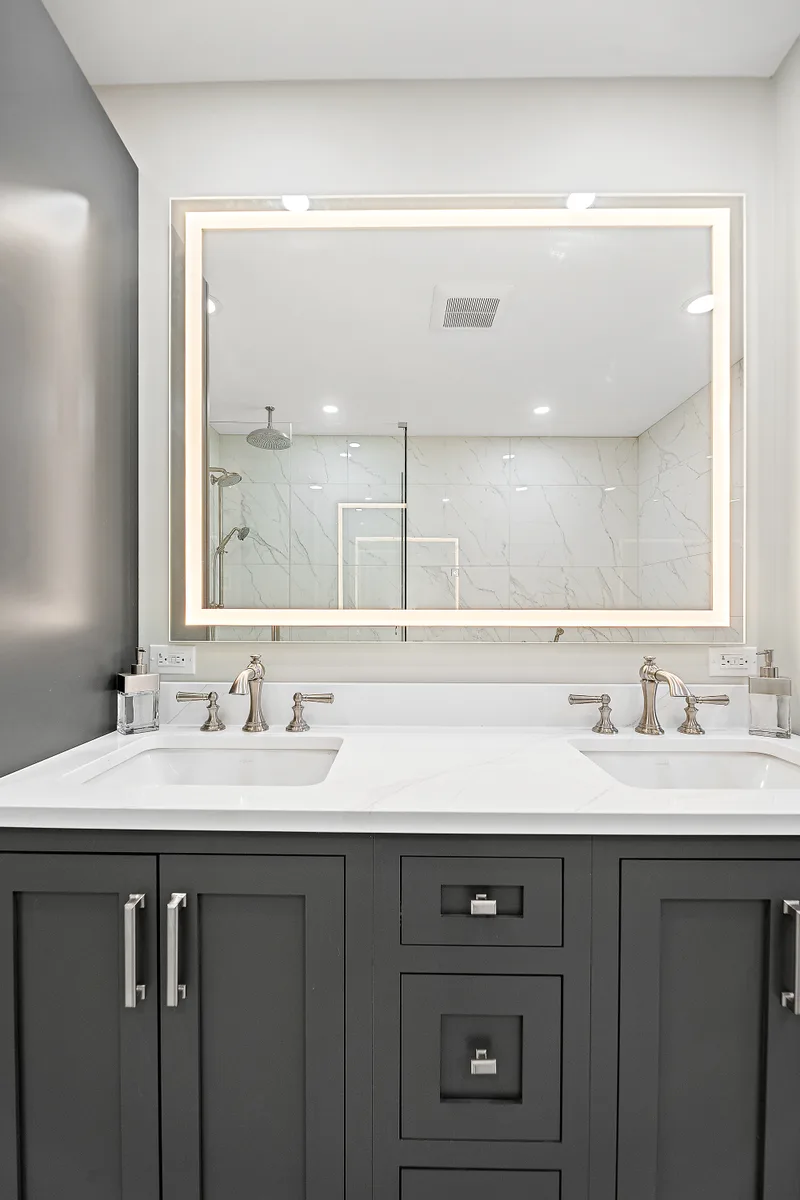
Here is an example on inset cabinets in a bathroom remodeling remodeling project we did for a client in North Shore Illinois. The inset cabinets work well with almost all kitchens and especially in traditional homes and the ones constructed in Georgian, Colonial Revival eras.

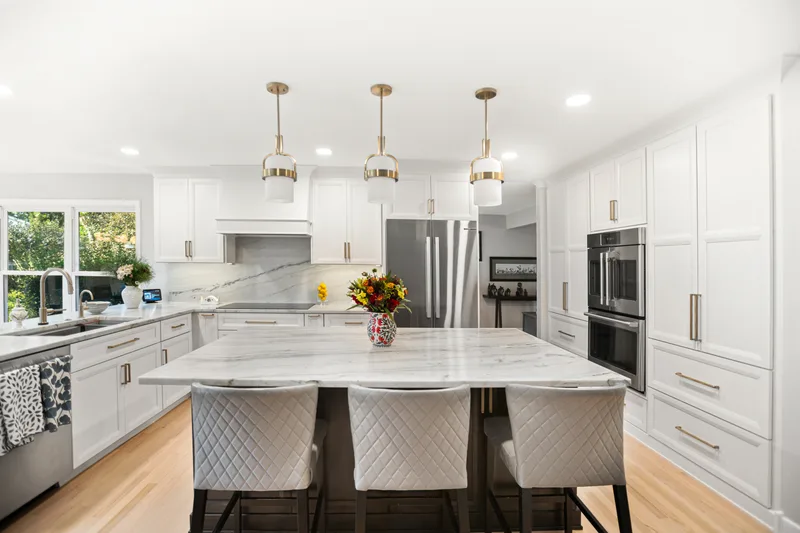
Inset shaker cabinets pair well with kitchens of this style that have a stand alone island. You can pair these cabinets with walnut or stained wood island, stone countertops, polished nickel hardware, unlacquered brass, paneled appliances, and traditional crown molding.
2. Beaded Inset Cabinetry
Custom cabinets in kitchen remodels require attention to detail, as well as making sure the design aligns with the home's unique architectural style. The Beaded Inset Cabinets adds a small decorative bead around the cabinet fram and gives a handcrafted appeal.

This style is ideal when plain Shaker feels too simple but ornate raised-panel cabinetry feels too heavy. The bead creates a shadow line that works beautifully beside original trim, formal dining rooms, butler’s pantries, and older architectural details.
Beaded inset cabinetry is especially effective in Colonial Revival, English Manor, French-inspired, and traditional Lake Forest homes. It also works well in secondary spaces such as sculleries, coffee bars, glass-front hutches, and butler’s pantries.
3. Edwardian and Georgian Paneled Cabinetry
Many Lake Forest homes are influenced by English, Georgian, Edwardian, and classical design traditions. Cabinetry can reflect that through symmetry, paneled doors, tall uppers, carefully scaled crown molding, and furniture-like details.

This does not mean the kitchen needs to feel heavy. The strongest Edwardian and Georgian-inspired kitchens rely on proportion more than ornament. Raised or recessed-panel doors, paneled appliance fronts, glass-front sections, polished nickel hardware, and soft painted finishes can all create a refined period feeling.
This style is especially useful when the kitchen connects to a formal dining room, breakfast room, or original hallway. It gives the cabinetry enough architectural presence to belong beside older trim and millwork.
4. Art Deco-Influenced Millwork
Art Deco influence can work beautifully in certain Lake Forest homes, especially those with 1920s or 1930s design layers. The key is restraint.
A Lake Forest kitchen featured by Modern Luxury at historic Pembroke Lodge used Art Deco influence through custom millwork, a sculptural plaster hood, layered lighting, geometric tile, a main kitchen, catering kitchen, and hidden pantry. The important lesson is not to copy that exact design, but to understand how period-inspired details can support a historic home while still feeling modern.
Art Deco-inspired cabinetry may include fluted walnut island panels, reeded glass, stepped profiles, slim brass hardware, geometric backsplash patterns, dark-stained wood accents, or a sculptural range hood. Used carefully, these details add quiet luxury without making the kitchen feel like a themed room.
5. Glass-Front Hutches and Leaded Glass Cabinets
Historic kitchens often feel better when cabinetry is broken into furniture-like moments instead of one long wall of solid cabinet doors.
Glass-front cabinetry helps create that effect. Mullion doors, leaded glass, seeded glass, or reeded glass can echo antique hutches, china cabinets, and original butler’s pantry storage. These details also help lighten the visual weight of upper cabinets.
Glass-front cabinets work well for dish display, barware, serving pieces, coffee bars, butler’s pantry uppers, and dining-room-adjacent storage. If the home has divided-light or leaded-glass windows, the cabinet glass pattern should feel related to those proportions. It does not need to match exactly, but it should feel like it belongs in the same house.
6. Custom Walnut Cabinetry
Walnut is one of the strongest materials for historic Lake Forest kitchens because it feels warm, architectural, and furniture-like. It can add depth without making the whole kitchen feel dark.

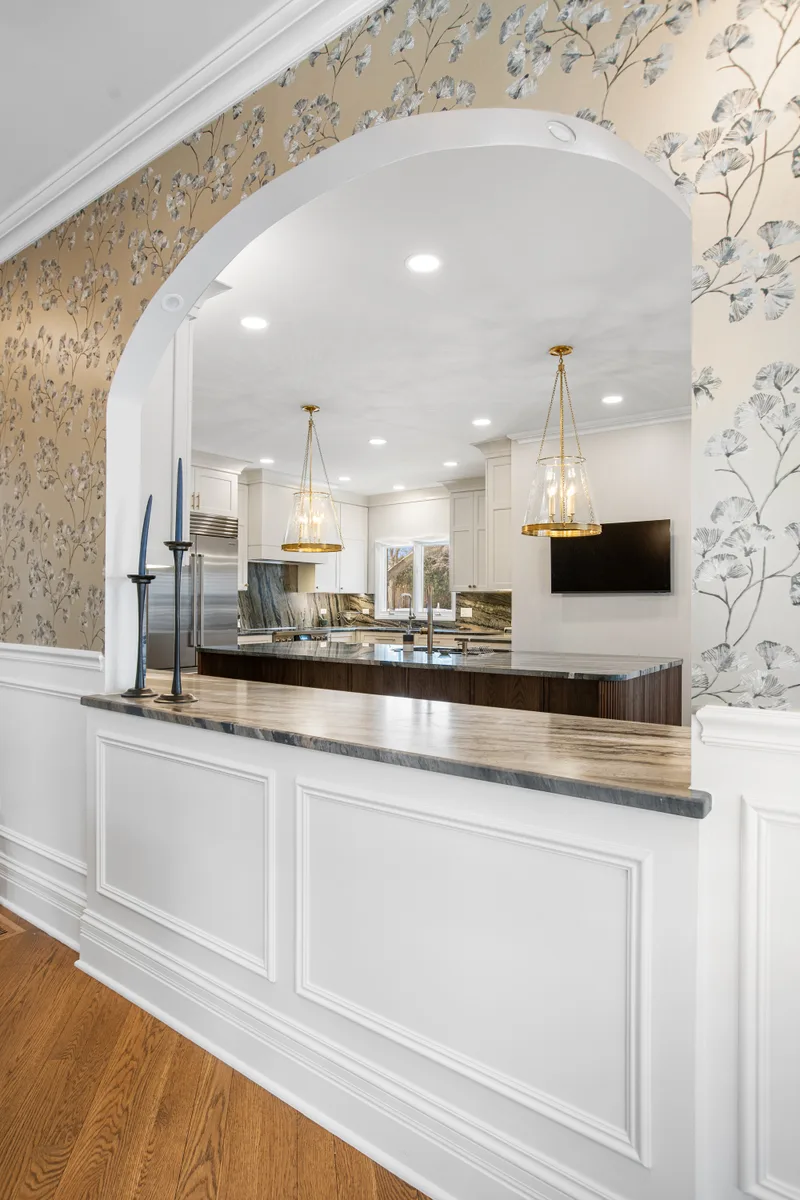
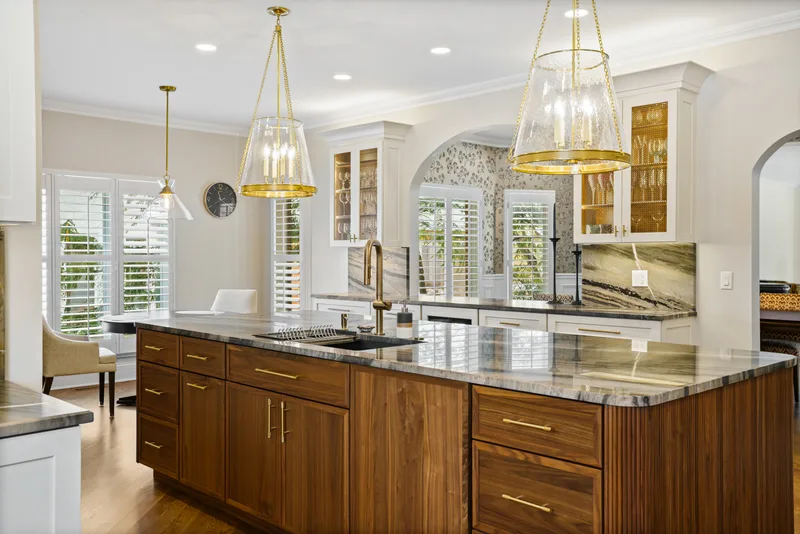
Delta’s Lake Forest walnut kitchen and butler’s pantry remodel shows this approach well. The project includes white perimeter cabinetry, a fluted walnut island, dark stone counters, brass pendants, paneled appliances, and a walnut butler’s pantry with glass-front uppers. That combination works because it balances bright cabinetry, warm wood, darker counters, and refined metal accents.
Walnut can be used for islands, appliance panels, butler’s pantries, coffee bars, tall pantry walls, bar cabinetry, open shelving, and fluted details. In some homes, quarter-sawn oak, rift-sawn oak, or cerused oak may also be appropriate, depending on the original architecture.
7. Painted Heritage Cabinetry
Painted cabinetry is common in historic homes, but the color must be chosen carefully.
Cold bright white can feel too new, while overly yellow cream can feel dated. Better options include warm white, soft cream, mushroom taupe, stone gray, muted blue-gray, deep navy, moss green, charcoal, warm greige, or soft black accents.

Heritage colors work especially well on islands, pantry walls, lower cabinets, bars, or sculleries. They create the feeling of a library, study, or traditional service space while keeping the main kitchen from becoming too dark.
The best cabinet color is not chosen from a trend board alone. It should be selected in relation to the home’s trim, flooring, natural light, surrounding rooms, and hardware.
8. Paneled Appliances
Modern appliances are necessary, but they do not always need to dominate the room.
Paneled refrigerators, paneled dishwashers, freezer columns, appliance garages, and integrated beverage centers help preserve the rhythm of historic cabinetry. This is especially important in kitchens that open to family rooms, dining rooms, or original hallways.

A professional range can still be exposed when it supports the design, but large stainless refrigerator walls often feel too commercial in historic homes. Paneled appliances allow modern performance without overpowering the architecture.
9. Butler’s Pantries and Sculleries
Many Lake Forest homes benefit from separating the main kitchen from support spaces. A butler’s pantry, scullery, coffee bar, or hidden pantry can make the kitchen more functional while keeping the main space calm and beautiful.
A butler’s pantry may include glass-front upper cabinets, beverage refrigeration, coffee service, walnut or painted cabinetry, dark stone counters, display storage, and serving storage near the dining room.
A scullery can hide dish cleanup, small appliances, extra refrigeration, prep mess, pantry overflow, and catering support. In historic estate homes, this often feels more natural than forcing every function into one open kitchen.
Cabinet Details to Avoid in Historic Homes
Not every popular kitchen trend belongs in a historic Lake Forest home.
Be careful with ultra-flat slab doors in traditional rooms, high-gloss acrylic cabinets, oversized modern bar pulls, excessive open shelving, heavy rustic distressing, cold bright-white finishes, trend-only colors, and stainless appliance walls that overpower the room.
A historic kitchen should not feel like a showroom installed inside an older house. It should feel designed for that specific home.
Best Cabinetry Style by Lake Forest Home Type
For Georgian or Colonial Revival homes, consider inset Shaker, raised-panel inset cabinetry, symmetrical cabinet walls, polished nickel, and warm white or soft gray finishes.
For Tudor Revival homes, consider stained wood, inset cabinetry, leaded or mullion glass, darker hardware, and furniture-style pantry pieces.
For French Manor or European-inspired homes, consider beaded inset cabinetry, soft painted finishes, elegant hood details, stone counters, and brass or nickel hardware.
For 1920s or 1930s estate homes, consider Art Deco-influenced details, fluted walnut, geometric tile, reeded glass, and sculptural hood design.
For lakefront estate homes, consider painted perimeter cabinetry, a walnut island, paneled appliances, a large butler’s pantry, and custom storage zones.
Lake Forest Historic Review: What to Know
Interior cabinetry changes are usually different from exterior architectural review, but homeowners should confirm requirements early if the project affects windows, exterior walls, additions, venting, demolition, or a landmarked property.
Lake Forest has a Historic Preservation Commission connected to historic preservation matters and a Building Review Board that reviews certain exterior design, additions, demolitions, and alterations outside that context. For a kitchen remodel, this matters most when the project changes more than interior finishes.
The practical advice is simple: confirm the review, cost and permit path before finalizing the design, especially in historic districts or older estate properties.
Final Recommendation
For most historic Lake Forest homes, the best cabinetry direction is not one single style. It is a thoughtful combination.
A strong historic kitchen might include inset painted perimeter cabinetry, a walnut or deep-colored island, glass-front hutch cabinets, paneled refrigeration, a furniture-style pantry wall, brass or polished nickel hardware, stone countertops, and a butler’s pantry with richer detailing.
This creates a kitchen that feels updated, functional, and respectful of the house.
A historic home should not feel frozen in time. It should feel carefully continued.
Planning a Historic Kitchen Remodel in Lake Forest?
Delta Remodels helps Lake Forest and North Shore homeowners plan kitchen remodels with custom cabinetry, layout planning, countertops, lighting, appliance integration, butler’s pantry design, and coordinated project management.
If your home needs a kitchen that feels updated without losing its character, schedule a free in-home consultation with Delta Remodels.
FAQs
What cabinetry style is best for a historic Lake Forest kitchen?
Inset Shaker is usually the most versatile starting point because it feels clean, traditional, and furniture-like. Beaded inset, Georgian paneled cabinetry, Art Deco-influenced millwork, glass-front hutches, and walnut accents can also work depending on the home.
Are inset cabinets worth it for historic homes?
Y
es. Inset cabinets are often worth considering because the doors sit flush within the cabinet frame, creating a tailored and furniture-like appearance that feels more authentic in older homes.
Should historic kitchen cabinets be painted or stained?
Both can work. Warm painted finishes are common for perimeter cabinetry, while stained walnut, oak, or cerused oak can add depth on islands, butler’s pantries, bars, and built-ins.
Can a historic kitchen still have modern appliances?
Y
es. Modern appliances can be integrated with paneled fronts, appliance garages, hidden storage, and carefully planned cabinet elevations so they do not overpower the historic character of the room.
Does Lake Forest review interior kitchen cabinetry?
Interior cabinetry alone is usually not the same as exterior architectural review, but projects that affect windows, exterior walls, additions, venting, demolition, or historic properties should be confirmed with the city early.
Ready to Start Your Project?
Schedule a free consultation. We bring design ideas, material samples, and honest answers.
Book Consultation