







The Challenge
The lower level needed a clearer identity, better lighting, and a finish strategy that could preserve ceiling height while coordinating visible mechanical systems.
Schedule your free in-home consultation. We'll visit, review your space, and share a detailed plan and estimate.
(847) 847-4148 contact@deltaremodels.com1212 Ranch Rd
Lake Forest, IL 60045
Delta Remodels transforms outdated basements and lower levels used mainly for storage into functional, comfortable living areas with options such as entertainment spaces, bathrooms, home offices, gyms, guest accommodations, and custom storage. Our basement remodeling process coordinates planning, 3D design, permits, mechanical systems, and construction.


 Glenview, ILPolished Concrete
 Design-Build Basements · North Shore
The lower level needed a clearer identity, better lighting, and a finish strategy that could preserve ceiling height while coordinating visible mechanical systems.
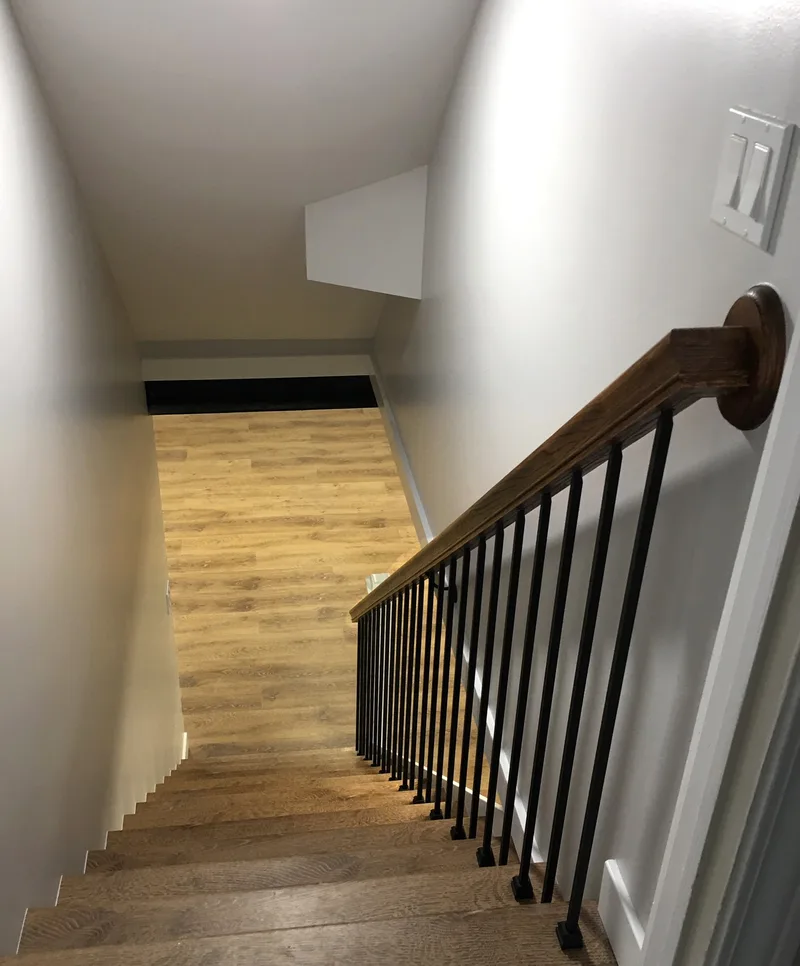
Delta Remodels used an open black-painted ceiling, zoned recessed lighting, a refinished oak staircase, iron spindle railing, light walls, and wood-look plank flooring after moisture conditions and mechanical routing were addressed.
The finished basement functions as a cohesive lower living level with an industrial-modern character that connects naturally to the home above.


Basement Remodeling Solutions
Delta Remodels offers complete customized basement remodeling solutions, including finishing, custom cabinetry, drywall, specialty rooms, and coordinated mechanical work.
Update an unfinished or outdated lower level through coordinated design, framing, insulation, mechanical work, lighting, flooring, storage, and finish construction.
Create a comfortable lower-level living area for family gatherings, media, games, and everyday use.
Add a functional bathroom as part of a larger basement renovation.
Plan a beverage area or secondary kitchenette for entertaining, guests, or multi-generational use.
Create dedicated rooms that can adapt to work, exercise, hobbies, guests, or changing household needs.
Plan a lower-level sleeping, bathing, and living area where the basement configuration and local requirements allow.
| Classification | Investment | Typically includes | Generally excludes |
|---|---|---|---|
| Standard finish | $35,000–$65,000 | Core finishing of a standard dry footprint | Bathroom, wet bar, structural work, and moisture remediation |
| Expanded build-out | $65,000–$120,000 | Bathroom or wet bar and broader mechanical coordination | Luxury specialty rooms and major foundation work |
| Luxury / multi-room | $120,000+ | Multiple finished zones, custom work, and premium finishes | Unforeseen remediation outside the approved scope |
A basement remodel may be worth considering when unused space, storage overflow, changing household needs, or unresolved lower-level conditions prevent the basement from supporting the rest of the home.
If the lower level has acceptable ceiling height and no active water problem, finishing it can add real living space without the cost of an addition.
When boxes, mechanical zones, and laundry overflow define the basement, the space usually needs planned storage, lighting, and circulation.
Growing families often need a media room, office, gym, guest suite, or teen space that works independently from the main living level.
Moisture or drainage concerns, including efflorescence, damp smells, sump activity, or past seepage, must be addressed before framing, insulation, flooring, or drywall are installed.
Basement Planning Comparison
| Layout | Best for | Main benefit | Planning considerations |
|---|---|---|---|
| Open-concept basement | Family rooms and entertainment | Flexible shared space | Lighting zones, acoustics, support posts, and furniture placement |
| Separate rooms | Offices, gyms, bedrooms, and hobbies | Privacy and dedicated use | Egress, ventilation, ceiling height, and circulation |
| Multi-purpose layout | Changing household needs | Adaptability over time | Storage, movable furniture, electrical planning, and sound control |
Bedrooms, guest suites, separate entrances, and dwelling-unit configurations depend on egress, layout, zoning, permits, and municipal approval.
One team manages your project from concept through construction.
Review the proposed layout and finishes before construction begins.
A dedicated project manager coordinates schedules, materials, and communication.
Extensive experience remodeling homes throughout Chicago's North Shore.
Detailed installation standards and careful project execution.

Before design, we inspect the basement under real conditions: moisture history, ceiling clearance, mechanical layout, existing plumbing rough-ins, and any foundation or drainage concerns that need to be addressed first.

Living areas, bathrooms, bars, storage, and specialty rooms are designed as one layout with lighting, flooring, and ceiling treatment coordinated so the basement reads as an extension of the home rather than a separate project.

Framing, electrical, plumbing, HVAC, waterproofing, insulation, drywall, and finish installation proceed in a controlled sequence with municipal inspections at every required stage. No framing over unresolved moisture.

Final finishes, lighting calibration, and trim detail match or complement the main living levels so the basement feels cohesive on the first walkthrough.
If you are considering a finished family room, basement bathroom, wet bar, home office, gym, guest accommodations, or a complete lower-level renovation, Delta Remodels can help determine what the existing basement can realistically support.

Book your consultation
Share a few details and we will follow up about your basement remodeling project.
Thank you. Your request was received.
A Delta Remodels team member will contact you about your basement remodeling project.
Prefer to talk now? Call (847) 847-4148The typical basement remodeling investment range is $35,000–$120,000+. Every project is priced after reviewing the actual basement because moisture history, ceiling height, and existing plumbing rough-ins affect the scope.
A basement remodel can include framing, insulation, drywall, flooring, lighting, electrical, HVAC extension, egress windows, a basement bathroom, a wet bar or secondary kitchenette, home theater or media room, home office, gym, in-law suite, and wine cellar. We design basements as a continuation of the home upstairs, so finishes, ceiling treatment, and lighting match the main living levels.
Permit requirements depend on the municipality and project scope. Layout changes and electrical, plumbing, HVAC, or egress work commonly require local review. Delta Remodels coordinates the applicable permits and inspections for the approved scope.
Before any framing starts, we verify the basement is dry under multiple conditions including heavy rain and snow melt. If there is any moisture history or evidence of seepage, we address the exterior drainage, sump system, and vapor barrier before finishing work begins. Older North Shore homes with stone foundations require different moisture strategies than newer construction. We partner with licensed waterproofing contractors when foundation work is needed and do not frame over active moisture issues.
Required ceiling height varies by municipality and existing conditions. Delta Remodels reviews the basement, mechanical runs, beams, and applicable local requirements during planning before confirming what can be finished.
Yes. Basement bathrooms are one of our most common add-ons. Plumbing approach depends on whether a rough-in is already in place (common in newer homes) or whether an ejector pump system is needed to move waste up to the main sewer line. Wet bars and secondary kitchenettes extend naturally from our main kitchen and bath capabilities.
Yes. Every Delta - Bathroom and Kitchen Remodeling basement project carries a 3-year workmanship warranty on construction and finishes. Waterproofing work by licensed specialists carries the specialist's own warranty. Warranty claims for any Delta-installed work are handled directly by Delta - Bathroom and Kitchen Remodeling as a single point of contact.
Yes where the municipality allows. In-law suites typically include a bedroom, bathroom, kitchenette, and living area with egress windows meeting code. A separate entrance requires zoning review and usually a walkout or English basement configuration. Explore local remodeling information for Lake Forest, Vernon Hills, and Highland Park.
We’ll review your answers and contact you to discuss a consultation.
Prefer to talk now? Call (847) 847-4148