





10 Signs You Need a Bathroom Remodel
On this page
- 1. There Is Visible Water Damage
- 2. Your Layout Makes Daily Routines Harder Than They Should Be
- 3. Storage Is Consistently Not Enough
- 4. Fixtures Are Leaking, Dripping, or Failing
- 5. The Tile, Grout, or Caulk Cannot Be Cleaned to an Acceptable Standard
- 6. The Bathroom Feels Too Small for Current Needs
- 7. You Are Seeing Mold or Mildew Recurrently
- 8. The Bathroom Has Not Been Updated in 20 or More Years
- 9. The Electrical Does Not Support Current Code Requirements
- 10. You Want the Bathroom to Work Better for Aging in Place
Most bathrooms do not fail all at once. They degrade in stages: a fixture here, a tile there, a layout that never quite worked. Knowing when a bathroom has reached the point where a remodel makes practical and financial sense is useful before making decisions. Our bathroom remodeling services page covers how we scope and plan projects, from initial inspection through construction.
Here are ten specific signs that a bathroom remodel is worth doing now rather than later, with the technical context that applies to North Shore homes specifically.
1. There Is Visible Water Damage
Water stains on walls or ceilings, soft spots in the subfloor, grout that crumbles when pressed, or caulking that has cracked and pulled away from surfaces are all signs of water intrusion that is either ongoing or has occurred in the past. In bathrooms, water damage rarely stays contained. Mold can develop inside wall cavities without being visible, and subfloor rot can spread to adjacent framing. Bathroom subfloor replacement runs roughly $700 to $3,500 depending on extent, but the actual scope is not knowable from the surface.
In pre-1970 homes on the North Shore, the substrate behind the tile matters significantly. In Northbrook ranches and Glenview split-levels from the 1960s-1970s, drywall rather than cement board was commonly used behind tile in wet areas. Drywall behind tile fails eventually and the damage is often larger than it appears from the outside. In pre-war Wilmette, Winnetka, and Kenilworth homes from the 1920s-1940s, tile was frequently installed directly over plaster-and-lath without cement board - a condition that can cause delamination failure and sustained moisture intrusion into the wall cavity. A thorough inspection before any other remodel decisions are made is the right first step in either case.
2. Your Layout Makes Daily Routines Harder Than They Should Be
Some bathrooms were designed without regard for how people actually use them. The toilet is in direct sightline from the door. The vanity is in a corner that makes the mirror difficult to use. There is no logical place to set a towel while showering. The door swings into the vanity or toilet.
These are layout problems, not cosmetic ones. A remodel that reconfigures the room, even modestly, can resolve years of daily inconvenience. Moving a toilet even 12 to 18 inches can open up usable floor area near the vanity or shower. The cost of moving plumbing is real, but so is the gain. Ask your contractor whether the existing rough-in allows for repositioning before ruling it out on cost grounds. In Northbrook ranches built on concrete slabs, drain relocation requires cutting through the slab, which is specialized work; confirm that your contractor has done this before - it is not a task to work out during construction.
3. Storage Is Consistently Not Enough
If counters are always cluttered, cabinet doors do not close because of overflow, and towels end up on the floor because there is nowhere to hang them, the bathroom lacks adequate storage. This is solvable through a remodel.
Vanity replacement with deeper drawers, recessed niches built into shower walls, medicine cabinets replacing flat mirrors, and shelving in dead wall space are all options that address storage without adding footprint. Addressing storage during a remodel is more effective than adding freestanding organizers after the fact.
4. Fixtures Are Leaking, Dripping, or Failing
A faucet that drips when fully closed, a toilet that runs constantly, a shower valve that is difficult to turn or does not hold temperature: these waste water and, in the case of dripping fixtures, contribute to moisture buildup around the fixture base over time.
Replacing individual fixtures is possible, but if multiple fixtures are showing age simultaneously, a remodel that addresses everything at once is usually more cost-effective than repeated service calls over several years. It also allows for rough-in inspection while walls are open.
5. The Tile, Grout, or Caulk Cannot Be Cleaned to an Acceptable Standard
Grout is porous and absorbs staining over time. If grout has reached the point where no cleaning produces an acceptable result, and if caulk around the tub or shower has become permanently discolored or is pulling away from surfaces, the practical solution is removal and replacement during a remodel. This is particularly relevant around shower and tub surrounds, where failed grout and caulk allow water to penetrate behind tile and damage underlying surfaces.
6. The Bathroom Feels Too Small for Current Needs
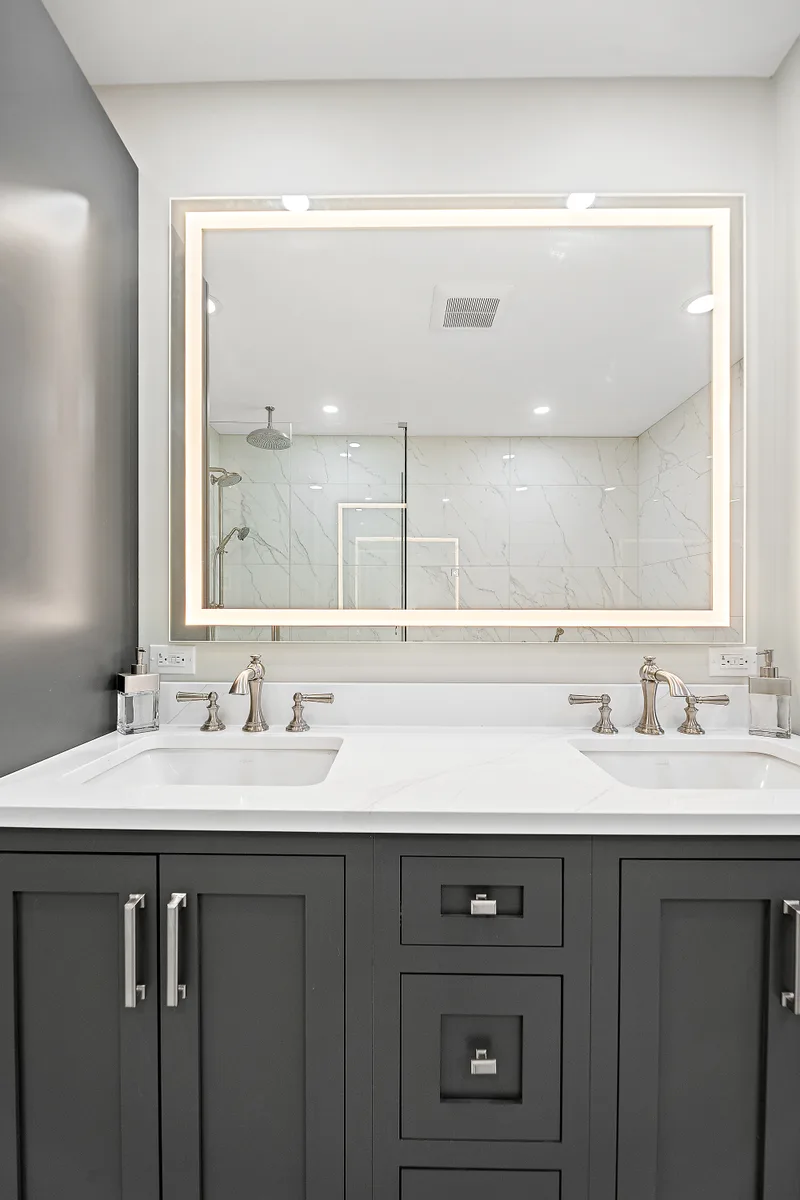
A bathroom that worked for a household at one point may not work as the household changes. A single bathroom serving two or three people creates real friction. A bathroom without a double vanity used by a couple with different morning schedules creates conflict. A bathroom that is no longer accessible to an aging household member may require modifications that go beyond cosmetic.
If the bathroom is not meeting the current needs of the people using it, a remodel is worth considering even if nothing is technically broken.
7. You Are Seeing Mold or Mildew Recurrently
Surface mold that reappears despite regular cleaning indicates inadequate ventilation, an unresolved moisture source, or both. Cleaning more frequently is not the solution.
The IRC (Ch. 15) requires bathroom exhaust fans to vent a minimum of 50 CFM to the exterior. In pre-1960 North Shore homes, fans were often not installed at all, or were vented into the attic rather than to the outside. Attic venting is a code violation regardless of when it was installed. In pre-war Wilmette, Evanston, and Glencoe homes with balloon-frame construction, attic moisture from an improperly vented fan can travel down open wall cavities into the framing - a structural problem, not just a cosmetic one. A remodel can include a properly sized exhaust fan vented through the exterior wall or roof, better waterproofing in the wet area, and materials less prone to mold growth. These changes reduce ongoing maintenance burden and protect long-term air quality. Ventilation upgrades run roughly $800 to $3,500 depending on the routing required.
8. The Bathroom Has Not Been Updated in 20 or More Years
Bathrooms built in the 1980s and 1990s often have hardware, lighting, and layout choices that are now dated in ways that affect both function and appearance. Beyond aesthetics, older bathrooms may have single-flush toilets using significantly more water per flush than current models, incandescent lighting, and fixtures beginning to fail due to age.
In Northbrook and Glenview, the housing stock is heavily weighted toward ranches and split-levels built in the 1960s through 1980s. Bathrooms that received cosmetic updates in the 1990s - oak cabinets, laminate counters, and brass hardware - are now due for full renovation a second time. In Deerfield, similar mid-century and late-century ranch and split-level stock presents the same pattern. Highland Park's more diverse housing stock, which spans lakefront estates to mid-century ranches, contains all of these conditions across its varied neighborhoods.
A remodel in this situation addresses all of these issues at once and brings the bathroom in line with current standards for water efficiency, lighting, and electrical safety.
9. The Electrical Does Not Support Current Code Requirements
This sign is specific to older North Shore homes and often goes unrecognized until walls are opened.
Bathrooms have required GFCI protection at all receptacles since 1975. Pre-1940 homes in Wilmette, Kenilworth, and Winnetka commonly still have knob-and-tube wiring in bathroom walls. Knob-and-tube has no equipment ground and its shared neutrals cause chronic nuisance tripping of GFCI devices, making reliable modern protection very difficult in practice. Many insurers will not write or renew policies on homes with active knob-and-tube wiring. Opening walls for a bathroom remodel typically triggers electrical scope in these homes.
Evanston presents the same condition at larger scale - the city's housing stock spans 1890s Victorians to 1940s Colonials across Ridge Avenue, Forest Avenue, and Central Street, and knob-and-tube is still found regularly in these homes. Evanston also requires all contractors to be registered with the City before pulling any permit; for electrical work specifically, confirming that the electrician holds current City registration before the project starts is worth doing explicitly.
If your home was built before 1940 and the bathroom has never been rewired, the electrical condition is worth evaluating before other decisions are made. The remodel scope and cost depend partly on what is behind the walls.
10. You Want the Bathroom to Work Better for Aging in Place
If you or a household member has reduced mobility, balance challenges, or anticipates needing bathroom modifications in the coming years, incorporating those modifications into a remodel now is more cost-effective than retrofitting later.
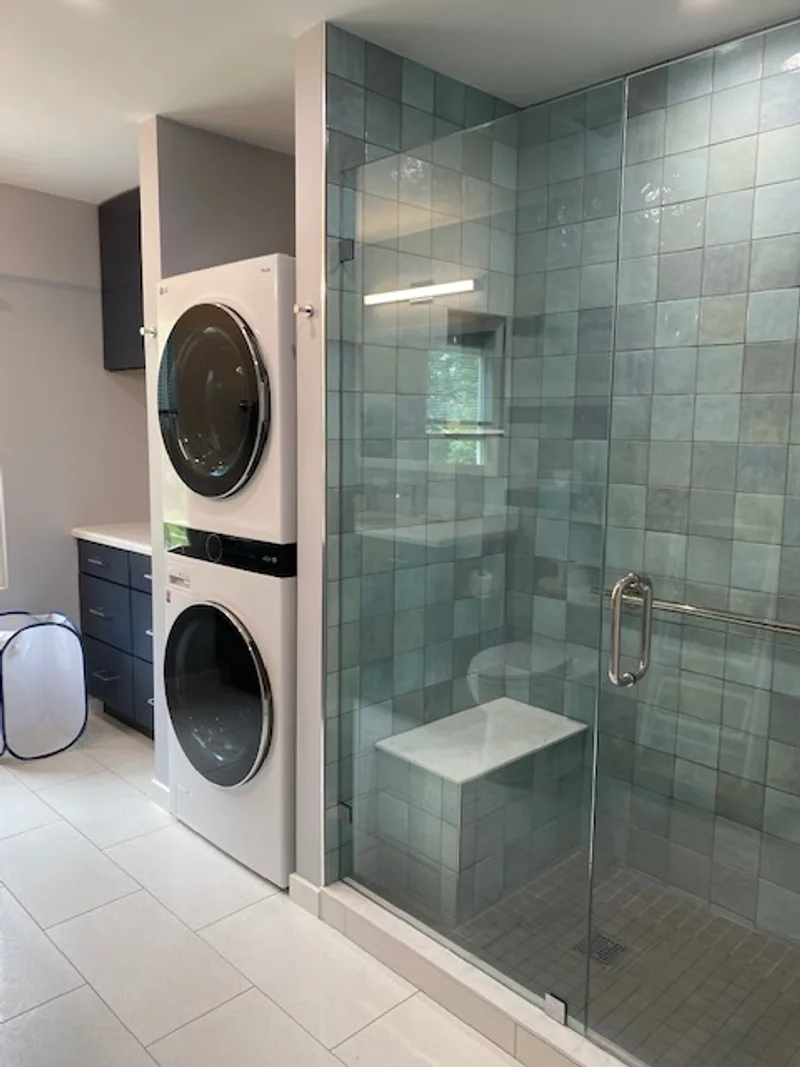
The technical requirements are specific. Grab bars must withstand 250 lbs of force in any direction per ADA 2010 Standards Section 609.8, which means 2x10 blocking installed in the wall before tile is set. You cannot anchor a properly rated grab bar into standard drywall or tile alone. A curbless shower requires the subfloor to be recessed 1.5 to 4 inches depending on the drain system, or built up with a linear drain, and any joist cutting for the recess requires structural review. Pre-1980 bathroom doorways in North Shore homes are commonly 28 to 30 inches wide; 32 inches of clear width requires a 36-inch door, and widening a load-bearing doorway requires an engineer and header.
These are features that are easier and less expensive to incorporate during a full remodel than as standalone additions. ANSI A117.1-2017 provides the technical standard for accessible bathroom design that contractors and designers use as the reference for accessible bathroom work.
If several of these signs apply, a remodel is likely worth the investment. The right sequence is to start with a clear scope of what needs to be addressed, get a realistic budget, and work with a contractor who can identify structural or waterproofing issues before work begins.
For smaller spaces, our small bathroom remodel ideas guide covers layout and fixture decisions for tighter rooms. For higher-end primary bath upgrades, the high-end bathroom remodel guide covers the decisions that separate a well-executed primary bath from one that just has expensive materials.
Delta Remodels serves homeowners across the North Shore, including Lake Forest, Lake Bluff, Wilmette, Highland Park, and surrounding communities. Contact us to schedule an on-site consultation, or learn more about our bathroom remodeling services. If you are deciding between a targeted refresh and a full renovation, see our guide on cosmetic refresh vs. full gut remodel to understand which scope fits your situation.
Frequently asked questions
What is the difference between a cosmetic refresh and a full bathroom remodel?
A cosmetic refresh replaces visible surfaces and fixtures without moving plumbing or altering the layout - new tile, vanity, mirror, and lighting. A full remodel opens walls, reconfigures plumbing or electrical, and may change the footprint. The right scope depends on whether the underlying structure and layout are sound, or whether they are part of the problem.
Can I fix individual problems in my bathroom without a full remodel?
Yes, in many cases. A single leaking fixture, failing grout, or an outdated vanity can be addressed on its own. A remodel becomes the better investment when multiple problems coincide, when water damage is present, or when the layout itself is the source of daily friction.
What signs indicate water damage I should not ignore?
Soft spots in the subfloor, grout that crumbles when pressed, walls that feel spongy near the tub or shower, and persistent musty odor are all indicators of moisture intrusion that may have reached the framing or subfloor. These need a thorough inspection before any other remodel decisions are made.
How do I know if my bathroom layout is worth reconfiguring?
If the toilet is in direct sightline of the door, the vanity placement makes the mirror difficult to use, or the door swings into fixtures, these are layout problems that a remodel can solve. Ask your contractor whether the existing plumbing rough-in allows for repositioning before ruling it out on cost grounds.
Ready to Start Your Project?
Schedule a free consultation. We bring design ideas, material samples, and honest answers.
Get Free Consultation