





Steam Showers: Benefits and Cost
On this page
Medical disclaimer: The health information in this post is drawn from Harvard Health and Cleveland Clinic and is provided for general context only. It is not medical advice. Anyone with a cardiac condition, uncontrolled high blood pressure, pregnancy, or any condition affected by heat exposure should consult a physician before using a steam shower.
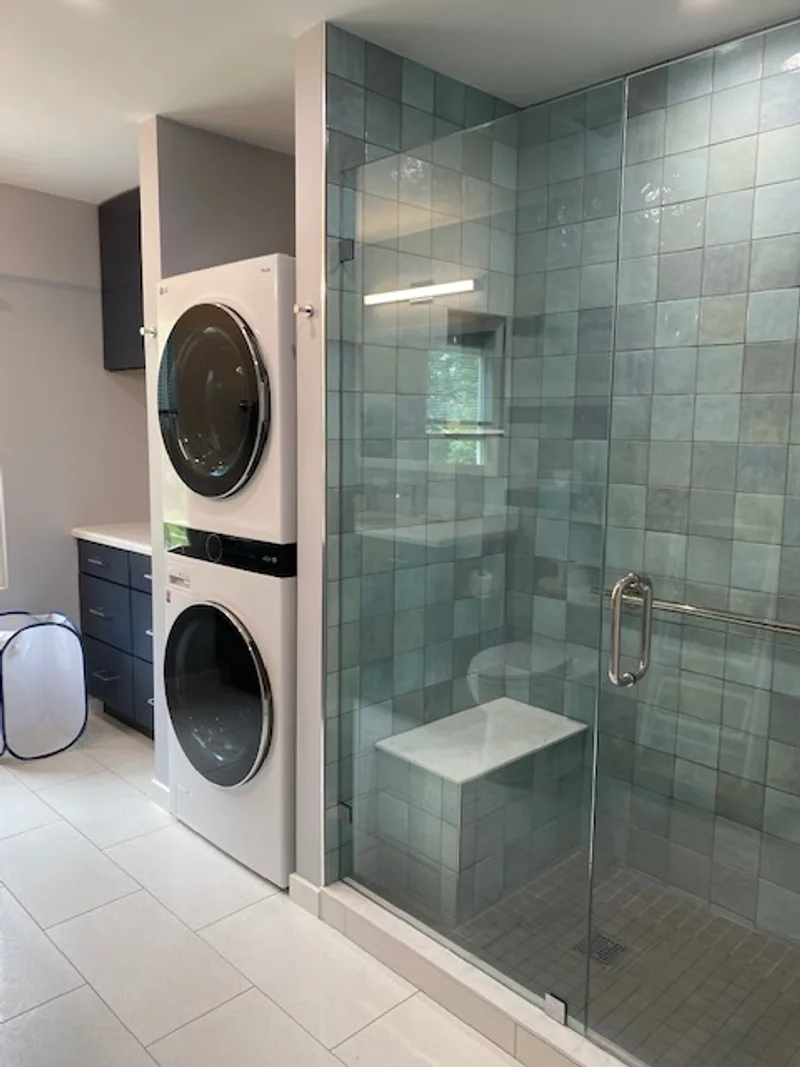
A steam shower replaces a standard shower stall with an enclosed, fully sealed space that fills with warm steam from a dedicated generator. You take the steam session, then rinse with the standard shower, all in the same enclosure. Compared to a sauna or whirlpool tub, it heats up faster, uses less water, and takes up roughly the same footprint as a standard shower. Our bathroom remodeling services cover scope, waterproofing coordination, and electrical planning for projects like this.
This covers what the health benefits actually are, what installation requires, and what the realistic cost range looks like for a North Shore home.
Health Benefits of Steam Bathing
The benefits of steam bathing are studied primarily in the context of saunas and steam rooms. As Harvard Health summarizes, heat bathing is associated with several measurable effects, and a residential steam shower draws on the same core physiological mechanisms.
Circulation support. Heat from steam causes blood vessels to dilate, which increases blood flow throughout the body. This brings more oxygen and nutrients to tissues and helps the body clear metabolic waste. The same mechanism that makes steam useful after exercise (it supports recovery by improving blood flow to fatigued muscles) also makes it useful for general recovery and relaxation.
Respiratory support. Warm, moist steam loosens mucus and opens airways. For people with chronic sinus congestion, allergies, or mild respiratory issues, a steam session provides genuine relief. The effect is similar to what you get from a hot shower in a small bathroom, but more concentrated and sustained.
Skin. Steam softens the skin's surface and promotes perspiration. According to Cleveland Clinic, heat and moisture loosen oil and buildup and make skin more permeable rather than physically opening pores. This is not a replacement for a skincare routine, but it is a reasonable supplement to one.
Stress and sleep. Warming the body shifts it toward a rest-and-recovery state, and many regular users report that a steam session before bed helps them wind down. Individual results vary, and steam bathing is not a treatment for sleep disorders.
Pre-shave preparation. Steam softens hair follicles and removes surface dead skin cells, which reduces friction and razor burn. A few minutes of steam before shaving produces a noticeably cleaner result.
A steam shower is a comfort and wellness feature, not a medical treatment. Heat exposure raises heart rate and can lower blood pressure, so anyone with heart disease, uncontrolled high blood pressure, or who is pregnant should check with a physician before regular use.
What Steam Shower Installation Requires
Adding a steam shower involves specific technical requirements that must be planned at the design stage. Retrofitting after construction costs significantly more.
The enclosure must be fully sealed. A steam shower works by containing steam in a defined space. This means the enclosure needs a ceiling (not an open-top enclosure), fully sealed grout lines and joints, a door that seals without gaps, and no vent openings that would let steam escape. This is one reason a steam shower and a wet room are fundamentally incompatible; the open-floor wet room allows steam to escape freely.
The ceiling should slope at least 1 inch per foot toward a corner so condensation runs down the wall rather than dripping on the user. This slope must be built into the substrate before tile is set; it cannot be added after the fact.
The steam generator. A separate unit (typically installed in a nearby cabinet or closet) heats water and delivers steam to the shower through a steam head in the wall. Generator sizing is based on the adjusted cubic footage of the enclosure and the wall materials. The general formula is approximately 1 kW per 45-50 adjusted cubic feet, with a material multiplier applied: natural stone walls (marble, granite, travertine) require roughly double the generator capacity of a tile enclosure of the same size, because stone absorbs substantial heat before contributing to steam. A generator undersized for the space will struggle to maintain temperature.
Most residential tile enclosures in the 80-150 cubic foot range call for units in the 7-12 kW range; a stone enclosure of the same size may need 12-18 kW.
Electrical requirements. A steam generator requires a dedicated 240V circuit. In North Shore homes, particularly pre-1940 homes in Kenilworth, Winnetka, Evanston, and Wilmette, the existing electrical panel may not have capacity for an additional circuit. Pre-1940 homes commonly had original 30-60 amp service and knob-and-tube wiring. Any such home should have the panel evaluated before steam shower planning proceeds, and knob-and-tube circuits cannot reliably support the GFCI protection modern bathrooms require. Panel upgrades in the Chicago area run roughly $1,400-$5,000+ depending on extent.
Waterproofing. Standard bathroom waterproofing is not sufficient for a steam shower. Steam penetrates more aggressively than liquid water, and the thermal cycling (hot during use, cooling down after) stresses tile and grout more than a standard shower. Proper steam shower waterproofing uses a continuous membrane system applied to all surfaces including the ceiling. This is the most critical phase of construction and the one least visible after completion.
Controls and accessories. Modern steam generators come with digital controls that set temperature, duration, and steam intensity. Controls mount inside the shower at a convenient reach location and connect to the generator via low-voltage wiring. Some systems integrate with chromotherapy lighting and audio.
Cost Range for a Steam Shower
Generator cost varies by manufacturer and capacity. Residential units from established brands typically run $1,000-$4,000 depending on features and kW rating. Installation cost for a complete steam shower (framing, waterproofing, tile, generator, controls, and plumbing) is meaningfully higher than a comparable standard shower. The incremental cost over a standard shower, when all components are accounted for, is typically several thousand dollars.
If you are already doing a full bathroom remodel, the incremental cost to add steam is significantly less than if you are adding it to an existing shower, because walls are already open and electrical work is already being planned.
The North Shore Wiring Reality
This point deserves emphasis for North Shore homeowners specifically. Pre-1940 homes in Kenilworth, Wilmette, Winnetka, and Evanston, communities that built out heavily in the 1890s-1920s, commonly have knob-and-tube wiring. Knob-and-tube has no equipment ground, and its shared neutrals cause chronic GFCI tripping, making reliable modern protection very difficult in practice. Many insurers will not write or renew policies on homes with active knob-and-tube.
A steam shower's dedicated 240V circuit is incompatible with a knob-and-tube system. For homes in this category, the steam shower conversation is also a panel and wiring conversation, which affects both timeline and budget. A 1920s Kenilworth home asking for a steam shower in a primary bathroom gut remodel should plan for electrical assessment as a first step, not an afterthought.
Is a Steam Shower Worth It?
The practical case is strong if you fall into one of these categories: you use a gym steam room or sauna regularly and want that access at home; you have respiratory issues or muscle recovery needs that benefit from regular heat therapy; or you are building a primary bathroom you plan to use for 10-plus years.
The case is weaker if the bathroom is a secondary bath used occasionally, or if the steam feature would be used rarely. Unlike a soaking tub, a steam shower does not consume additional floor area; it uses the existing shower footprint. But the added cost needs to justify itself in regular use.
On the North Shore, where primary bathrooms are frequently designed to a high standard and homes are owned for long periods, steam showers are a common addition to primary bath remodels. They appear regularly in Highland Park and Winnetka primary bath projects. They also tend to read well to buyers because they are a visible, named feature rather than a general upgrade.
For more on spa-style bathroom features, see our spa bathroom design guide. To discuss adding a steam shower to your remodel, contact us or learn more about our bathroom remodeling services.
Delta Remodels has served North Shore communities from Lake Forest since 1987. Service areas include Highland Park, Winnetka, Kenilworth, Wilmette, Northbrook, and surrounding communities. Health information in this post is drawn from published Harvard Health and Cleveland Clinic sources and is not medical advice.
Frequently asked questions
How much does a steam shower add to a bathroom remodel?
The steam generator itself typically runs $1,000 to $4,000 depending on capacity and features. Beyond that, a steam shower needs upgraded waterproofing and a fully sealed enclosure, so the installed cost is meaningfully higher than a standard shower of the same size. Adding steam during a full bathroom remodel costs less than retrofitting it later, because the walls are already open.
What does a steam shower require that a standard shower does not?
A steam shower needs a fully sealed enclosure with a ceiling, a steam generator sized to the space, a dedicated 240V electrical circuit, and a continuous waterproofing membrane on all surfaces including the ceiling. These are design-stage decisions, not later add-ons.
Is a steam shower safe to use regularly?
Most people can use a steam shower regularly, with sessions usually kept to 10 to 15 minutes. Heat raises heart rate and can lower blood pressure, so anyone with heart disease, uncontrolled high blood pressure, or who is pregnant should check with a physician first. This post is not medical advice.
Does a steam shower add resale value?
A steam shower tends to read well to buyers because it is a visible, named feature rather than a general upgrade. It is most worthwhile in a primary bathroom you plan to use for many years, and less so in a secondary bath used occasionally.
Ready to Start Your Project?
Schedule a free consultation. We bring design ideas, material samples, and honest answers.
Get Free Consultation