





Spa Bathroom Design Ideas at Home
On this page
The difference between a bathroom that relaxes and one that simply functions comes down to a handful of specific decisions: water delivery, temperature underfoot, organized storage, and lighting with actual range. This is not about square footage. A well-planned 80-square-foot primary bathroom with the right shower, radiant floor, and layered lighting reads as a restful space. A poorly planned 150-square-foot bathroom with a single overhead fixture and no storage does not.
Our bathroom remodeling services page covers how we scope and plan projects like this, from the first site visit through final walkthrough.
What Makes the Difference
Water delivery. A standard shower has one showerhead. A spa shower might have a rain head mounted overhead, a handheld for rinsing, and body jets. You do not need all three. A ceiling-mounted rain head alone changes the shower experience materially; the sensation is different from a wall-mounted fixed head. Body jets add cost, require a larger water heater to sustain pressure, and add maintenance - the jets on North Shore homes with Lake Michigan municipal supply, which averages roughly 130-150 ppm hardness (about 8 grains per gallon) per the Chicago Department of Water Management's published water quality data, need periodic cleaning to prevent mineral buildup. Choose body jets when you know you will use them; otherwise the rain head is the higher-return selection.
Temperature underfoot. Heated tile floors are the most consistently appreciated upgrade across spa bathroom projects. Cold tile in the morning undermines the comfort of everything else in the room. Electric radiant mat systems are standard in residential bathrooms; the mat is embedded in the mortar bed before tile is set, connects to a thermostat, and runs on a programmable schedule so the floor is warm when you step in and off the rest of the time. Operating cost is minimal.
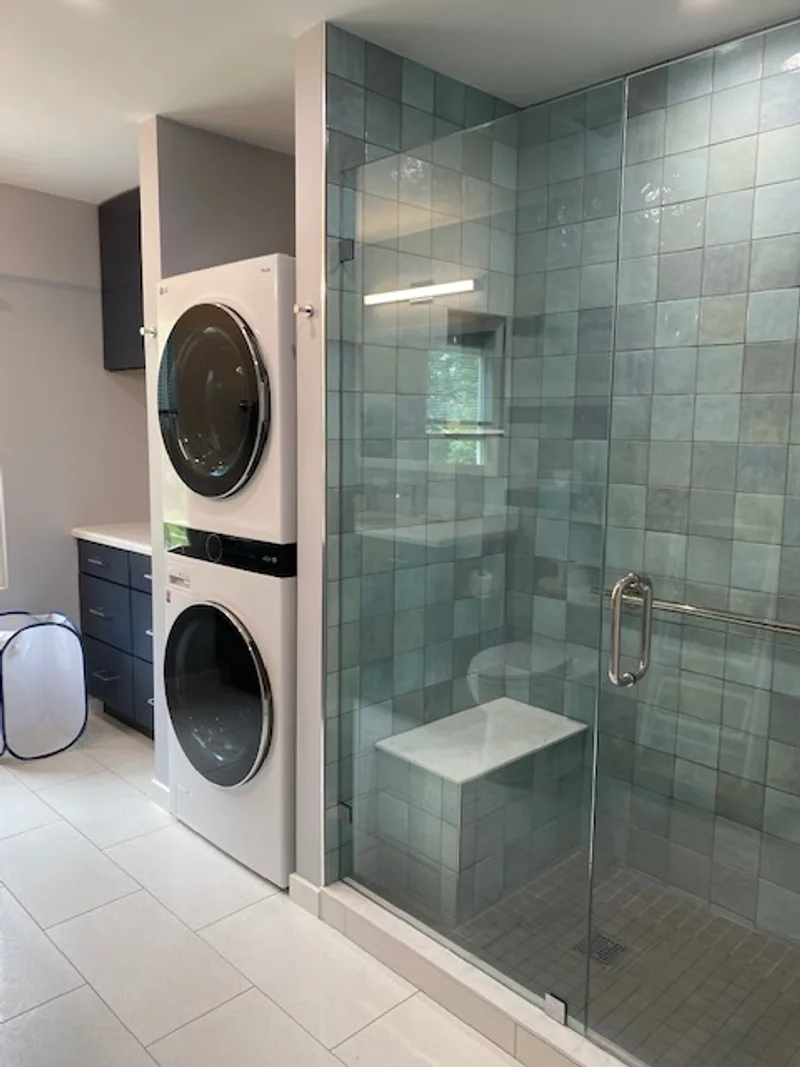
A place to rest. A soaking tub, a built-in bench in the shower, or both. The key difference from a standard alcove tub is depth: a true soaking tub is deep enough to submerge to shoulder height. The built-in shower bench serves a practical function - seated showering, foot washing, setting products - and signals a shower designed for use rather than minimum compliance. Solid tile benches built during construction outlast any aftermarket fold-down option.
Organized storage. A spa environment is not cluttered. Recessed niches in the shower, built-in cabinetry at the vanity, medicine cabinets with real depth, and no open countertop clutter. Storage design happens at the plan stage, not as an afterthought; once tile is set, adding a niche requires removing tile.
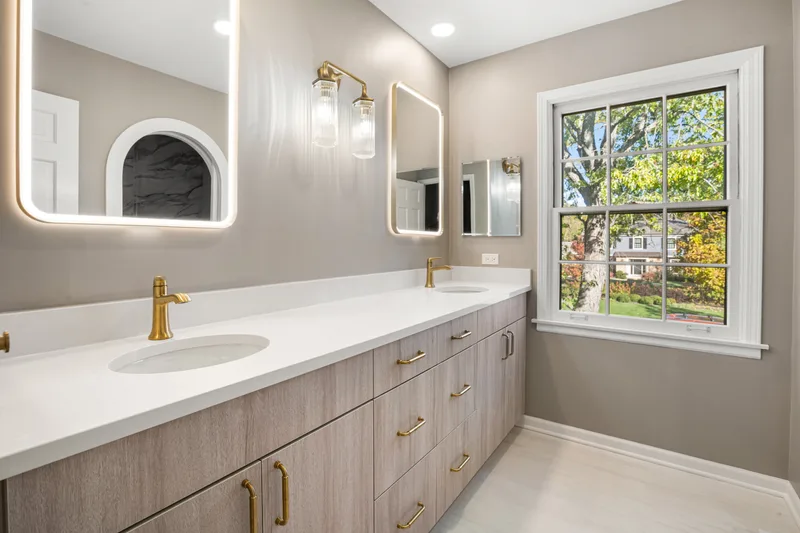
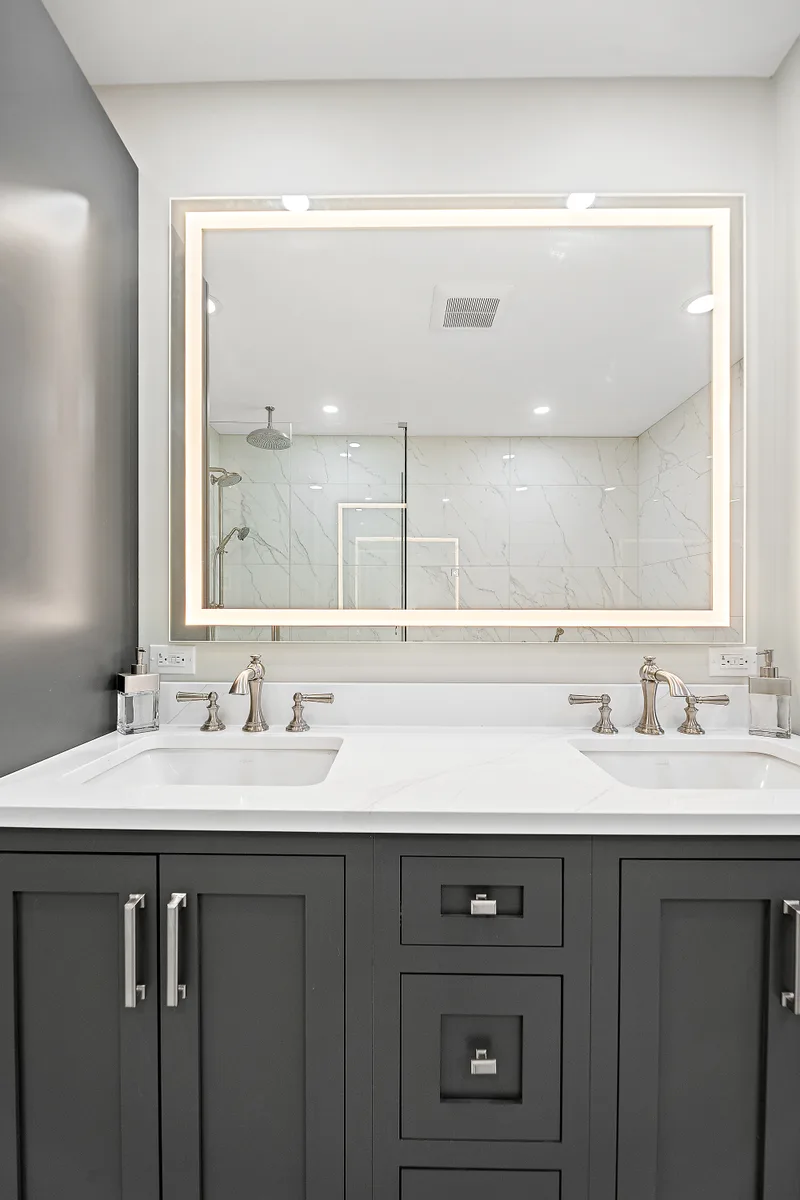
Lighting with range. Bright, even task lighting at the vanity for grooming. Dimmer-controlled ambient lighting for the general space. The ability to reduce light significantly when using the tub or shower for relaxation. These are separate circuits or zones, not one overhead fixture on a single switch.
Shower Features That Make a Real Difference
The shower is the most-used feature in most bathrooms, which means shower quality has the highest daily impact.
Steam capability. Converting a shower into a private steam room requires the enclosure to be fully sealed with a ceiling (not open-top), a dedicated generator, and a continuous waterproofing membrane on all surfaces including the ceiling. Generator sizing is based on the adjusted cubic footage of the enclosure and the wall materials; natural stone requires roughly double the generator capacity of a same-size tile enclosure, because stone absorbs more heat before it contributes to steam. Most residential enclosures call for units in the 7-12 kW range. The generator also requires a dedicated 240V circuit planned at the design stage, before rough-in - not something that can be added after walls close. See our steam shower guide for full installation requirements.
Rain showerheads. Ceiling mounting delivers the most immersive experience and requires planning the supply rough-in before framing begins; you cannot add a ceiling supply line after tile is set without reopening the wall.
Built-in benches and niches. A single wide recessed niche at shoulder height beats four small ones at awkward locations. Bench and niche placement should be confirmed during design review, not improvised during installation.
Soaking Tubs: Drop-In vs. Freestanding
Not every spa bathroom needs a separate soaking tub, and space and budget both constrain the decision. But if the primary bathroom has the footprint and the occupants will use it, a soaking tub adds a genuine rest option that a shower does not provide.
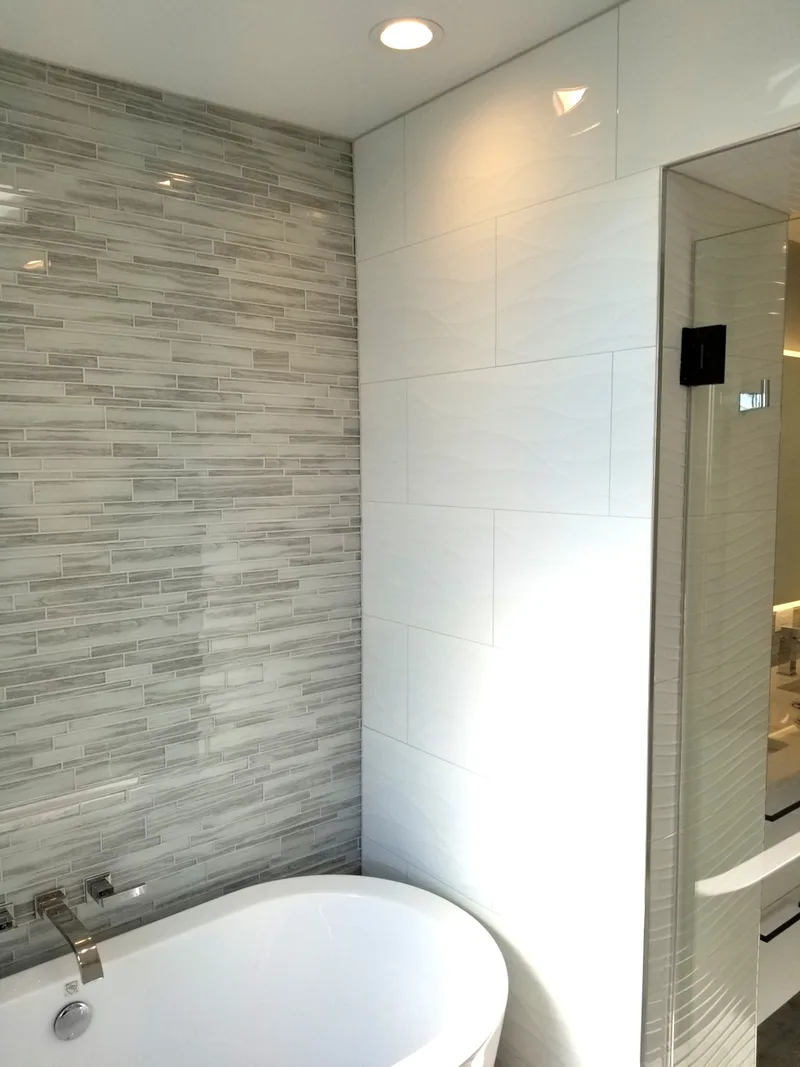
Drop-in tubs with a tiled or stone surround integrate cleanly into the room. The surround is a design decision in itself; quartzite, marble, and large-format porcelain all work, each with different maintenance profiles. As a representative example of how material combinations work in northwest Chicagoland post-war homes - 1950s-1980s ranches and split-levels common in communities like Mount Prospect - a spa bathroom scope might combine large-format slate tile wrapping the wet area with a drop-in soaking tub and glass mosaic niche behind it. This illustrates how a cooler stone palette can be kept from reading as cold through niche detailing and material combination.
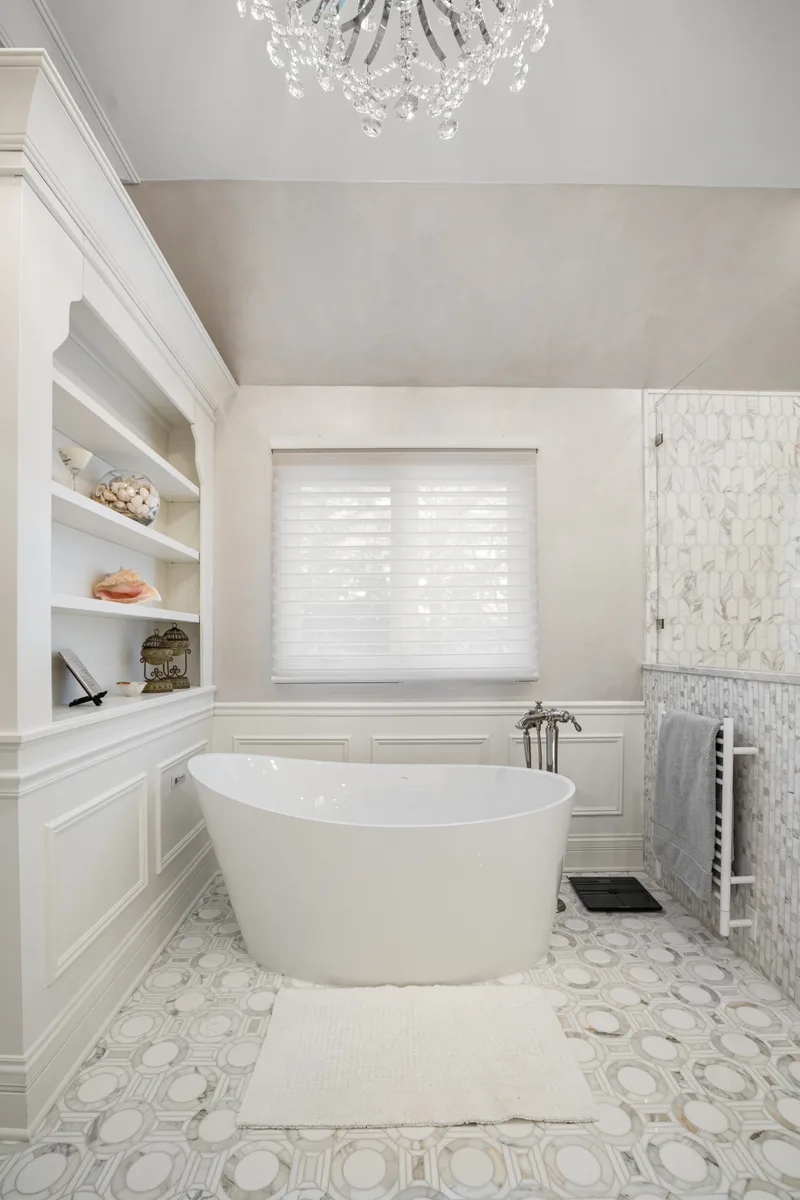
Freestanding tubs require enough floor space to walk around the tub; in a room where that clearance exists, they read as a clear design statement and are easier to clean than a built deck. Plumbing requires a floor supply and drain planned at rough-in.
Materials and Atmosphere
Natural stone has warmth and variation that porcelain approximates but does not replicate. The tradeoff is maintenance: stone requires sealing at installation and periodically afterward, and is more sensitive to acids. For a primary bathroom used primarily by adults, the maintenance tradeoff is usually acceptable. For a family bathroom with heavy daily use, large-format porcelain that looks like stone is the more practical selection.
Large-format tile (24x48 inches is common) reduces grout lines and creates a cleaner visual field on both floors and walls. Fewer grout lines also means less cleaning. The tradeoff is substrate precision; large-format tile on a floor requires a precisely sloped, level substrate, and any variation reads through the tile.
Color temperature interaction. Warm neutrals - soft whites, warm grays, taupe, greige - read as calming. But the wall color interacts with the lighting color temperature: cool LED fixtures above 4000K in a warm-toned room create an uncomfortable dissonance. Aim for 2700-3000K ambient lighting in any bathroom with a warm material palette.
North Shore and Nearby Chicagoland: What the Housing Stock Adds to the Conversation
Delta Remodels works across the North Shore lakefront corridor and into nearby Chicagoland communities. The housing stock in each zone shapes spa bathroom planning in specific ways.
In Kenilworth and Winnetka, where many homes date to the early 1900s through 1930s, primary bathrooms in original floor plans are often undersized relative to the rest of the house. Expanding a bathroom into adjacent closet or bedroom space is a common scope item. Opening walls in these homes means encountering balloon framing (studs running full height from sill to roof), knob-and-tube wiring that predates GFCI requirements, and plaster-and-lath that requires careful demolition. The spa bathroom conversation starts with what the structure allows, not just what the homeowner envisions.
Winnetka's Landmark Preservation Commission and demolition delay ordinance are relevant if any exterior wall or roof line changes are involved in a primary suite expansion; confirm requirements with the Village of Winnetka Community Development Department before scoping any exterior work. Kenilworth's Building Review Commission consideration applies to properties on the Village's Historic Survey list - primarily exterior and demolition decisions, but worth confirming before a project touches exterior-facing walls.
In Highland Park, where the housing stock ranges from 1920s Ravinia Colonials to mid-century ranches, the starting conditions vary widely. Ranch-home primary bathrooms tend to be compact (50-60 square feet), and expanding them typically means borrowed space from an adjacent room. In a single-story structure, that is more straightforward structurally than a two-story home. Highland Park parcels with ravine frontage fall under Steep Slope Zone rules that apply to any work adding footprint, per the City of Highland Park Community Development Department.
In Lake Bluff, the Village of Lake Bluff fully waives building permit fees for work on the same property as a designated landmark, per the Village of Lake Bluff Building Division. This is an unusual benefit worth understanding before budgeting a landmark-property spa bathroom remodel. Note that this fee waiver applies to landmark-designated properties; the Uptown Commercial Historic District is a National Register commercial listing and does not mean residential homes throughout the village fall inside a commercial historic zone.
The northwest Chicagoland homes in Delta's service area - Mount Prospect, Arlington Heights, and nearby communities with post-war ranch and split-level stock - generally have fewer structural surprises than the pre-war lakefront corridor. 1960s-1980s construction with 100-amp service, cast-iron or early plastic drains, and standard balloon-frame or platform construction means the spa bathroom scope is often more straightforward. The design challenge in these homes is typically proportion and material selection rather than structural discovery.
NKBA bathroom planning guidelines specify minimum fixture clearances for primary bathrooms: 24 inches in front of a shower entry, 21 inches in front of a toilet, and 36 inches between lavatory centerlines on a double vanity. These minimums define the difference between a layout that works and one that feels cramped once tile is in.
What the Combination Looks Like in Practice
A well-executed spa bathroom typically combines a small number of high-daily-impact decisions: radiant floor heat, a well-waterproofed shower with a rain head and a built-in bench, thoughtful niche placement, layered lighting on separate circuits, and a material palette that works in the specific light conditions of the room.
The decisions that do not show up at first glance - waterproofing membrane specification, generator sizing, niche placement, circuit planning - are the ones that determine whether the bathroom performs the way it should for years. Starting with the functions you actually want and building the design around those goals produces better outcomes than starting with a look and working backward.
For more on spa-style shower features, see our steam shower benefits guide. To talk through what a spa bathroom remodel would involve for your specific home and municipality, contact us or visit our bathroom remodeling service page.
Delta Remodels has served North Shore and nearby Chicagoland communities from Lake Forest since 1987. Service areas include Winnetka, Highland Park, Kenilworth, Glencoe, Northbrook, Lake Bluff, and surrounding communities. NKBA bathroom planning guidelines cover fixture spacing and shower configuration standards for primary bathrooms.
Frequently asked questions
What is the single most impactful feature in a spa bathroom?
Heated tile floors are the most consistently appreciated upgrade in well-designed primary bathrooms. Cold tile in the morning undermines the comfort of everything else in the room. Electric radiant mat systems scale with square footage, are programmed by timer so they run only when needed, and are modest in cost relative to their daily impact.
Does a spa bathroom require a soaking tub?
No. Many well-designed spa bathrooms are built around the shower experience: a rain head, steam capability, and a built-in bench. A soaking tub is a genuine addition for homeowners who will actually use it, but it is not required for the bathroom to function as a restful, well-designed space.
What lighting setup is right for a spa bathroom?
The goal is range: bright, even task lighting at the vanity for grooming, and dimmer-controlled ambient lighting for the rest of the space. These should be on separate circuits or zones. Aim for 2700 to 3000K color temperature for warm, flattering light that works with tile and stone palettes in natural tones.
How does a drop-in tub differ from a freestanding tub in a spa bathroom?
A drop-in tub integrates into a built tile or stone deck and suits rooms where the surround is part of the design. A freestanding tub reads as a standalone design element and works better in larger rooms with enough floor space to walk around it. Plumbing a freestanding tub requires a floor supply and drain planned at rough-in, not a detail that can be added after tile is set.
Ready to Start Your Project?
Schedule a free consultation. We bring design ideas, material samples, and honest answers.
Get Free Consultation