





Aging-in-Place Bathroom Remodeling in Illinois: Planning Guide for Homeowners
On this page
- The Main Difference Between Standard and Accessible Bathrooms
- What Is the Difference Between ADA and Accessible Bathrooms?
- What Does ADA Mean?
- ADA Shower Types
- ADA Showers in Residential Bathrooms
- Can You Convert a Standard Bathroom to an Accessible Bathroom?
- Changing Doorways and Flooring
- Walk-In Curbless Showers
- Toilet Position, Height, and Grab Bars
- Accessible Bathroom Sizing
- What Is the Estimated Cost for Aging in Place Bathroom Remodeling?
Aging-in-place bathroom remodeling focuses on creating a safer and more functional space that allows homeowners to remain independent as their mobility needs change. This guide explains the planning process, common accessibility considerations, Illinois-specific requirements, and the decisions that should be made before construction begins.
Our accessible bathroom remodeling services and accessible design guides cover planning, code-informed dimensions, and North Shore project examples.
The Main Difference Between Standard and Accessible Bathrooms
The main difference between standard residential or commercial bathrooms and accessible bathrooms is how the space supports safe movement. Accessible bathrooms include handrails, lower sink clearances, and grab bar placements for aging in place. They use easier-to-enter showers and must provide a 60-inch (152.5 cm) turning radius for wheelchair users. Toilet seats should measure 17 to 19 inches (43 to 48 cm) from the floor.

What Is the Difference Between ADA and Accessible Bathrooms?
You may see both "ADA bathroom" and "accessible bathroom" when researching options.
What Does ADA Mean?
ADA stands for the Americans with Disabilities Act, a federal civil rights law enacted in 1990 to prevent discrimination against individuals with disabilities. The law establishes accessibility standards for public accommodations, commercial buildings, and government facilities throughout the United States.
In most cases, ADA requirements apply to commercial and public properties, not privately owned homes. Many homeowners still incorporate ADA-inspired features because they improve comfort, safety, and long-term accessibility.
ADA Shower Types
The ADA recognizes two primary compliant shower configurations:
Roll-in shower — designed for wheelchair users to enter without stepping over a high curb. Typical requirements include:
- Minimum interior size of 60 inches by 30 inches
- Finished threshold no higher than ½ inch
- Grab bars in designated locations
- Wall-mounted folding shower seat
- Accessible shower controls and handheld showerhead placement
Transfer shower — intended for users who transfer from a wheelchair onto a built-in seat before bathing. Typical requirements include:
- Interior size of 36 inches by 36 inches
- Properly installed grab bars
- Wall-mounted shower seat
- Accessible controls within easy reach
ADA Showers in Residential Bathrooms
Although ADA compliance is generally not required for private homes, many homeowners choose ADA-style showers for safety, easier access, and aging-in-place planning. Standard residential bathrooms often have a 60-inch-wide shower alcove, which may not fit a full ADA-compliant roll-in shower. Many ADA shower units are one-piece systems that are difficult to install during a remodel. For existing homes, multi-piece shower systems are often better because they fit through standard doorways and assemble on site.
Illinois references ADA principles through the Illinois Plumbing Code (77 Ill. Admin. Code Part 890) and the Illinois Accessibility Code (71 Ill. Admin. Code Part 400).
Can You Convert a Standard Bathroom to an Accessible Bathroom?
Yes — Delta Remodels regularly converts standard bathrooms to accessible, ADA-informed layouts in Illinois. Typical scope includes:
Changing Doorways and Flooring
We recommend doorway clear width of at least 36 inches when designing accessible bathrooms, with non-slip flooring throughout. Options include chemical anti-slip treatment, anti-slip mats, textured porcelain or natural slate, anti-slip mosaic tile, or waterproof vinyl floor panels.
Walk-In Curbless Showers
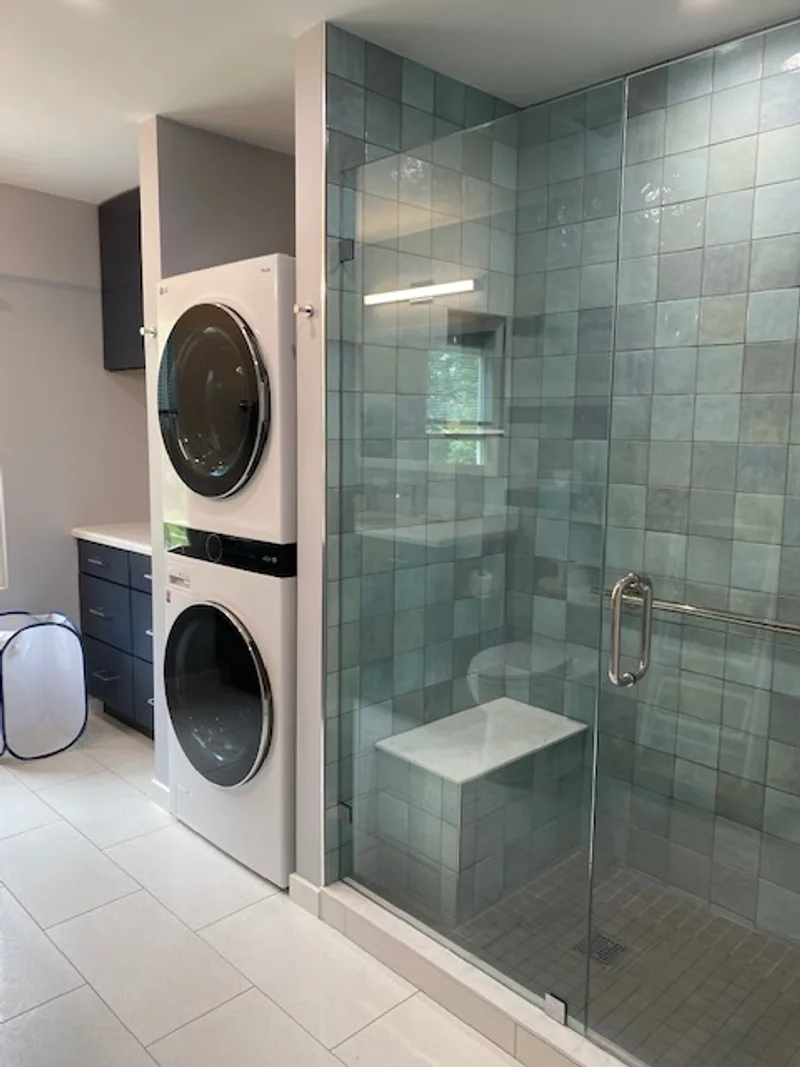
We recently completed a wheelchair-accessible bathroom remodel in Chicago, IL — curbless shower with no step, plus a fold-down bench for a comfortable, worry-free bathing experience.

Toilet Position, Height, and Grab Bars
ADA-informed toilets in Illinois sit 17 to 19 inches high with accessible grab bars nearby. Allow side clearance so a user can transfer between the toilet and a wheelchair with proper rotation. Install grab bars near sinks, toilets, and showers — wherever balance support is needed.
As Certified Aging-in-Place Specialists (CAPS), we also recommend emergency call buttons in accessible washrooms, lever-handle faucets that are easy to operate, and heated floors — especially valuable in Illinois winters for aging-in-place comfort.
Accessible Bathroom Sizing
An accessible bathroom should provide minimum floor spacing of 5 × 4.8 feet (60 × 56 inches). For wheelchair-accessible layouts, plan clear floor space of at least 60 × 60 inches (1500 mm × 1500 mm).
Key sizing factors:
- Clear space near the toilet or shower to position a wheelchair and transfer to a seat
- Turning space of at least 60 inches (5 feet)
- Stall-style layouts: 60 inches wide × 56 inches deep
- Toilet seat height: 17–19 inches; grab bars: 33–36 inches high
- Mirrors above countertops: 40 inches from the floor; without countertops: 35 inches
- 30 × 48 inches of clear floor space in front of each fixture for approach and rotation
These are baseline dimensions contractors follow for handicap-accessible bathrooms — though client preference and existing Chicago-area floor plans often require creative layout variations. Many older Illinois bathrooms have narrow footprints that are not wheelchair-ready without structural and plumbing adjustments.
What Is the Estimated Cost for Aging in Place Bathroom Remodeling?
Handicap-accessible bathroom remodel cost depends on size, features, and how much structural work is required. Estimated ranges for Illinois:
| Remodel Type | Estimated Cost (Illinois) | What's Typically Included |
|---|---|---|
| Basic aging-in-place bathroom remodel | Starting at $25,000 | Curbless shower conversion, comfort-height toilet, grab bars, slip-resistant flooring, handheld showerhead, basic accessibility upgrades |
| Standard accessible bathroom remodel | $30,000–$40,000 | Basic package plus wider doorway, ADA-inspired vanity, improved lighting, premium fixtures, waterproof flooring, enhanced storage |
| Premium handicap accessible bathroom remodel | $40,000–$55,000 | Custom walk-in shower, built-in bench, luxury tile, frameless glass, floating vanity, high-end accessibility fixtures, custom cabinetry, upgraded ventilation |
| Luxury aging-in-place bathroom remodel | $55,000–$75,000+ | Fully customized universal design, heated floors, smart toilet, custom lighting, premium materials, integrated safety features, designer finishes |

For a deeper cost breakdown, see our guides on grab bar installation and blocking and curbless shower subfloor requirements.
We have completed full accessible bathroom remodels in as few as four weeks, though timeline varies by scope. Delta Remodels offers 24-hour emergency inspections and free estimates for accessible bathrooms across Illinois.
If you're planning an aging-in-place renovation, explore our Accessible Bathroom Remodeling services to discuss solutions tailored to your home and future needs.
Contact us for an aging-in-place bathroom remodeling estimate — we serve Chicago, the North Shore, and surrounding Illinois communities.
Frequently asked questions
What is the difference between ADA and accessible bathrooms?
ADA (Americans with Disabilities Act) sets legally enforceable standards for public accommodations and commercial buildings. Accessible bathrooms in private homes adapt those same dimensions — grab bar height, toilet seat height, shower clearances — for comfort and safety without a legal mandate to meet every commercial code requirement.
Can you convert a standard bathroom to an accessible bathroom?
Yes. Typical scope includes widening doorways to at least 36 inches, installing slip-resistant flooring, converting to a curbless walk-in shower, adding grab bars with proper wall blocking, raising the toilet to comfort height, and choosing lever-handle fixtures and an open or wheelchair-friendly vanity.
What is the estimated cost for aging-in-place bathroom remodeling?
In Illinois, basic aging-in-place remodels start around $25,000. Standard accessible packages run $30,000–$40,000. Premium handicap-accessible remodels range $40,000–$55,000, and luxury universal-design projects can exceed $75,000 depending on size, materials, and structural changes.
How long does an accessible bathroom remodel take?
Delta Remodels has completed full accessible bathroom remodels in as few as four weeks, but timeline depends on layout changes, permit review, custom orders, and whether doorway widening or plumbing relocation is required.
Ready to Start Your Project?
Schedule a free consultation. We bring design ideas, material samples, and honest answers.
Get Free Consultation