





Bathroom Tile Guide for North Shore Remodels
On this page
Tile selection is one of the most consequential decisions in a bathroom remodel, and one of the easiest to get wrong. The choices are made early, they are visible every day, they affect how the room holds up over 15-20 years, and they are essentially permanent once the grout cures. A poor tile decision in a 1940s Wilmette home costs the same to fix as a poor decision in a new Northbrook build; the material does not care about the address.
This guide gives you a framework for making good tile decisions before you set foot in a showroom, ordered around the distinctions that actually matter.
Floor Tile and Wall Tile Are Not the Same Decision
The most important distinction in bathroom tile selection: floor tile and wall tile serve different functions and have different performance requirements.
Floor tile must meet slip resistance standards. The ANSI A137.1 standard uses a Dynamic Coefficient of Friction (DCOF) rating to measure how slip-resistant a tile surface is when wet. For bathroom floors, the recommended minimum is 0.42. Polished stone, glazed ceramic, and most smooth-finish tiles do not meet this threshold. They are not appropriate for bathroom floors regardless of how they look in a showroom sample.
Matte-finish porcelain, textured tile, unpolished stone, and small-format mosaic tile (where the grout lines increase traction) reliably meet or exceed 0.42. Ask your contractor or tile supplier to confirm the DCOF rating before ordering floor tile.
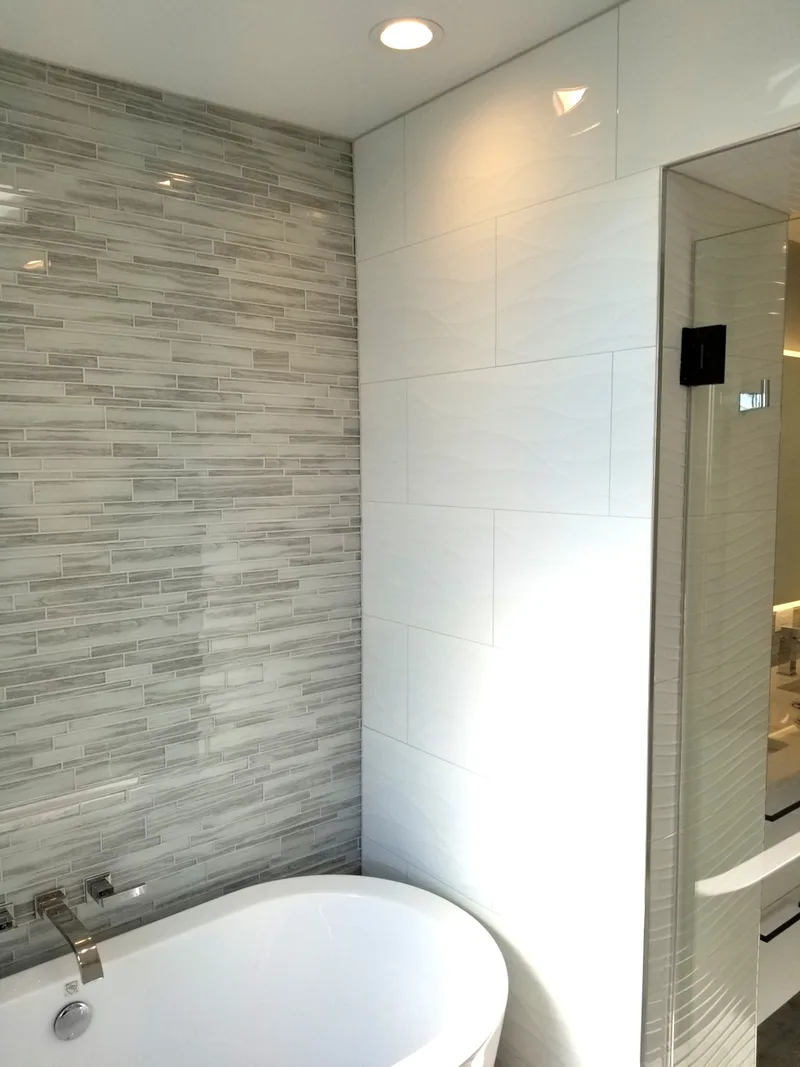
Wall tile has no slip resistance requirement because it is not walked on. This opens the aesthetic range considerably. Polished marble, glossy subway tile, hand-painted decorative tile, and large-format glazed porcelain are all appropriate for walls where they would be unsafe on floors.
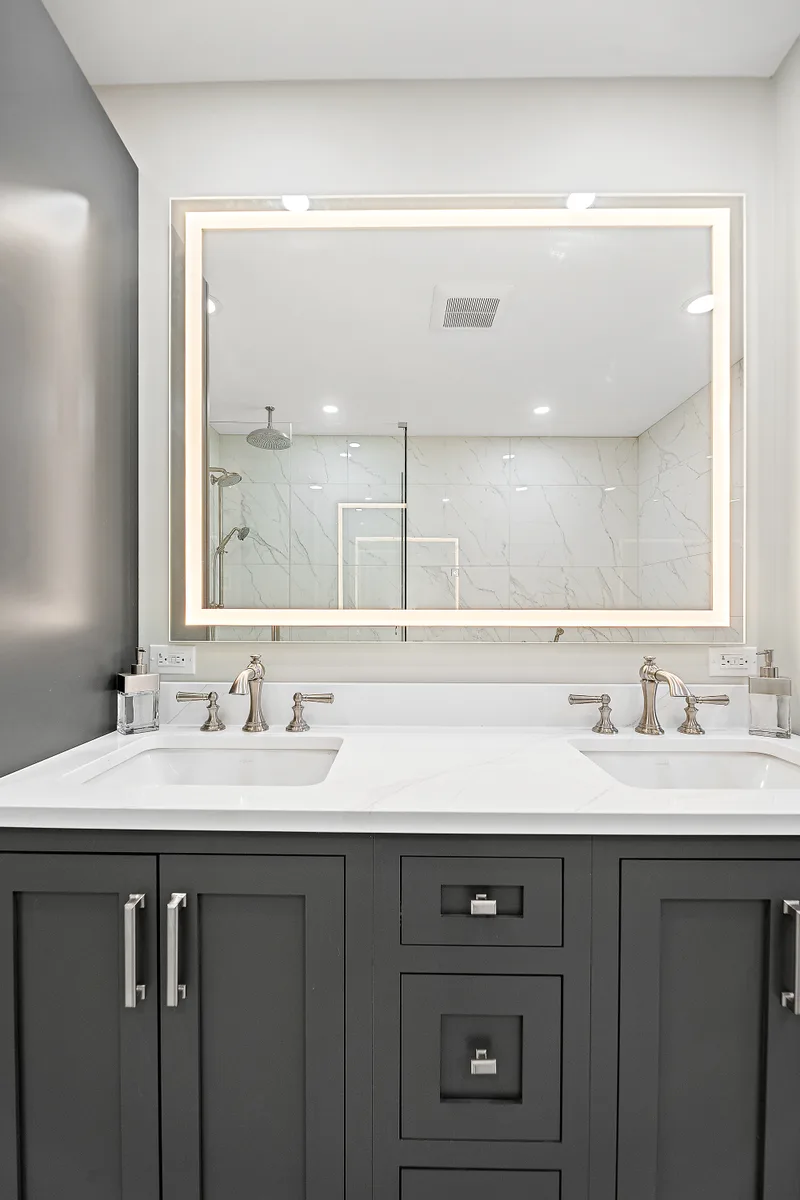
This distinction is what makes mixed applications work well. A polished marble-look tile on the shower walls paired with a matte porcelain in a complementary tone on the floor gives you the visual effect of polished stone alongside a floor surface that is safe when wet.
North Shore Homes and What Tile Work Encounters
Tile installation in pre-war North Shore homes encounters conditions that newer construction does not.
Plaster-and-lath walls. Pre-war homes in Kenilworth, Wilmette, Winnetka, and Glencoe, all of which built heavily before 1940, have plaster-and-lath wall construction rather than drywall. Plaster is harder to fasten tile backer to, heavier, and less predictable than modern assemblies. Many pre-war bathrooms also have tile installed directly over plaster (without cement board), which is common in the 1930s-1950s era and can cause delamination failures in a new tile installation if the substrate is not correctly addressed. Getting this right means stripping back to the framing and installing cement board or an approved waterproof backer before any new tile goes up.
Subfloor condition in pre-war and post-war stock alike. Slow leaks from failed grout and caulk in tub and shower areas are the most predictable source of subfloor damage in a North Shore bathroom gut renovation. Damaged subfloor runs $700-$3,500 to replace depending on how far the rot has spread and the joist condition below. Large-format tile installed over a compromised subfloor will crack within 1-3 years as the subfloor deflects. This problem is not limited to the oldest housing. In Northbrook ranches built on concrete slabs through the 1960s and 1970s, a failed tub surround over decades can allow moisture to wick into the framing at the tub perimeter - a different failure path, but the same result: the substrate has to be correct before tile goes down.
Architectural character and tile compatibility. Tile in Winnetka's Georgian and Tudor estates from the 1920s-1940s and in Kenilworth's Arts and Crafts homes from the 1900s-1920s carries a visual character that belongs to those buildings. Subway tile, hex floor tile, and unglazed quarry tile read correctly in these spaces in a way that large-format 24x48 porcelain does not. This is not a rule against modern tile; it is a judgment call that affects whether a bathroom renovation enhances or disrupts the character of the home. Northbrook ranches and Glenview split-levels from the 1950s-1980s have no equivalent architectural constraint - the right tile decision there is about practical performance and spatial effect.
Asbestos. Homes built or last renovated before 1980 may contain asbestos in 9x9-inch floor tile and black mastic, drywall joint compound, and ceiling texture. Testing before demolition is required. This applies to Northbrook ranches from the 1960s-1970s, Deerfield split-levels, and mid-century Highland Park homes as much as it does to pre-war properties.
For a full picture of what remodeling pre-war North Shore homes typically uncovers, see the bathroom remodel budget guide.
Format Decisions: What Size Does and Does Not Do
Tile format affects both the visual character of the space and how the installation is executed.
Large-format tile (12x24, 24x24, 24x48 and larger) reduces the number of visible grout joints, which creates a cleaner, more continuous surface. The trade-off: large-format tile requires a very flat, stable substrate. Any unevenness telegraphs through a large tile in a way that smaller tile tolerates better. Installation is more demanding and typically costs more per square foot than standard-format tile. On a wall in a pre-war home with plaster-and-lath construction, the substrate preparation step is significant - more so than in a post-war Northbrook ranch where you are working with wood framing and original drywall.
Standard format tile (3x6 subway, 4x4, 6x6, 12x12) is versatile, widely available, and works in the range of bathroom styles found across the North Shore. A 12x12 floor tile is practical and easy for most tile contractors to install well. 3x6 subway tile on shower walls is the most commonly used wall tile in North Shore bathroom remodels and has held its visual relevance through decades of design cycles. In pre-war Wilmette and Evanston bathrooms, 3x6 subway tile is also period-appropriate, which is why it continues to appear in renovation work on homes originally designed around it.
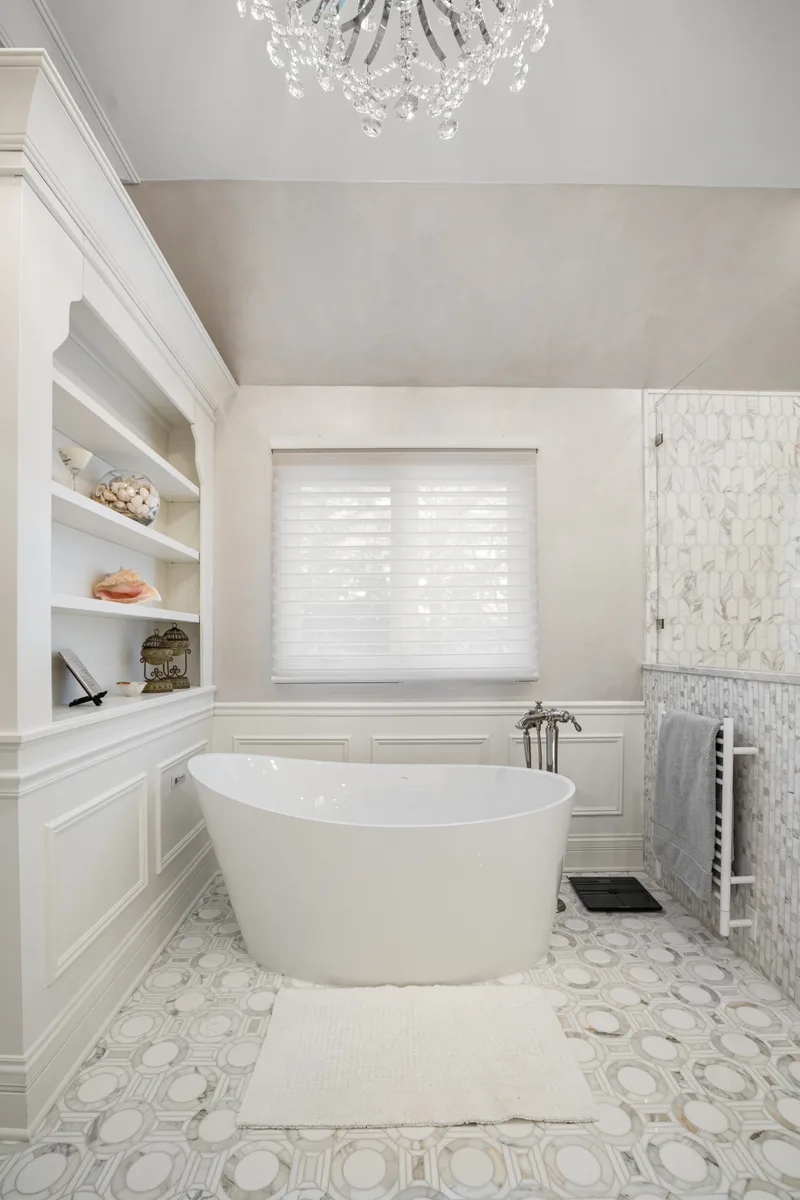
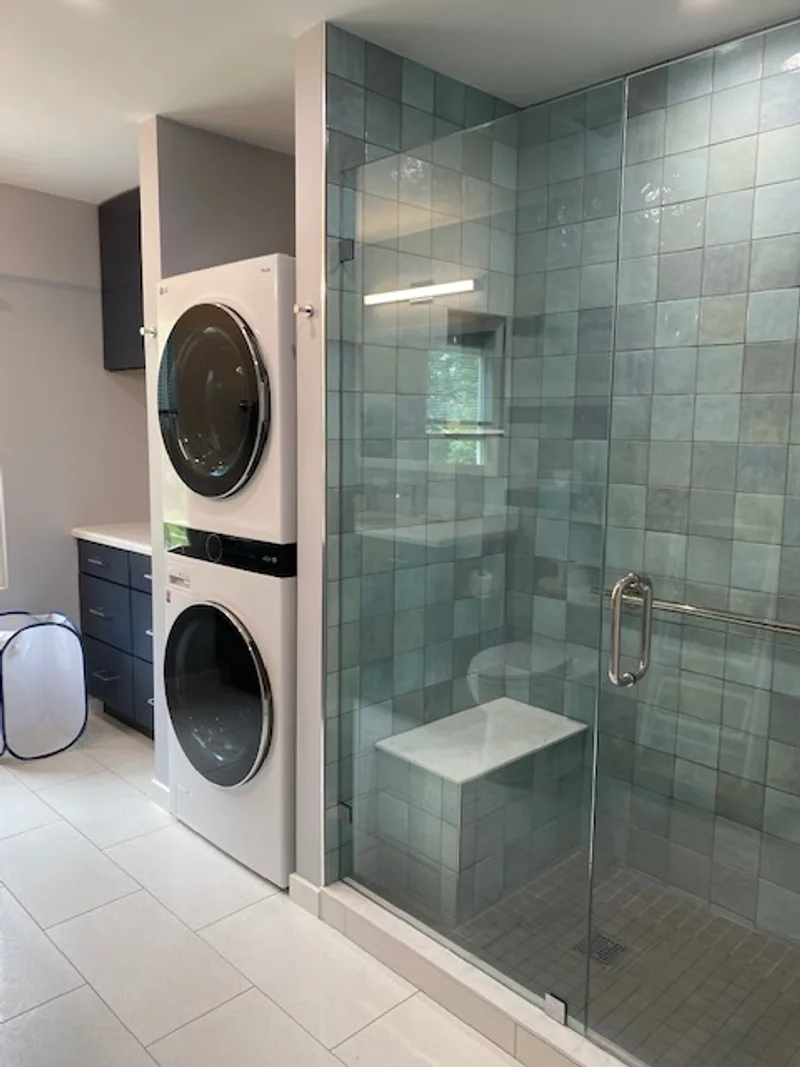
Mosaic tile (1x1, 2x2, penny) creates a high grout-joint-to-tile ratio, which increases traction on floors. It is commonly used on shower floors for this reason. The practical trade-off: more grout means more surface to maintain, and mosaic installation is more labor-intensive and more expensive per square foot than standard formats.
Pattern and layout. The same tile installed in a horizontal running bond (joints offset like brickwork) versus stacked (joints aligned) reads differently. Running bond is traditional and visually active; stacked is contemporary and clean. Herringbone and diagonal patterns add 30-50% to tile labor cost over a standard grid layout. That labor cost difference is real and should be budgeted before committing to a complex pattern, not discovered after the bid comes in.
Color Strategy: Light, Dark, and Water Hardness
Color choice affects how a bathroom reads spatially and how much maintenance it requires.
Light tile in smaller bathrooms. Light-colored tile, including whites, creams, soft gray, and light beige, reflects light and makes a smaller bathroom feel more open. This is a real optical effect. In a bathroom under 50 square feet, common in pre-war North Shore homes in Kenilworth, Wilmette, and Winnetka where bathrooms were designed to be functional rather than expansive, lighter tile on walls and floors contributes meaningfully to the perception of space.
Dark tile in larger spaces. Dark tile works best where there is enough space and natural light that it does not feel heavy. In a larger primary bathroom with good natural or artificial lighting - the kind of space found in Winnetka's Georgian estates and Lake Forest's mid-century custom homes - a dark tile floor or feature wall creates visual contrast that reads as considered. In the same dark tile, a small windowless bathroom feels closed in.
Water hardness and maintenance. Chicago-area tap water is moderately hard, according to Chicago water quality data. North Shore municipalities draw from Lake Michigan, which runs roughly 130-150 ppm hardness. Hard water leaves mineral deposits and soap scum more visibly on dark glossy tile than on light or matte surfaces. If you are selecting dark, glossy tile for a heavily used bathroom, factor in the cleaning frequency that will be required to keep it looking right. This is an especially relevant consideration in homes with existing hard-water scaling on fixtures - the tile will show the same staining pattern.
Long-term neutrality. The most durable tile choices accommodate fixture and accessory changes over time. A white or light gray floor and a white subway tile wall will not require wholesale replacement if a vanity color, towel scheme, or mirror style changes in ten years. A very specific pattern or unusual color is a long-term commitment.
Coordinating Tile Across the Bathroom
A bathroom with five independent tile selections for the floor, shower walls, shower floor, tub surround, and vanity backsplash can read as incoherent. The more effective approach is a limited palette used deliberately.
A simple framework that works across the range of North Shore bathroom styles - from Evanston Craftsman bungalows and Northbrook ranches to Glencoe mid-century moderns and Winnetka Tudor estates:
- Choose one primary floor tile and use it throughout (main floor and shower floor, or at minimum within the same color family)
- Choose one primary wall tile for both the main bathroom walls and the shower walls
- Introduce variation through a single accent tile in one feature location (shower niche, band at chair-rail height, tub surround)
Three well-chosen tiles coordinated intentionally read more considered than five tiles selected independently.
Floor-to-wall continuity. Using the same tile family on the floor and shower walls, or tiles in the same color with different finishes (matte floor, polished wall), creates continuity that makes a bathroom feel larger and more unified. This is particularly effective in bathrooms where the floor extends into the wet area without a raised threshold, as in curbless shower designs common in accessible remodels across the North Shore.
Grout as a design decision, not an afterthought. A light grout with dark tile creates contrast and emphasizes the tile grid. A grout matched to the tile reads as more seamless. Lighter grout shows discoloration over time; darker grout hides it but can be harder to touch up if repairs are needed. Have a specific grout color in mind when you select tile, and confirm the combination before materials are ordered. For shower applications, epoxy grout is the most moisture-resistant option and is worth the added cost - it resists staining, does not require sealing, and holds up better over time than cement grout, which matters in any bathroom handling Lake Michigan hard water.
What to Confirm Before Tile Is Ordered
Lead time. In-stock tile is immediate. Special-order or imported tile runs 4-6 weeks; large-format specialty tile 8-12 weeks. Tile arriving after the tile setter is scheduled pushes the project and usually incurs additional coordination costs. Confirm lead time before committing to a specific tile.
Quantity. Order 10-15% more than the measured square footage. Cuts, breakage during installation, and future repair needs all require material overage. Running out of a discontinued tile forces either a complete re-tile or a visible mismatch; neither outcome is acceptable.
Sample in the actual bathroom. Tile looks different under different light conditions. A cool gray tile that reads well in a daylight-lit showroom may look noticeably different under the warm artificial lighting of a small pre-war bathroom with one window. Request samples and live with them in the space before ordering.
DCOF rating for floor tile. Confirm in writing. This should be on the product specification sheet; if the supplier cannot provide it, that is a reason to look at a different product.
For more on the full scope of a bathroom remodel, see our bathroom remodeling services. Delta Remodels works with homeowners from Wilmette through Lake Forest across the North Shore. If you are selecting tile as part of a larger project and want guidance specific to your layout and housing era, contact us for a consultation.
Frequently asked questions
What DCOF rating should bathroom floor tile have?
The ANSI A137.1 standard recommends a minimum Dynamic Coefficient of Friction (DCOF) rating of 0.42 for tile in wet floor areas. Matte-finish porcelain, textured tile, and small-format mosaic tile reliably meet this threshold. Polished stone and high-gloss tile typically do not and should be limited to wall applications.
What is the difference between floor tile and wall tile in a bathroom?
Floor tile must meet slip resistance standards because it is walked on when wet. Wall tile has no slip resistance requirement, which opens the aesthetic range considerably. A polished or glossy tile that would be unsafe on a floor is often a good choice for shower walls or a vanity backsplash.
What grout type works best in a shower?
Epoxy grout is the most moisture-resistant option and is worth the added cost in shower applications. It resists staining, does not require sealing, and holds up better over time than standard cement grout. For floor and wall applications outside the shower, cement grout sealed at installation is standard.
How much extra tile should I order for a bathroom remodel?
Order 10 to 15 percent more than the measured square footage to account for cuts, breakage during installation, and future repairs. Running out of a discontinued tile mid-project forces a complete tile change and delays the schedule, so over-ordering slightly is the right call.
Ready to Start Your Project?
Schedule a free consultation. We bring design ideas, material samples, and honest answers.
Get Free Consultation