





Bathroom Remodels for Teens on the North Shore: What Actually Holds Up
On this page
- What the House Is Working With
- Ventilation: The Most Consequential Decision in a Teen Bathroom
- Vanity and Storage: Build It In
- Flooring and Tile: Safety First
- Fixtures and Hardware: Where Quality Matters
- Lighting for a Room That Is Also a Getting-Ready Space
- Pre-War Electrical Reality
- What to Keep Flexible
Teen bathrooms see heavier daily use than any other bathroom in the house, and in North Shore homes built before 1960, a finish project frequently becomes a structural one. That is not a problem to avoid - it is the normal condition of working in pre-war housing stock, and the remodel that accounts for it from the start finishes on budget and lasts.
What the House Is Working With
Before tile and vanity styles, it is worth understanding what is behind the walls of the specific home.
Pre-war homes in Wilmette, Winnetka, Kenilworth, and Glencoe built heavily from the 1890s through the 1940s, which is when a large share of the North Shore's housing stock was constructed. These homes commonly have cast-iron drain lines, galvanized supply pipes, and knob-and-tube wiring in or near wet areas. Camera inspection of cast-iron drain lines before a bathroom remodel is standard practice on pre-1970 homes - these lines are functional until disturbed; a remodel that moves a fixture or cuts into an adjacent wall can find brittle sections that need immediate replacement. This is standard practitioner knowledge from working in pre-war North Shore housing stock.
Knob-and-tube wiring in a bathroom is a specific electrical problem. It has no equipment ground, uses cloth insulation that degrades over time, and shared neutrals cause nuisance tripping with GFCI devices. Bathroom receptacles have required GFCI protection under the National Electrical Code for decades. Many insurers will not write or renew policies on homes with active knob-and-tube; this is a consistent pattern seen in the North Shore market.
1950s-1980s homes in Northbrook, Deerfield, and Highland Park skew postwar with earlier Romex, 60-100 amp service, and asbestos-containing materials through the mid-1970s. Testing before demolition is required for pre-1980 construction, and the EPA RRP Rule requires certified contractors and lead-safe practices when disturbing more than 6 square feet of paint in a pre-1978 home.
None of this is a reason not to remodel. It is a reason to budget a 15-20% contingency for pre-1960 homes and to make sure the scope conversation includes what is behind the walls, not just what is on them.
Ventilation: The Most Consequential Decision in a Teen Bathroom
This comes before vanity styles because it determines how long the bathroom lasts.
Many North Shore bathrooms built before 1970 have no mechanical exhaust, or have exhaust fans illegally vented into the attic rather than to the exterior. The IRC (Chapter 15, Section R303.3) requires bathroom ventilation equal to the greater of 50 CFM or 1 CFM per square foot of floor area, exhausted to the exterior. A 60-square-foot teen bathroom requires at least 60 CFM - not 50. Venting to an attic is a code violation and causes long-term structural damage from moisture accumulation.
For a bathroom that sees multiple long showers daily, inadequate ventilation is the primary driver of mold growth behind tile, paint failure on walls and ceilings, and early deterioration of wood framing. Correcting it during a remodel, while walls are already open, is the right time. Correcting it after walls are closed costs more and requires reopening finished surfaces.
Humidity-sensing fans run automatically until relative humidity drops to an acceptable level, removing the human variable entirely. They are worth the modest upgrade cost in a teen bathroom.
Vanity and Storage: Build It In
A standard single-sink vanity with two shallow drawers is rarely sufficient for the product volume, grooming tools, and daily accumulation of a teenager.
Width matters more than height. A 48-inch or 60-inch vanity provides two counter zones, which keeps daily-use items from taking over the entire surface. Deep drawers with removable dividers outperform shelved cabinets for this age group: everything is visible, accessible, and easier to put away.
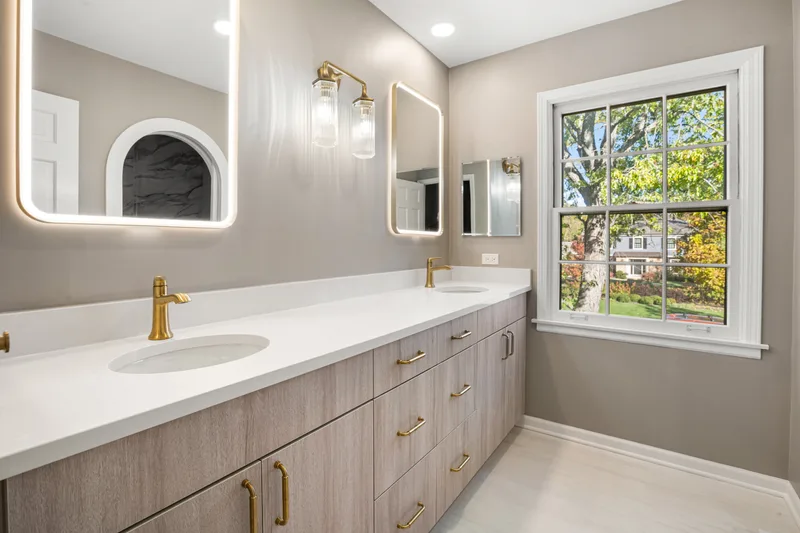
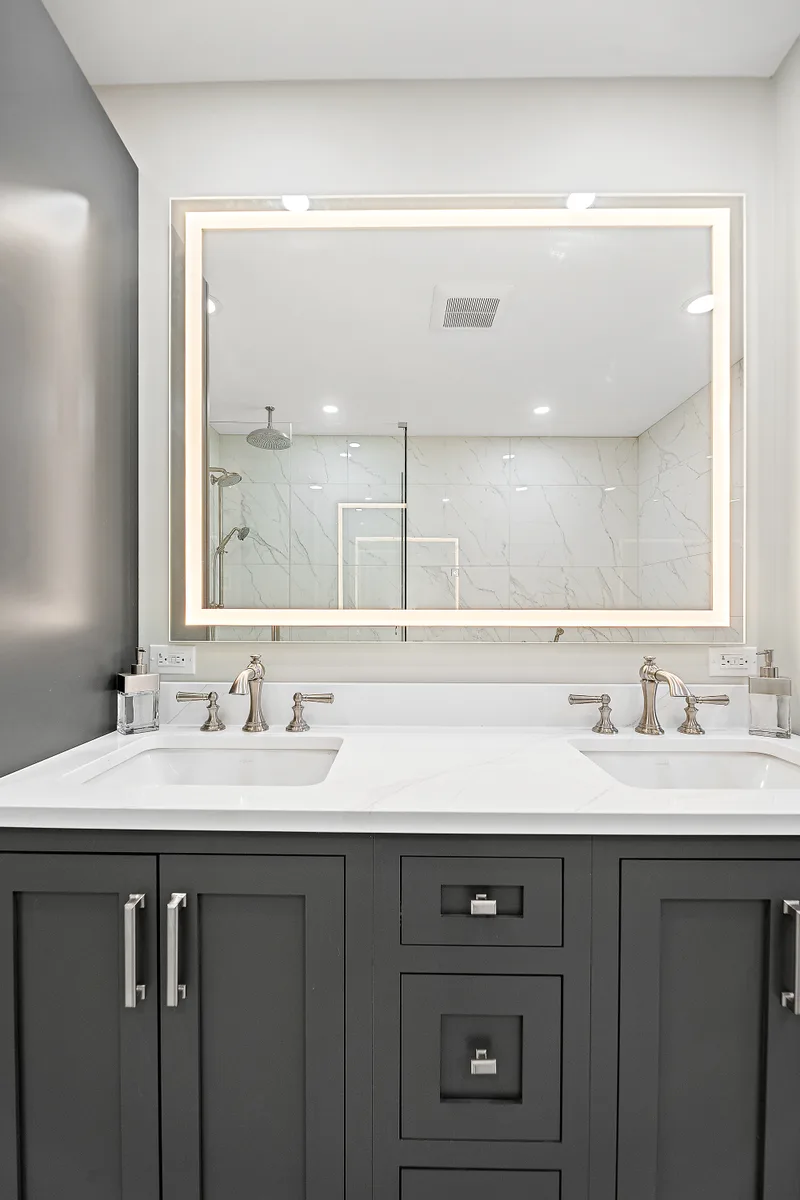
For shared bathrooms, a double-sink configuration or two vanity sections is the practical answer to the most common bathroom conflict point. If the footprint is tight - common in pre-war Wilmette Colonials and Kenilworth cottages where bathrooms were sized for a different era - a wall-mounted vanity frees up floor space visually and makes cleaning underneath straightforward.
Built-in vs. retrofit. Recessed shower niches, medicine cabinets with real depth, and wall-mounted shelving above the toilet provide durable storage capacity without changing the footprint. These solutions outperform freestanding organizers and over-door racks because they are part of the room, not attached to it.
Features worth including at the remodel stage:
- At least two recessed shower niches, properly waterproofed: one at eye level for daily-use products, one lower. A freestanding caddy is a maintenance burden; a built-in niche is not.
- Drawer dividers in the vanity cabinet: wide shallow drawers with removable inserts keep makeup, accessories, and grooming products organized without requiring constant sorting.
- Hooks inside the vanity door: keeps hair dryers and styling tools off the counter.
Flooring and Tile: Safety First
For a bathroom floor used multiple times daily, tile type and finish are safety decisions before they are aesthetic ones.
The ANSI A137.1 standard specifies a Dynamic Coefficient of Friction (DCOF) rating to measure slip resistance on wet tile. The minimum for bathroom floors is 0.42. Matte-finish porcelain and textured tile reliably meet this threshold; polished stone and high-gloss tile typically do not.
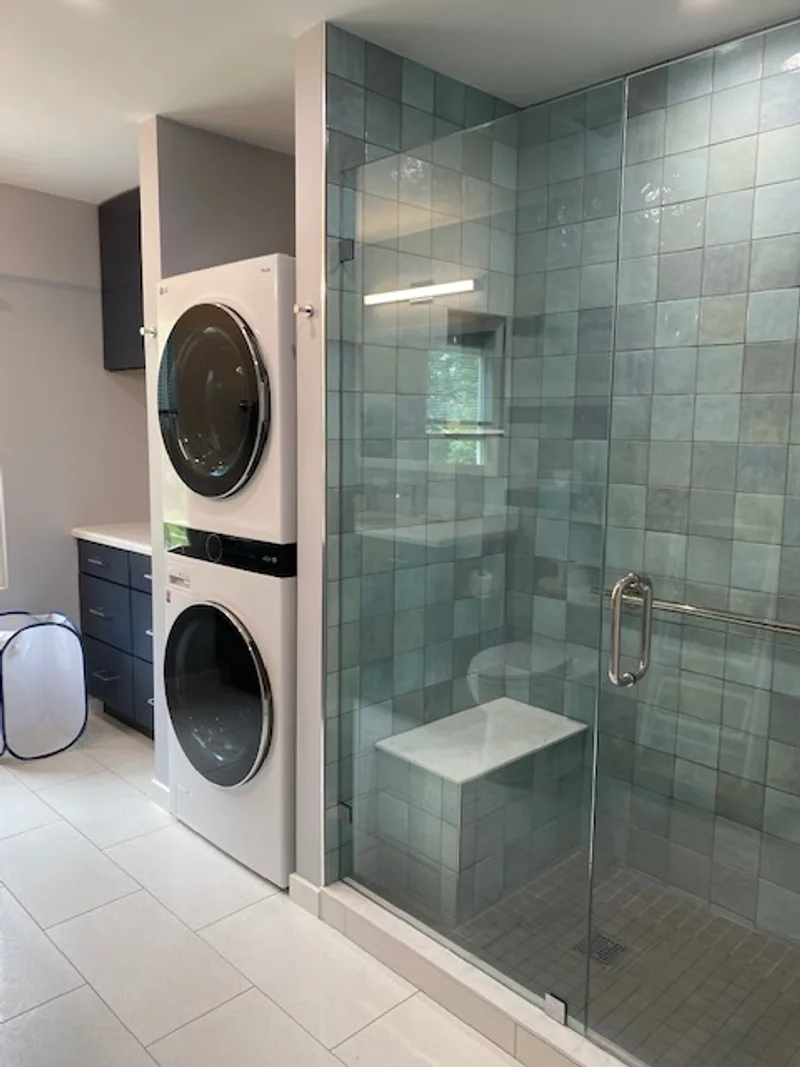
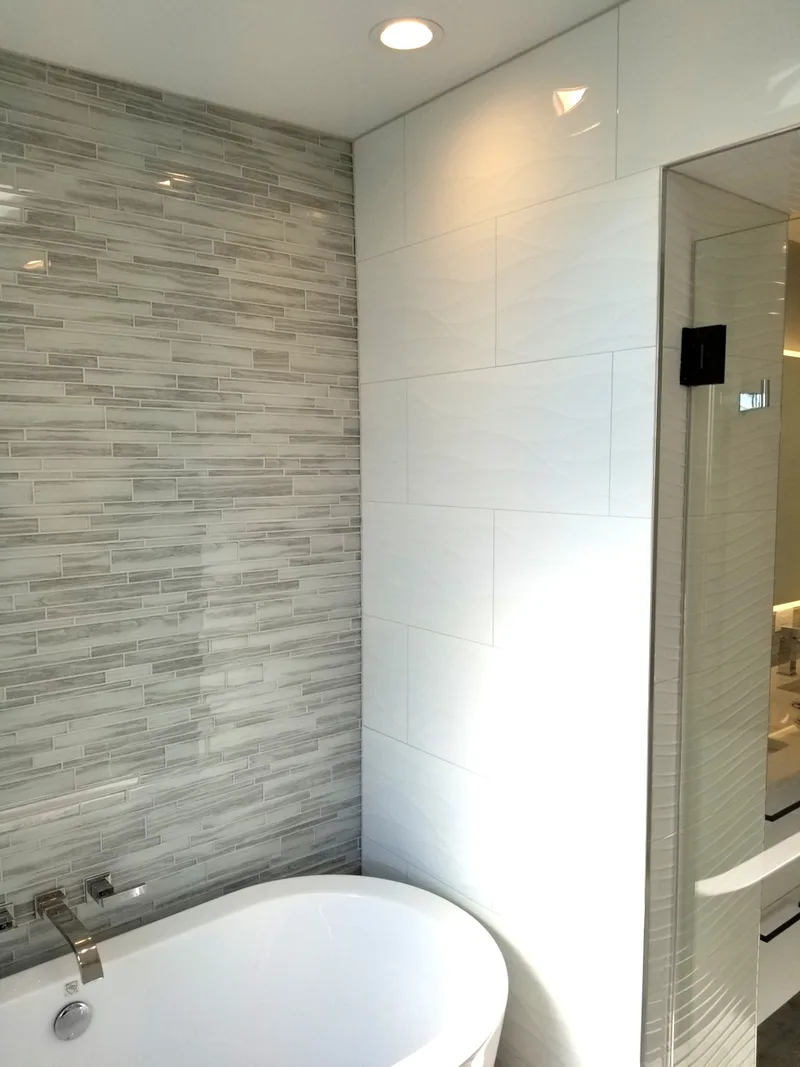
For a teen bathroom, a 12x24 or 18x18 matte porcelain floor tile is the practical baseline. It is durable, water-resistant, has fewer grout lines than small-format tile, and is easier to maintain. For shower walls, large-format tile in a neutral tone ages well and does not conflict with whatever accessories a teenager chooses.
For grout: epoxy grout in the shower is more moisture-resistant and does not require periodic sealing; it holds up better over time than cement grout in high-moisture applications. This is practitioner knowledge from the tile trade, not a claim requiring external citation.
Fixtures and Hardware: Where Quality Matters
Teen bathrooms see fixtures pulled on, turned on and off dozens of times daily, and used in ways that stress-test installation quality.
Shower valves with ceramic disc cartridges are significantly more durable than builder-grade ball-and-seat cartridges, which are more prone to dripping and early maintenance. The per-fixture cost difference is modest; the over-time maintenance difference is not.
A handheld showerhead on a slide bar adds flexibility for rinsing, adjusting to height, and cleaning the shower itself.
Brushed nickel and matte black finishes hide water spots better than polished chrome on surfaces that are wet multiple times daily.
Towel bars and hooks should be anchored into studs or with proper wall anchors. In pre-war North Shore homes with plaster-and-lath walls, proper anchoring is more involved than in drywall construction. Plaster does not hold toggle bolts the same way. Hardware pulls on cabinetry are a low-cost item and easy to swap; choose something neutral that will not date the room in two years.
Lighting for a Room That Is Also a Getting-Ready Space
A single overhead fixture creates shadows across the face at the mirror. For a teenager who uses the bathroom to prepare for school and before going out, this is a functional problem.
Side-lit or vertically oriented vanity lighting flanking the mirror eliminates those shadows. NKBA bathroom planning guidelines include mirror lighting as a planning consideration for this reason. If the layout does not accommodate flanking sconces, a wide backlit mirror provides even illumination across the face.
Dimmer switches add minimal cost during a remodel and make the bathroom function for both a quick morning routine and a longer evening use.
Pre-War Electrical Reality
Wilmette, Kenilworth, and Winnetka homes built before 1940 commonly have original service in the 30-60 amp range. A teen bathroom addition can mean a GFCI circuit, a new exhaust fan circuit, and potentially an updated vanity light circuit - easily three new circuits. On a home with 30-60 amp original service, the electrician is likely having a panel-capacity conversation before the first circuit is added.
This is not an obstacle; it is information. Addressing the panel during the remodel, while trades are already on-site, is less expensive than treating it as a separate future project. And a panel upgrade often makes insurance renewal easier on homes where knob-and-tube was the previous system.
What to Keep Flexible
Tile, layout, fixture locations, and vanity size should be chosen for durability and long useful life - not for a specific style moment. Moving plumbing or changing layout mid-project adds thousands of dollars; locking those decisions before demolition is how budgets hold.
Personal expression belongs in the details that are inexpensive to swap: paint color, towel colors, a shower curtain if applicable, small decorative objects, hardware pulls. A neutral tile foundation with quality fixtures and well-designed storage gives the bathroom a 15-20 year useful life. Everything else can evolve.
Delta Remodels serves families across the North Shore and nearby Chicagoland from our Lake Forest headquarters, which has been home base since 1987. We serve Highland Park, Northbrook, Wilmette, and surrounding communities. Contact us to discuss your specific home's construction and what a teen bathroom remodel would actually involve.
Frequently asked questions
What vanity size works best in a teen bathroom?
A 48-inch or 60-inch vanity gives a teenager enough counter space and storage for the volume of products and tools they typically use. If two siblings share the bathroom, a double-sink vanity or two separate sink sections at that combined width is the most practical configuration. In smaller bathrooms common in pre-war North Shore homes, a wall-mounted vanity can free up visual floor space and make cleaning easier.
What tile finish is safest for a teen bathroom floor?
Matte or textured porcelain tile is the right choice. The ANSI A137.1 standard specifies a Dynamic Coefficient of Friction (DCOF) rating of 0.42 or higher for wet floor areas, and matte finishes reliably meet that threshold. Polished or high-gloss tile is slippery when wet and is not appropriate for bathroom floors regardless of aesthetic preference.
How do I build storage into a teen bathroom without adding square footage?
Recessed shower niches, deep drawer vanities with dividers, and wall-mounted shelving above the toilet add meaningful storage capacity without changing the room's footprint. These built-in solutions outperform retrofit organizers because they stay in place and are easier for a teenager to use consistently.
Should I choose trendy finishes for a teen bathroom remodel?
Keep structural decisions neutral. Tile, layout, and vanity size should be selected for durability and long useful life. Accessories like towel colors, hardware pulls, and shower curtains are inexpensive to swap as preferences change, so those are the right places for personal expression.
Ready to Start Your Project?
Schedule a free consultation. We bring design ideas, material samples, and honest answers.
Get Free Consultation