




Wet Room Bathrooms: Design, Waterproofing, and What They Cost
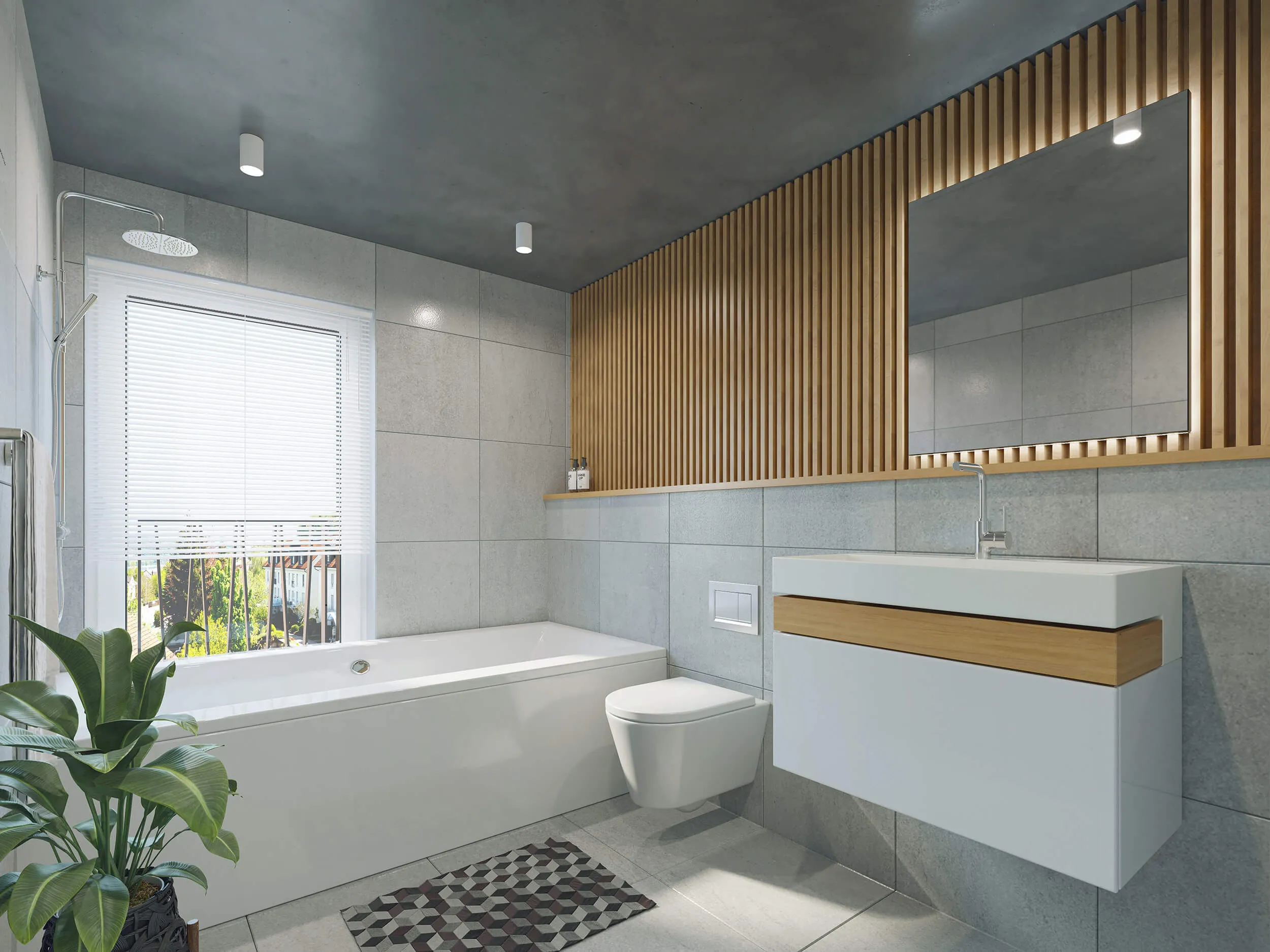
A wet room bathroom is a fully waterproofed room where the shower has no enclosure and water drains from the entire floor. Unlike a standard shower with a defined pan, the whole bathroom floor is the shower floor — sloped, waterproofed, and drained to handle water across the entire surface.
Done correctly, a wet room is one of the most functional and visually clean bathroom configurations available. Done incorrectly, it is an expensive water damage problem. Understanding what separates a well-built wet room from a poorly executed one is the most important thing a homeowner can know before starting the project.
What Makes a Wet Room Different from a Standard Shower
In a conventional bathroom, the shower is a distinct waterproofed zone with a defined pan or base. The rest of the bathroom floor is treated as dry space and waterproofed only where it directly meets the shower or tub surround.
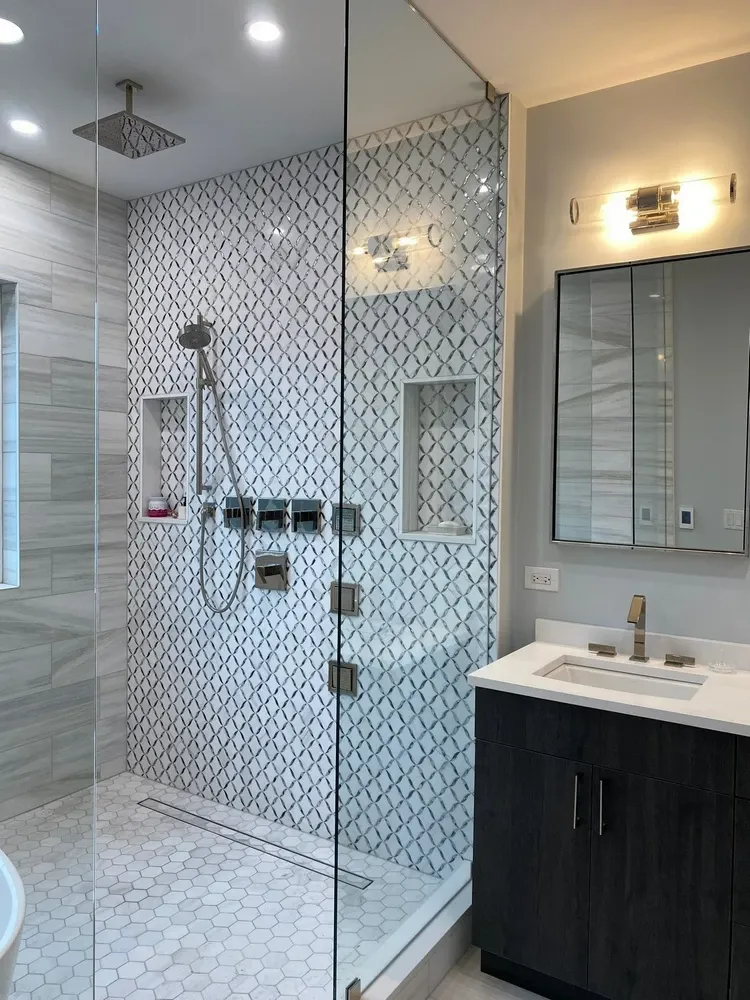
In a wet room, the entire floor — and often the lower portion of all walls — is waterproofed to handle routine water exposure. The shower area flows directly into the rest of the room with no curb, door, or enclosure boundary. A linear drain or center drain handles water from the entire floor area.
This creates several practical differences:
- No door or curtain to maintain or clean
- No step-over threshold — the floor is continuous from outside the bathroom to the shower area
- The entire floor must slope toward the drain, which means the floor is not completely flat anywhere
- Every surface exposed to the shower zone must be waterproofed and tiled with materials suited to continuous water contact
A wet room is not the same as a doorless shower in an otherwise standard bathroom. A doorless shower has a defined footprint with a waterproofed pan; the rest of the bathroom floor is standard. A wet room treats the entire room as a water-exposure zone.
The Structural Assessment Comes First
Before a wet room can be planned in detail, the structure of the existing bathroom needs to be evaluated. Wet rooms require a stable, level subfloor that can support the weight of the waterproofing system, the mortar bed (if used), and large-format tile without flexing.
Subfloor requirements: Wood subfloor systems typically require reinforcement before a wet room is built over them. Deflection — the natural flex in a wood floor — causes tile and grout to crack over time. In most cases, this means adding a second layer of plywood, installing concrete backer board, or using a crack isolation membrane rated for the expected movement. A competent contractor will assess this before committing to a tile specification.
Drain placement: The drain position determines everything about floor slope. In a new build or full gut renovation, the drain can be positioned where it makes the most design sense. In a renovation of an existing bathroom, the drain location is constrained by the existing plumbing stack location — moving it is possible but adds cost. Discuss this with your contractor early and understand what is involved if drain repositioning is on the table.
Ceiling height: Because the floor of a wet room is sloped and sometimes raised slightly to accommodate the drainage system, ceiling height can become a factor in a basement or lower-level bathroom. This is worth checking before the project begins.
Waterproofing: The Most Important Part of the Job
The waterproofing system is the foundation of a wet room. It is also invisible once tile is installed, which means a homeowner has no way to verify it after the fact. This is why contractor selection and communication during this phase matters more than it does in most renovation projects.
Sheet membrane vs. liquid membrane: Two primary systems are used in wet room waterproofing. Sheet membranes (such as Schluter Kerdi or similar products) are pre-formed waterproof sheets adhered to the substrate. Liquid membranes are brush or roller applied and cure to form a continuous waterproof layer. Both work well when installed correctly. Sheet membranes are more predictable in thickness and coverage; liquid membranes require more careful application technique.
Critical failure points: The corners where walls meet the floor, the drain connection, and any penetrations (pipe locations, grab bar anchors) are where wet room waterproofing most commonly fails. These transitions need to be sealed and integrated into the membrane properly. Your contractor should be willing to walk you through how they handle these details before the tile goes down.
Wall waterproofing height: In a wet room where the shower area is adjacent to a freestanding tub or vanity, the waterproofing on the walls should extend at least 6 inches above the height of any expected splash. For a full wet room where the showerhead is not in an enclosed zone, full wall waterproofing to ceiling height in the shower area is appropriate.
Material Selection for Wet Rooms
Not all tile is appropriate for wet room floors. The floor of a wet room needs to meet slip resistance standards because it will be wet regularly.
Slip resistance: The ANSI A137.1 standard uses a Dynamic Coefficient of Friction (DCOF) rating to measure slip resistance. For wet room floors, a DCOF rating of 0.42 or higher is the generally accepted minimum. Polished stone and glazed ceramic tile with smooth surfaces often do not meet this threshold. Matte-finish porcelain, unpolished stone, textured tile, and mosaic tile (where the grout lines add traction) typically meet or exceed it.
Large-format tile on wet room floors: Large tiles (24x24 and larger) are popular in wet rooms because they reduce grout joints and create a cleaner visual. However, they require a very precisely sloped substrate — any variation in slope shows through large tile. They also need full mortar coverage on the back (back-buttering) to prevent hollow spots, which can crack under load or temperature cycling. For a full breakdown of tile choices, finishes, and slip ratings, see our bathroom tile guide.
Wall materials: Large-format porcelain on the walls is the most popular choice. Natural stone (marble, travertine, slate) is beautiful but requires sealing and somewhat more maintenance in a high-moisture environment. Porcelain with a stone-look finish is a practical middle ground.
Grout: Epoxy grout resists moisture, staining, and mold better than standard cement grout. In a wet room, particularly on the floor, the added durability is worth the slightly higher cost.
Ventilation and Humidity Management
A wet room produces more sustained humidity than a standard bathroom because the entire floor is a water surface during use. Adequate ventilation is not optional.
The standard exhaust fan sizing recommendation is 1 CFM per square foot of bathroom area, with a minimum of 50 CFM for any bathroom. For a wet room, particularly one used by multiple people, ventilating toward the higher end of that range is appropriate. The fan should be rated for wet or damp locations and positioned as close to the shower zone as the ceiling layout allows.
A humidity-sensing fan (one that activates automatically when moisture reaches a threshold and runs until humidity drops) is a practical upgrade that ensures the fan actually does its job without requiring someone to remember to turn it on.
Planning a Wet Room: What the Process Looks Like
A wet room renovation involves more pre-construction planning than a standard shower remodel. The sequence matters, and decisions made early have downstream consequences.
- Structural assessment: Subfloor condition, drain location, ceiling height — all evaluated before design is finalized.
- Drain selection and placement: Linear drain along a wall or traditional center drain? This decision affects how the floor is sloped and where tile patterns land.
- Waterproofing specification: Which system, how far it extends, how transitions and penetrations are handled. This should be explicit in the project scope.
- Tile selection: Confirmed against slip resistance ratings and format requirements for the specific substrate.
- Fixture rough-in: Showerhead position, faucet placement, any body spray or rain shower components — all positioned before tile goes down.
- Tile installation, grouting, sealing.
- Fixture trim, glass panels if any, accessories.
Skipping or compressing these stages is where wet room projects go wrong. The waterproofing has to cure before tile is installed. The drain connection has to be tested before the floor is closed. A contractor who wants to move faster than the process allows is a contractor worth questioning.
Delta Remodels handles bathroom remodeling on the North Shore including wet room projects. For a realistic assessment of whether your bathroom is a good candidate for a wet room conversion, visit /contact-us/ or review our broader bathroom work at /bathroom-remodeling/. If accessibility is part of your motivation for a wet room layout, see our accessible bathroom design guide for the standards that apply.
Ready to Start Your Project?
Schedule a free consultation. We bring design ideas, material samples, and honest answers.
Get Free Consultation