




Small Bathroom Remodel Ideas That Actually Make a Difference
A small bathroom can function well and feel spacious — if the design decisions are made deliberately. The mistakes that make small bathrooms frustrating are almost always fixable: wrong fixture scale, poor storage, layouts that create traffic problems, and finish choices that make the room feel smaller than it is.
This covers what actually works in small bathroom remodels, based on projects we have completed on the North Shore.
Layout Changes Worth Making
The single biggest improvement in a small bathroom often has nothing to do with fixtures or tile. It comes from rethinking the layout.
Toilet placement is one of the most overlooked variables. Moving a toilet even 12-18 inches can open up significant usable floor area near the vanity or shower. Before committing to a cosmetic refresh, ask your contractor to look at whether the plumbing rough-in allows for repositioning. The cost of moving a toilet is real, but so is the gain in daily usability.
Tub-to-shower conversion is the most common layout change in small bathrooms. A standard 5-foot alcove tub takes up the full short wall of a small bathroom and rarely gets used as a tub. Converting it to a walk-in shower recovers that volume and makes the room feel substantially larger. The main consideration before converting: if this is the only bathtub in the home and you plan to sell, some buyers factor this in. Worth discussing with a realtor if resale is near-term.
Separate shower and tub combos in modern homes have largely given way to stand-alone enclosed showers. If your bathroom still has the traditional combo, that design approach is dated and inefficient. An enclosed shower area sized to your actual usage patterns is more practical.
Door swing can waste surprising amounts of usable floor space. Switching from a swing door to a pocket door or barn door eliminates the clearance zone and makes the room noticeably more functional. This is a structural change but not a large one.
Fixture Choices That Open Up the Space
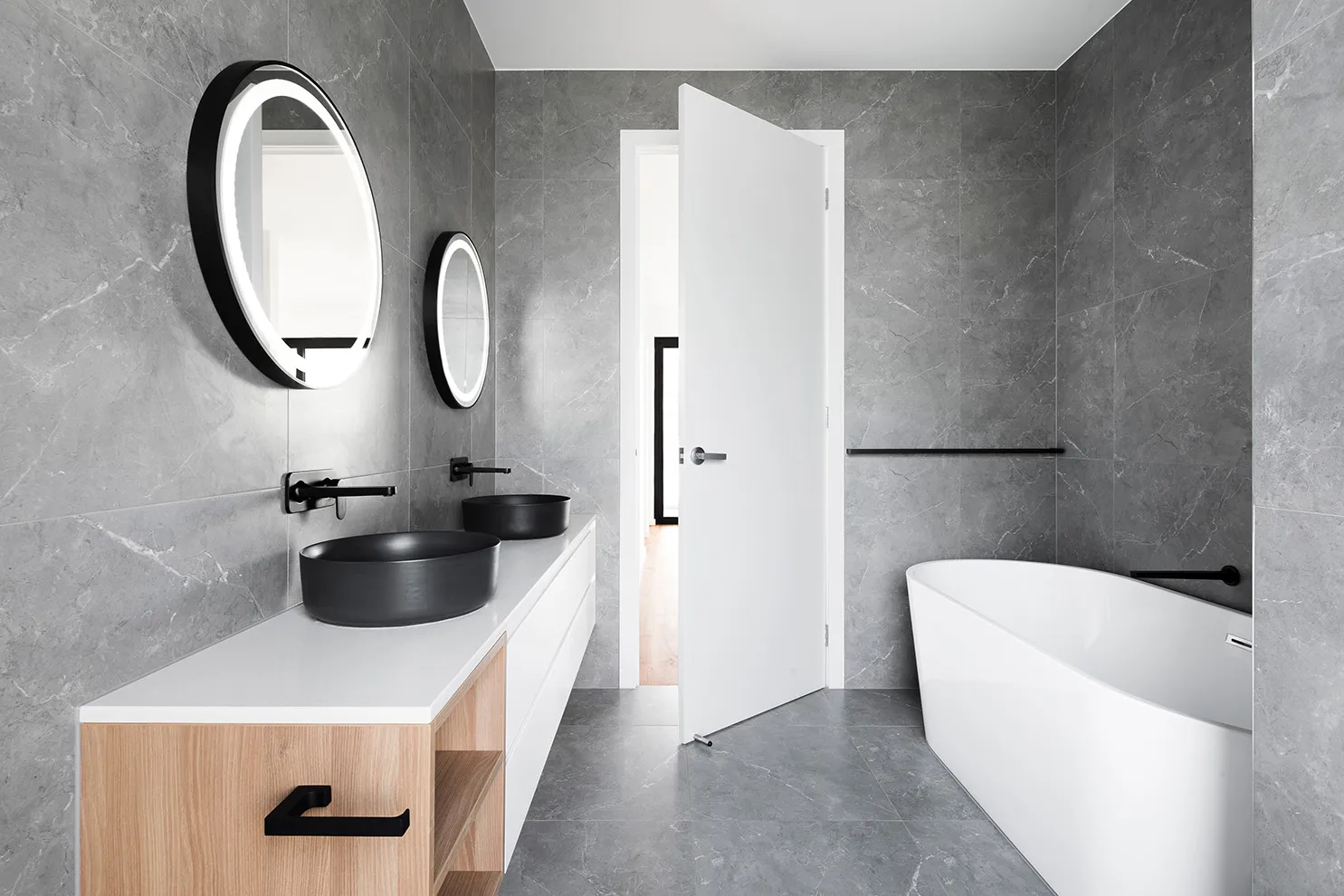
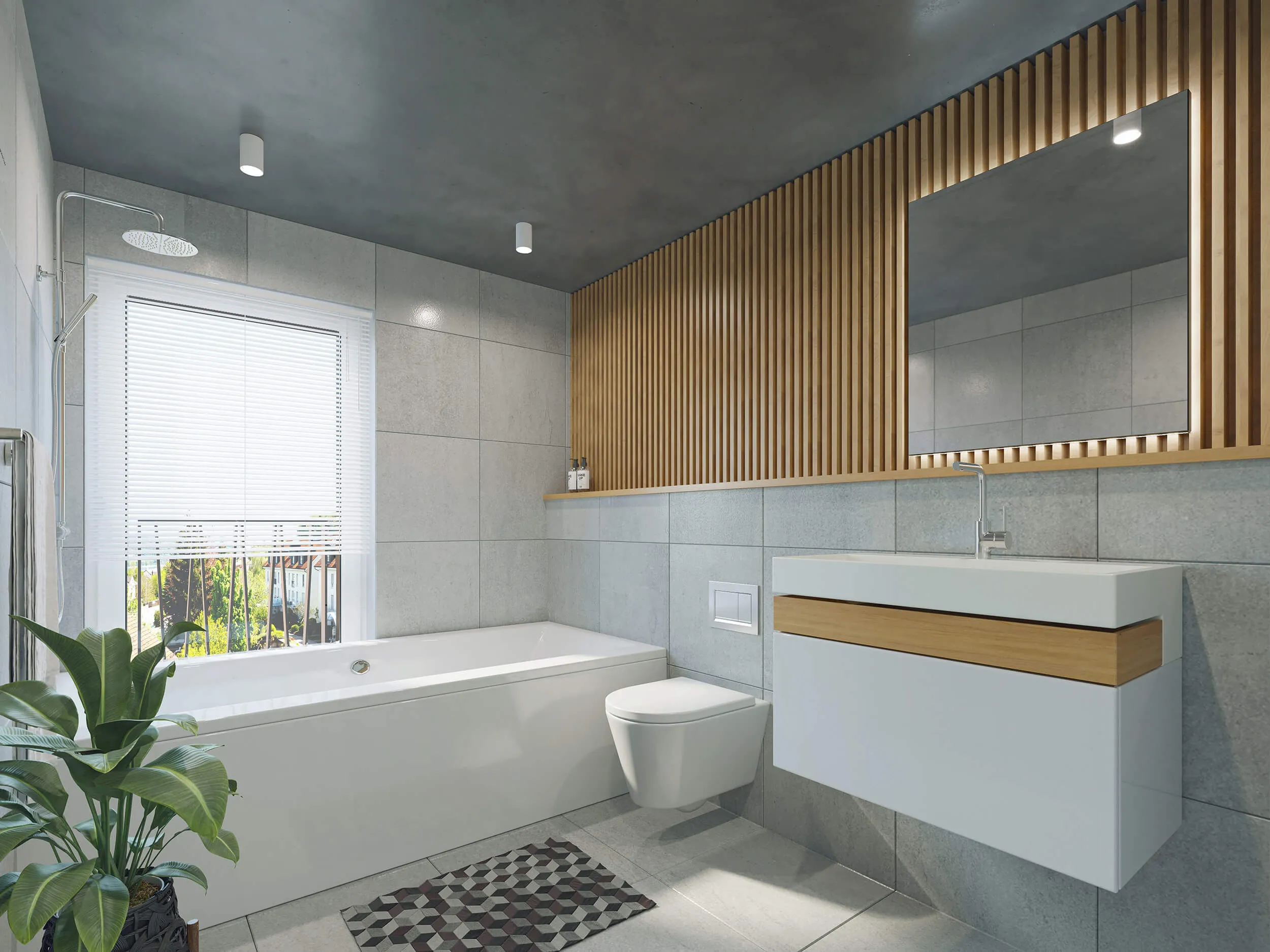
Floating vanities are consistently the right call in small bathrooms. Mounting the vanity to the wall and leaving the floor visible underneath creates the perception of more floor area. It also makes cleaning easier. Floating vanities do require solid blocking in the wall framing — something a good contractor handles at rough-in.
Wall-hung toilets accomplish the same thing. The tank is hidden in the wall, the bowl sits closer to the wall than a floor-mount unit, and the visible floor area increases. Installation cost is higher because of the in-wall tank, but the spatial gain in a tight bathroom is meaningful.
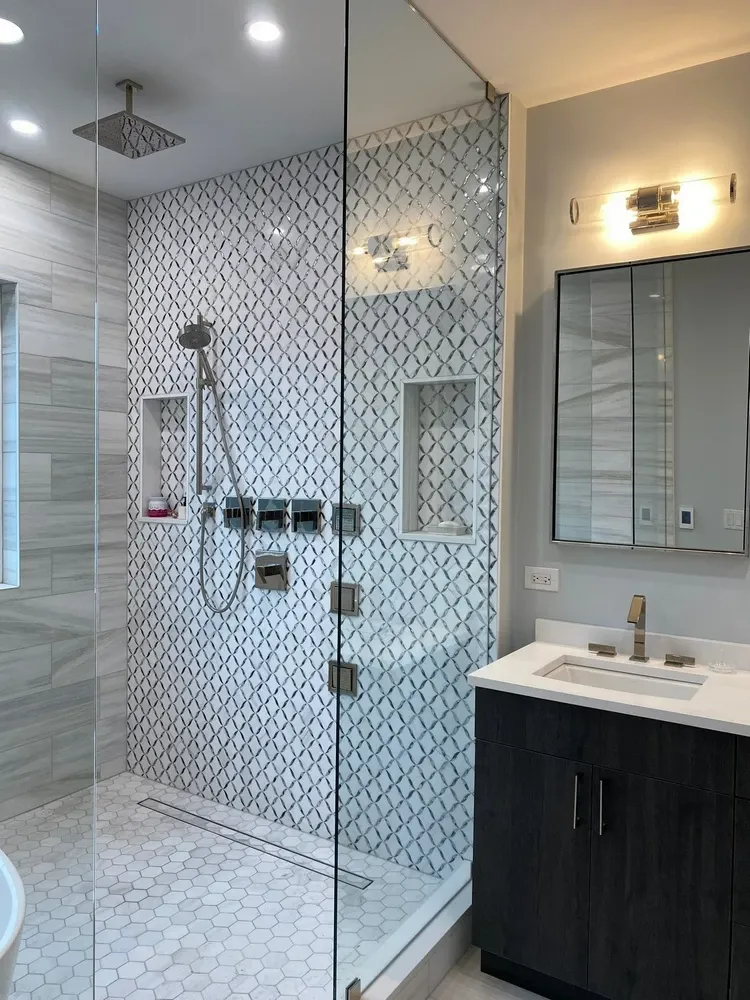
Frameless glass shower enclosures read as visually open rather than as a separate enclosed box. A framed enclosure with thick metal rails draws the eye and segments the room. Frameless glass lets the eye travel through. This is one of the highest-impact visual changes in a small bathroom.
Single-handle faucets and wall-mount fixtures reduce countertop clutter. A wall-mount faucet over a vessel sink is not just a style choice — it frees up vanity surface area.
Storage Without Bulk
The complaint we hear most often about small bathrooms is not enough storage. The solution is rarely adding more surface area — it is using the right kind of storage in the right locations.
Recessed niches in shower walls store shampoo, soap, and accessories without projecting into the shower space. These are framed during rough-in and tiled flush with the wall. Every shower we build includes at least one; larger showers typically get two.
Recessed medicine cabinets do the same thing for vanity storage. A surface-mount cabinet projects into the room. A recessed cabinet sits in the wall and provides the same storage with a much smaller visual footprint.
Vertical shelving uses wall height rather than floor area. Tall, narrow shelving units or built-in cabinetry columns provide substantial storage without eating into the usable floor plan.
Under-vanity storage benefits from a floating vanity with a properly designed cabinet. Open shelving below a floating vanity looks clean but collects clutter quickly. Closed cabinet doors below keep the room looking organized.
Finishes That Make Small Bathrooms Work
Light colors on walls and large-format tile make a room read as larger. This is well-established and worth applying, but it does not mean the bathroom needs to be all-white. Warm neutrals, soft greiges, and toned-down pastels all work. What does not work is dark tile on every surface in an already-tight space.
Consistent flooring material between the bathroom and the shower — the same tile carried from floor into the shower — removes a visual break that segments the space. It is a simple decision that makes a room feel more cohesive and larger.
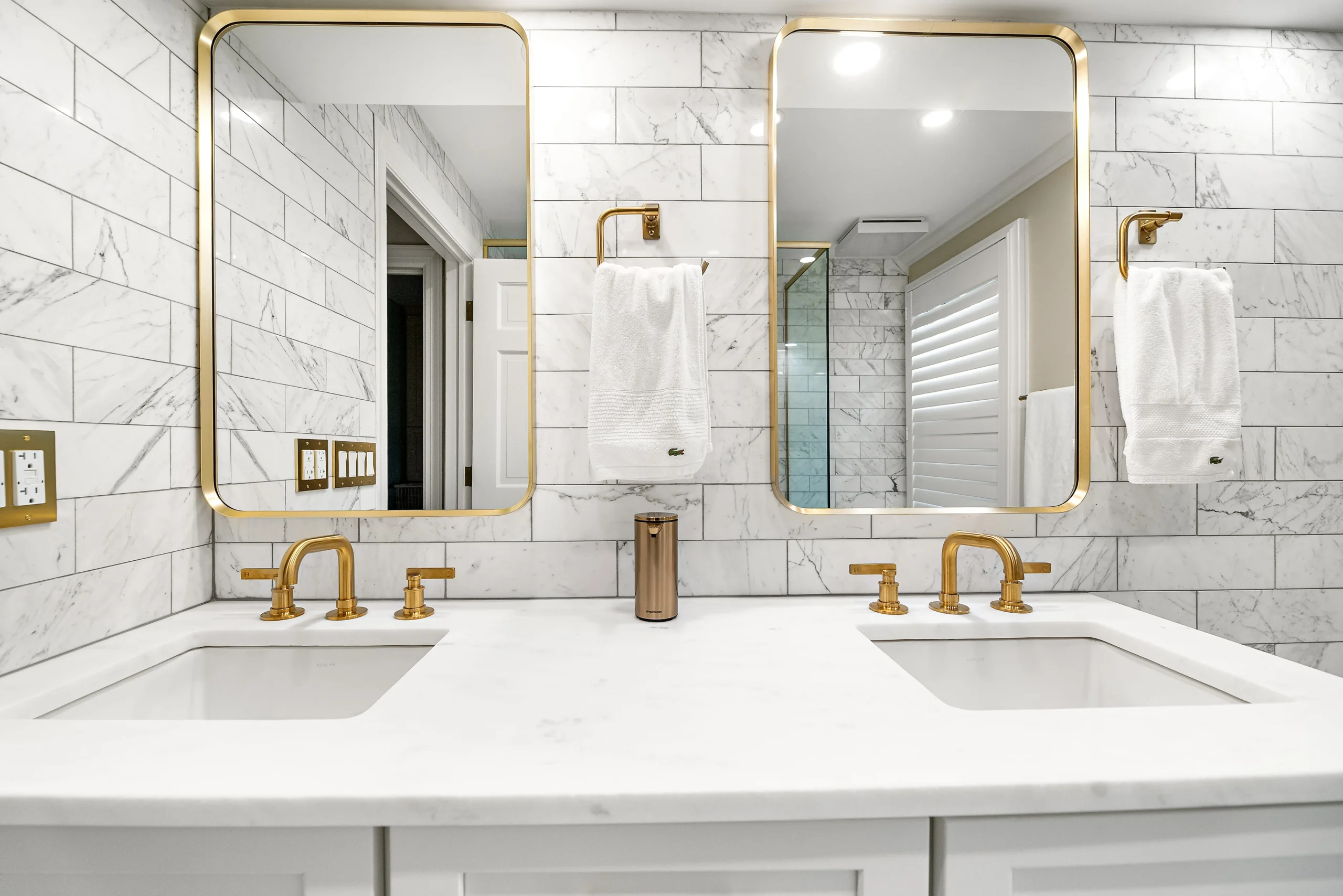
Large mirrors are one of the highest-return investments in a small bathroom. A mirror that spans the full width of the vanity wall, or extends close to ceiling height, reflects light and depth back into the room. A frameless mirror maximizes this effect.
Dimmer switches and layered lighting allow the bathroom to shift from task lighting at the vanity to ambient lighting for a soak. Good lighting design in a small bathroom — vanity lighting at face height, overhead lighting that does not cast shadows — makes the space more functional and more comfortable.
Heated flooring is worth considering in a small bathroom because the cost of the heating element scales with the square footage. In a 45-50 square foot bathroom, adding in-floor radiant heat is a modest incremental cost that has a meaningful daily impact.
What People Actually Dislike About Their Bathrooms
Most small bathroom frustrations fall into a few categories: not enough counter space near the sink, poor lighting that makes grooming difficult, a shower that feels cramped, and no good place to store towels and toiletries. If you are not sure whether your bathroom has reached the point where a remodel makes sense, see our 10 signs it is time to remodel your bathroom guide.
Counter space problems are usually solved by choosing the right vanity, not by making the vanity larger. A well-designed 36-inch floating vanity with a proper medicine cabinet above it provides more functional space than a bulky 48-inch floor-mount cabinet.
Shower size is sometimes a layout constraint, but often a configuration problem. A shower that is 36 inches wide and 36 inches deep is genuinely small. A shower that is 36 inches wide and 60 inches deep is quite comfortable. Elongating a shower in the footprint direction, rather than widening it, is often possible when the tub is removed.
If you are working through what is not functioning in your current bathroom before a remodel, that list becomes the brief for the project. We can help you translate that list into a realistic scope and budget. Our bathroom remodel budget guide covers what different scopes typically cost, and our bathroom tile guide can help you think through finish choices.
For more on planning your project, visit our bathroom remodeling service page or contact us to schedule a consultation.
Delta Remodels serves Lake Forest, Highland Park, Northbrook, Winnetka, Glencoe, and surrounding North Shore communities.
Ready to Start Your Project?
Schedule a free consultation. We bring design ideas, material samples, and honest answers.
Get Free Consultation