




Organic Bathroom Design: Natural Materials, Warm Textures, and Calm Spaces
Organic bathroom design creates spaces that feel calm and grounded by using natural materials, warm tones, and details that reference the natural world - without requiring reclaimed wood or pebble walls. It sits on a spectrum with luxury bathroom remodels and spa bathroom design — overlapping in some choices and diverging in others.
The style has become more common in North Shore remodels because it works well with the traditional architecture of the area while producing bathrooms that feel modern. It’s not a single aesthetic - it ranges from subtle (warm-toned tile, wood accents, matte fixtures) to fully committed (stone surfaces, live-edge elements, large-format natural tile throughout) - but the underlying approach is consistent: materials that have texture and warmth, tones that don’t feel clinical, and a layout that feels deliberate rather than assembled.
A recent Delta Remodels master bathroom project illustrates how these decisions work together in a real space.
Materials: What Creates the Organic Feel
The organic quality in a bathroom comes primarily from materials. The specific choices that work:
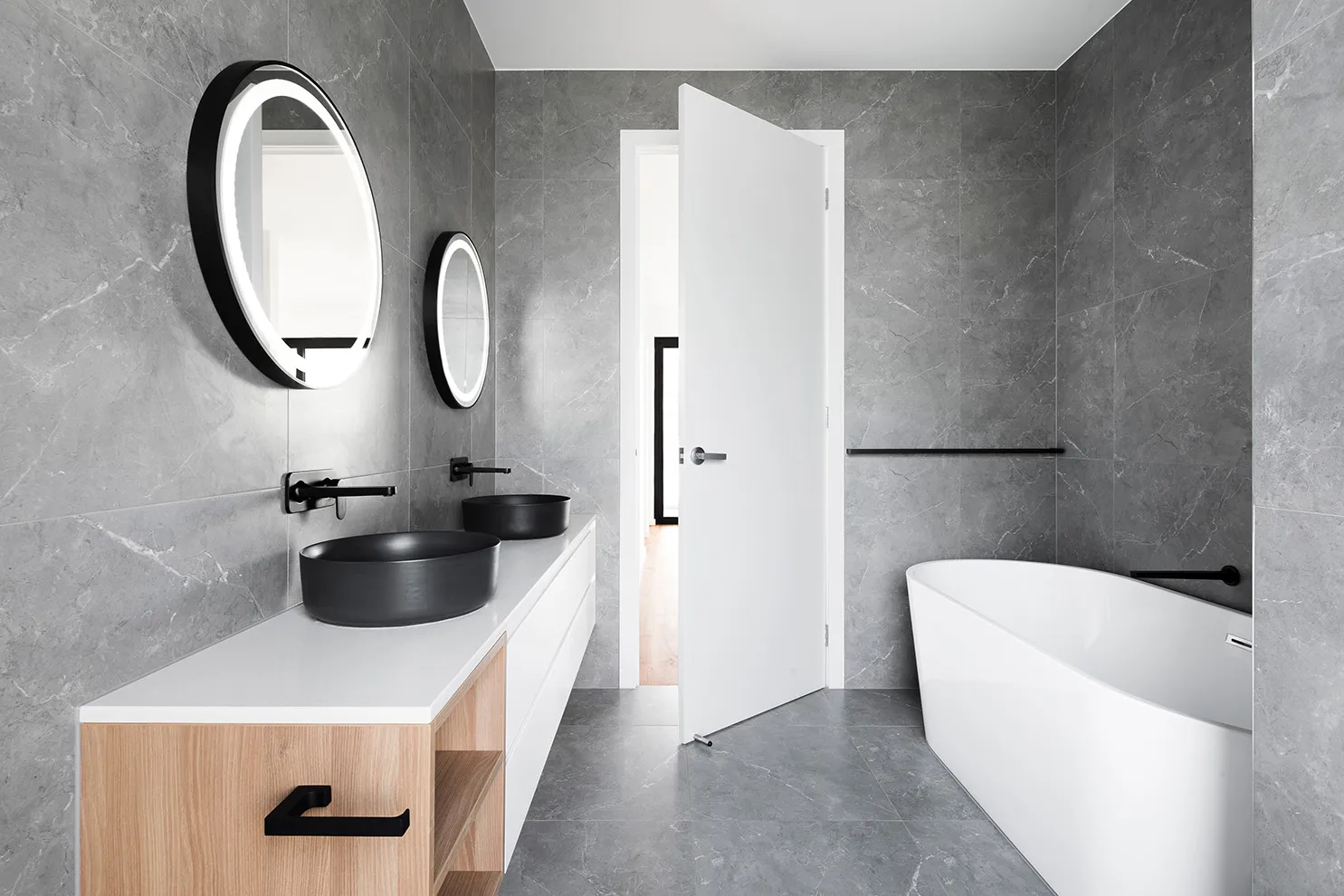
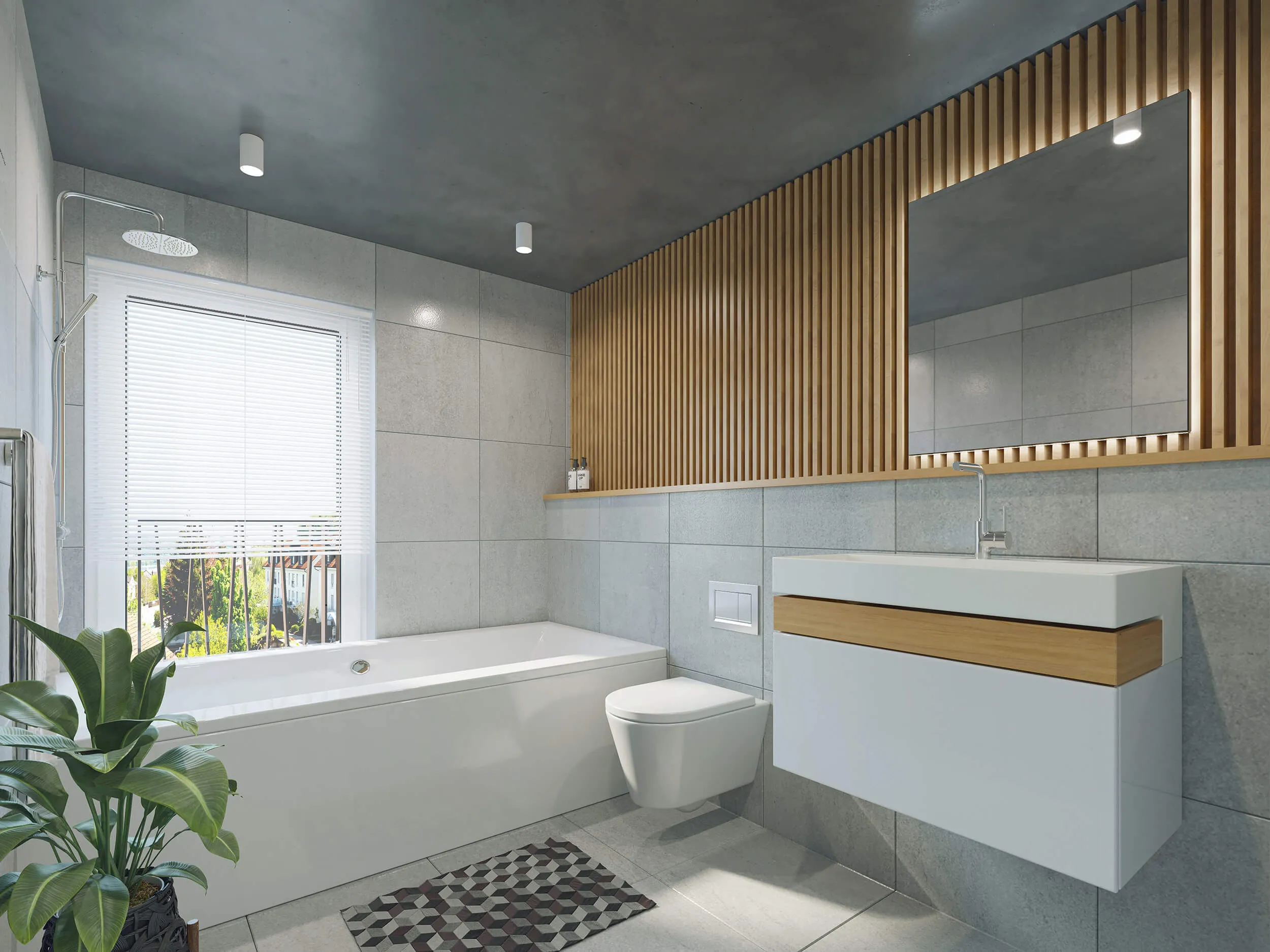
Large-format tile - 24x24 inches or larger, in stone-look or natural stone finishes - produces a clean, contemporary surface with minimal grout lines. Less grout means less visual interruption and a more continuous look. Stone-look porcelain in warm grays, sandstone, and warm white is practical (durable, easier to maintain than actual stone) while achieving the organic aesthetic. The scale of the tile also helps smaller bathrooms feel more spacious. Our bathroom tile guide covers format selection, material trade-offs, and grout considerations in more detail.
Natural stone accents - marble, travertine, or slate used selectively rather than throughout - add the texture and variation that manufactured tile can’t fully replicate. A stone shower bench, a stone-surfaced niche, or a stone vanity top brings natural material into the space without the full maintenance commitment of stone throughout.
Wood elements - teak shower benches, wood vanity panels or frames, wood-look tile on specific surfaces - introduce warmth that tile alone doesn’t provide. Wood in wet areas requires appropriate species selection and sealing. Teak is commonly used in shower environments because of its natural oil content. Wood-look tile provides the visual warmth with none of the moisture management concerns.
Matte and honed finishes on tile, fixtures, and hardware suit organic design better than high-gloss and polished finishes. Matte tile absorbs light rather than reflecting it, which creates a softer quality in the space. Honed stone, matte black hardware, and brushed metal fixtures work together without creating the reflective, shiny quality that reads as more traditional or contemporary bathroom design.
The Recent Project: How These Elements Work Together
In the master bathroom Delta Remodels recently completed in organic style, several elements combined to achieve the overall effect:
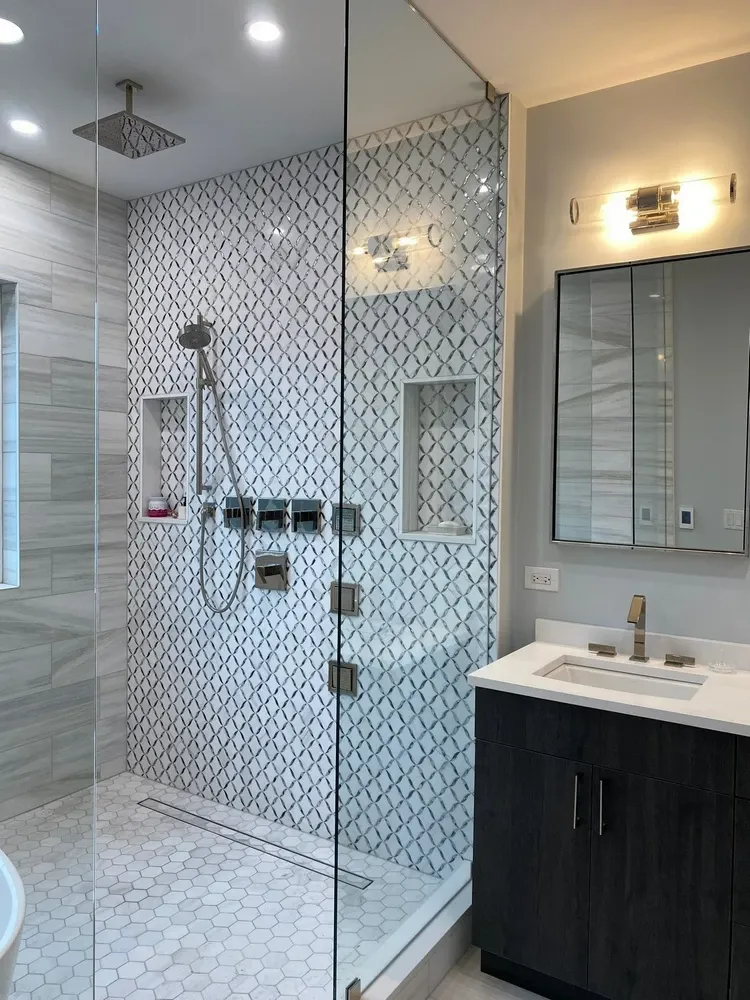
Large-format tile throughout the floor and shower walls created visual continuity and kept the space feeling open despite its square footage. The neutral tone of the tile - a warm, slightly textured stone-look porcelain - established the baseline for everything else.
A heated floor system under the tile provides thermal comfort that’s particularly valuable in a bathroom. Radiant floor heating distributes heat evenly across the slab surface, which means the floor is warm to the touch without relying on forced-air heating that can feel abrupt. In a bathroom used daily during cold Chicago-area winters, this is a functional upgrade that pays for itself in daily comfort.
A steam feature in the shower converts the shower enclosure into a steam room. Steam generators are compact units that mount outside the shower enclosure; the steam outlet nozzle mounts in the shower wall. For the steam function to work effectively, the shower enclosure needs to be properly sealed - a frameless glass enclosure with well-sealed joints is the standard approach. The steam feature is one of the clearest ways a master bathroom crosses from functional to genuinely restorative.
A built-in shower bench serves both functional and aesthetic purposes. Functionally, it provides a seating surface for showering, steam sessions, or simply setting items. Aesthetically, a tile-wrapped or stone-surfaced bench reads as part of the architecture of the shower rather than an add-on. A built-in bench sized appropriately - deep enough to sit on comfortably, low enough not to obstruct the shower space - is different in feel from a small fold-down bench installed as an afterthought.
Together, these elements create a bathroom that functions as both a daily-use space and a place to decompress - the combination that makes a well-designed master bathroom genuinely useful rather than merely presentable.
Fixtures and Hardware: Finishes That Reinforce the Organic Approach
Fixture and hardware finish selection has a larger effect on overall bathroom character than most homeowners expect. In organic design, certain finishes reinforce the aesthetic and others work against it:
Matte black is versatile and works in organic bathrooms with dark or contrasting tile. It reads as modern without the coldness of polished chrome.
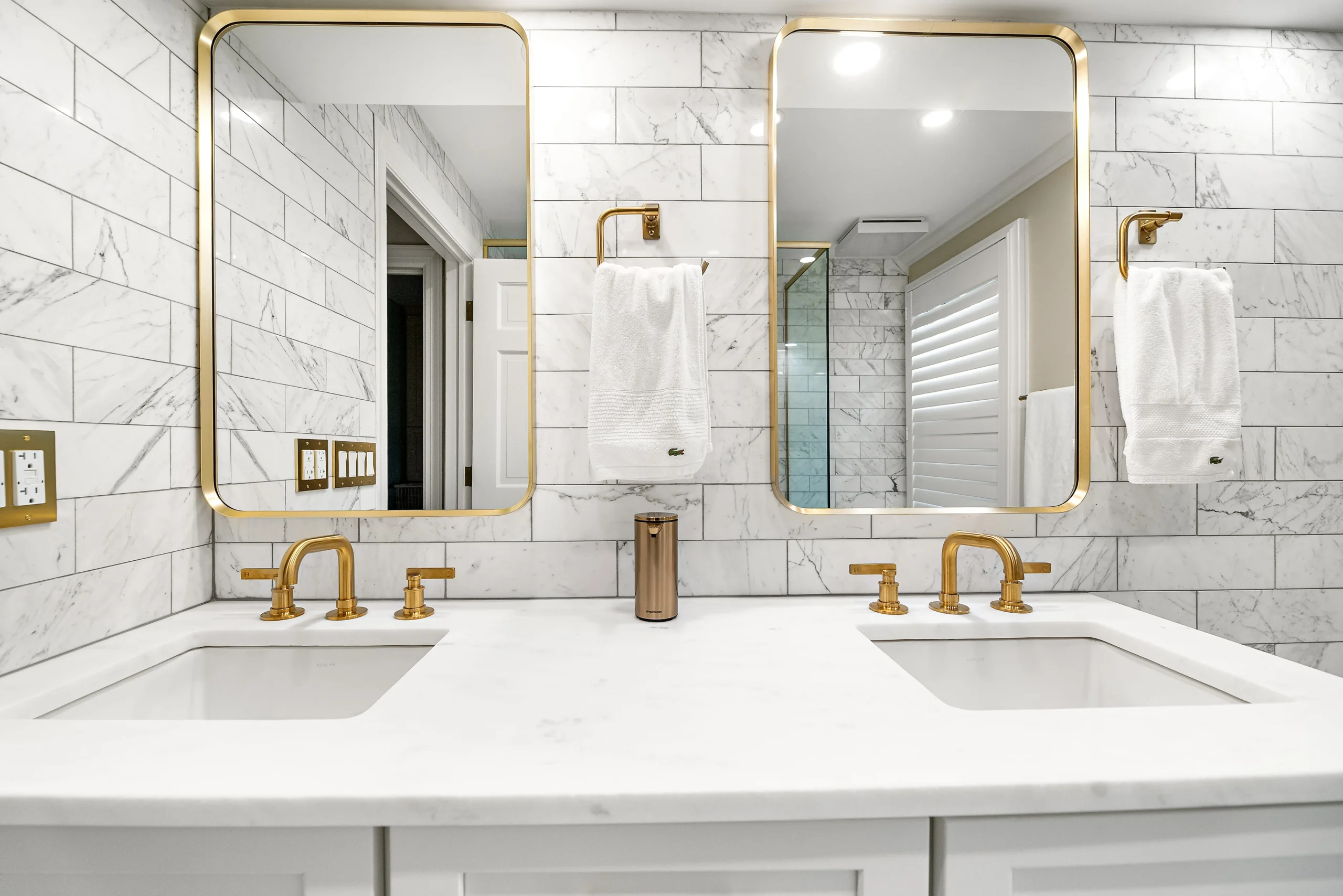
Brushed brass and unlacquered brass add warmth that suits the earthy, natural-material direction of organic design. Unlacquered brass develops a patina over time - some homeowners find this character; others prefer the consistency of brushed brass, which is more stable in appearance.
Brushed nickel is neutral and complements most tile choices. It doesn’t add warmth the way brass does but doesn’t work against organic palettes the way polished chrome can.
Polished chrome tends to conflict with the organic aesthetic - its reflectivity and precision have a different visual character than the matte, textured surfaces that define the style. This doesn’t mean it can’t work, but it requires more deliberate coordination.
The fixture selections that have the most visual impact are the shower head and hand shower, the faucets, and the towel bars. These don’t need to match exactly, but they should share a finish family - mixing warm and cool metals typically reads as uncoordinated rather than intentional.
Lighting in an Organic Bathroom
Lighting in an organic bathroom should feel warm and adjustable rather than bright and fixed. The approaches that work:
Recessed lighting on a dimmer gives flexibility for different times of day. Full brightness for getting ready in the morning; lower levels for a steam session or evening bath.
Backlit mirrors or LED mirror fixtures provide even, flattering light for the vanity area. Mirrors with integrated LED lighting avoid the shadows that wall-mounted sconces can create in certain positions.
Natural light should be maximized where possible. A skylight in a master bathroom - even a small fixed skylight - produces a quality of light that artificial sources can’t replicate. If the bathroom is on the second floor or below an attic, a tubular skylight is a lower-cost option that brings daylight in without a full structural opening.
Warm-temperature LEDs (2700K to 3000K) suit organic bathrooms better than cooler, whiter bulbs. The warm tone complements natural materials and creates a bathroom that feels like a retreat rather than a clinical space.
What an Organic Bathroom Remodel Requires From the Contractor
The materials and details that define organic bathroom design require more precise installation than standard tile work. Large-format tile requires more careful substrate preparation - deflection and flatness tolerances are tighter for large tiles than for smaller ones. Steam systems require completely sealed enclosures to work properly and to prevent moisture damage to the surrounding structure. Heated floor systems need to be planned before flooring is installed, not afterward.
This is work that requires a contractor with specific experience in these systems and materials. Ask to see completed projects and confirm that the contractor has installed steam generators and radiant floor systems before - these are not standard work that any tile installer can approach without prior experience.
If you’re planning a master bathroom remodel on the North Shore and want to discuss an organic or spa-influenced direction, contact Delta Remodels to schedule a consultation. We serve Lake Forest, Highland Park, Winnetka, Glencoe, Northbrook, and surrounding communities. See our full bathroom remodeling services for more information.
Ready to Start Your Project?
Schedule a free consultation. We bring design ideas, material samples, and honest answers.
Get Free Consultation