




Doorless Showers: Pros, Cons, and What Your Contractor Should Tell You
A doorless shower works well when it is sized and designed correctly. When it is not, you end up with water on the bathroom floor, a cold showering experience, and a renovation you wish you had thought through more carefully.
This post covers the practical side of doorless shower design: what size you actually need, where water goes, the real trade-offs, and when the investment makes sense. If you are considering one for a bathroom remodel on the North Shore, these are the questions worth answering before you commit to the layout.
What a Doorless Shower Actually Is
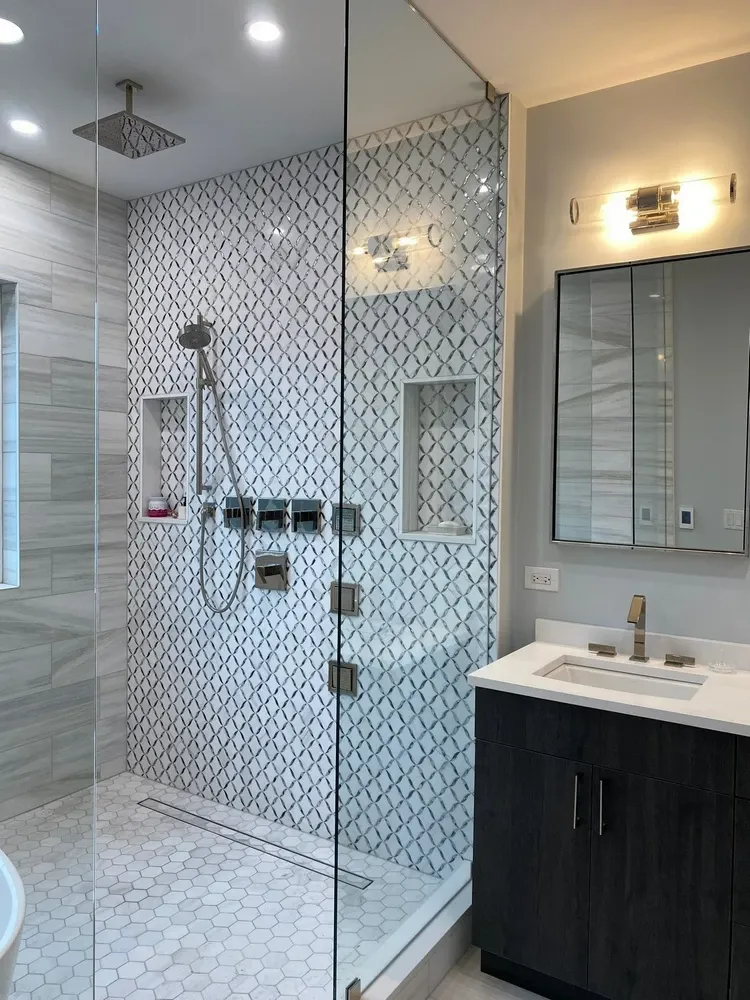
A doorless shower — sometimes called a walk-in shower or an open shower — is a shower enclosure with no door or curtain across the entry. The opening is typically protected by a partial glass panel, a low knee wall, or simply designed with enough depth that water does not reach the opening under normal use.
There is a range of configurations:
- Open entry with glass panel: A fixed glass panel on one or two sides contains splash while leaving the entry completely open. This is the most common luxury bathroom approach.
- Partial knee wall: A tiled half-wall at the entry provides some privacy and contains water without a full glass enclosure.
- Corner walk-in: The shower is positioned in a corner so two walls naturally contain water, with an open entry facing into the room. This is often the most space-efficient approach.
The key distinction from a regular shower is the absence of a door and the design attention paid to water containment through positioning, floor slope, and sometimes a linear drain configuration.
What Size Does a Doorless Shower Actually Need?
This is where a lot of homeowners get into trouble. Building codes require a minimum shower stall size of 36 by 36 inches, but that minimum is for enclosed showers. A doorless shower needs to be meaningfully larger to function correctly.
Why size matters more for doorless showers: Without a door to contain steam and splash, the shower must be deep enough that normal use — turning, rinsing, moving the showerhead — does not send water past the opening. The standard minimum for a well-functioning doorless shower is approximately 36 inches wide by 48 inches deep, with many working better at 42 by 60 or larger.
The 36-inch entry rule: The open entry of a doorless shower is typically a minimum of 24 inches wide. Wider entries (36 to 42 inches) are appropriate for accessibility purposes and are often required when designing for aging-in-place or wheelchair access. ANSI A117.1 sets out the dimensional requirements for accessible shower compartments if accessibility is a factor in your project.
Corner positioning: Positioning your doorless shower in a corner of the bathroom is the most efficient way to work with limited space. Two walls naturally contain water and the entry faces into the room. A well-positioned corner doorless shower can function in a smaller footprint than a freestanding open shower.
If you are remodeling an existing bathroom without expanding the footprint, be honest with your contractor about whether the space can genuinely support a doorless configuration. An undersized doorless shower almost always leads to wet bathroom floors.
Drainage and Waterproofing Requirements
A doorless shower requires more careful drainage design than an enclosed shower. The floor slope has to direct all water to the drain before it can migrate toward the open entry, which means both the slope angle and drain placement matter more.
Linear drains: A linear drain positioned along the wall opposite or adjacent to the entry is common in doorless shower designs. It handles water efficiently and allows for a large-format tile floor with minimal interruption — there is no center-drain medallion cutting through the tile pattern. Linear drains sit flush with the tile surface and are more visually clean. The same drainage approach is used in wet room designs, where the entire bathroom floor is waterproofed and drains as a single wet zone.
Floor slope: ICC/IRC building codes require a minimum slope of 1/4 inch per foot toward the drain. For a doorless shower, your contractor may specify a slightly steeper slope near the entry to ensure water moves away from the opening.
Waterproofing membrane: The shower pan and walls require a waterproofing membrane behind the tile regardless of shower type, but in a doorless shower with a wider splash zone, the membrane sometimes extends further onto the adjacent floor. Delta Remodels treats this as a non-negotiable quality step — membrane failures are the most common source of bathroom water damage, and they are not visible until the damage has already happened.
The Honest Pros and Cons
What works well about a doorless shower:
- No door to clean, track to scrub, or hardware to replace
- Genuinely easier access for people with mobility limitations — no step-over threshold and no door to negotiate
- Better sightlines into the shower, which makes the bathroom feel more open
- A large, well-lit doorless shower with good tile work is visually strong and photographs well
- Natural light from a window in or adjacent to the shower reaches the entire space without a door blocking it
What does not work well:
- Without a door to seal in steam, a doorless shower does not retain heat the same way an enclosed shower does. In winter, this is noticeable. If you run cold in the morning, this matters.
- Privacy is reduced compared to a fully enclosed shower. For a shared bathroom, this may be relevant.
- If you have household members who use the shower at different temperatures or spray settings, the lack of containment means water can travel further.
- A doorless shower generally costs more to build correctly than an enclosed shower of the same size, because the tile work, drainage, and waterproofing all have to be executed precisely.
The resale value question: A doorless shower in a well-executed master bathroom remodel reads as a premium feature to most buyers. A small doorless shower that replaced a bathtub in the only full bathroom in a house is a different calculation — many buyers with young children specifically want a tub in at least one bathroom. If you are replacing your only tub, discuss the resale implications with your contractor before proceeding.
Is a Doorless Shower Right for Your Bathroom?
A doorless shower makes the most sense when:
- The bathroom has the square footage to support a proper-sized enclosure (at least 36x48, ideally larger)
- The shower is in a master bathroom where it will not be the household’s primary tub-or-shower choice for younger children
- Accessibility is a factor — doorless designs accommodate mobility aids and aging-in-place needs better than any other configuration (see our guide to handicap shower conversions for what an accessible configuration requires)
- The overall bathroom renovation includes quality tile work and drainage design that gives the open shower a finished, intentional look
It makes less sense when:
- The bathroom is small and accommodating a properly sized doorless shower would require significant layout changes
- You are remodeling your only full bathroom and replacing the tub
- You or your household members prefer a steam-retaining shower experience
For North Shore homeowners considering this as part of a full bathroom remodel, the /bathroom-remodeling/ page covers our work in more detail. If accessibility is the primary driver — whether for aging in place or for a household member with a disability — also read our accessible bathroom design guide for the specific dimensional and safety standards that apply.
Contact Delta Remodels if you want to discuss whether your bathroom layout can support a doorless shower. We will look at the actual floor plan and give you an honest answer, including what it would take structurally to make it work correctly.
Ready to Start Your Project?
Schedule a free consultation. We bring design ideas, material samples, and honest answers.
Get Free Consultation