




Kitchen Remodel Design Guide: Layout, Materials, and What to Prioritize
A successful kitchen remodel comes down to three things: a layout that supports how you actually cook, materials that hold up to daily use, and a budget prioritized around function before aesthetics.
Most homeowners approach a kitchen remodel backwards - they start with a Pinterest board and work toward a budget. That approach produces beautiful-looking kitchens that don’t work well. The better approach is to start with layout and workflow, lock in the structural decisions, then make material selections within what’s left of the budget.
This guide covers each major decision in the order you should make it.
Start With Layout: Workflow Before Everything Else
Kitchen layout determines how the space functions day-to-day. No amount of beautiful cabinetry fixes a bad layout. The core principle is the work triangle - the relationship between the sink, range, and refrigerator. These three points should form a compact triangle with no major traffic paths running through it.
Common layout options and when each works:
Galley (corridor) kitchens are efficient for one cook because everything is within a few steps. They struggle with two cooks working simultaneously and can feel narrow if the corridor is under 42 inches wide. NKBA guidelines recommend a minimum 42-inch clearance for single-cook kitchens and 48 inches where two cooks will work at the same time.
L-shaped layouts work well in open-plan homes because they leave one or two walls open for dining or living areas. The corner can be a storage challenge (see cabinet options below), but the layout is versatile for most family sizes.
U-shaped kitchens maximize counter and cabinet space by using three walls. They work best in larger kitchens; in smaller spaces, a U-shape can feel enclosed. This layout is excellent for serious cooks who want dedicated prep, cooking, and cleanup zones.
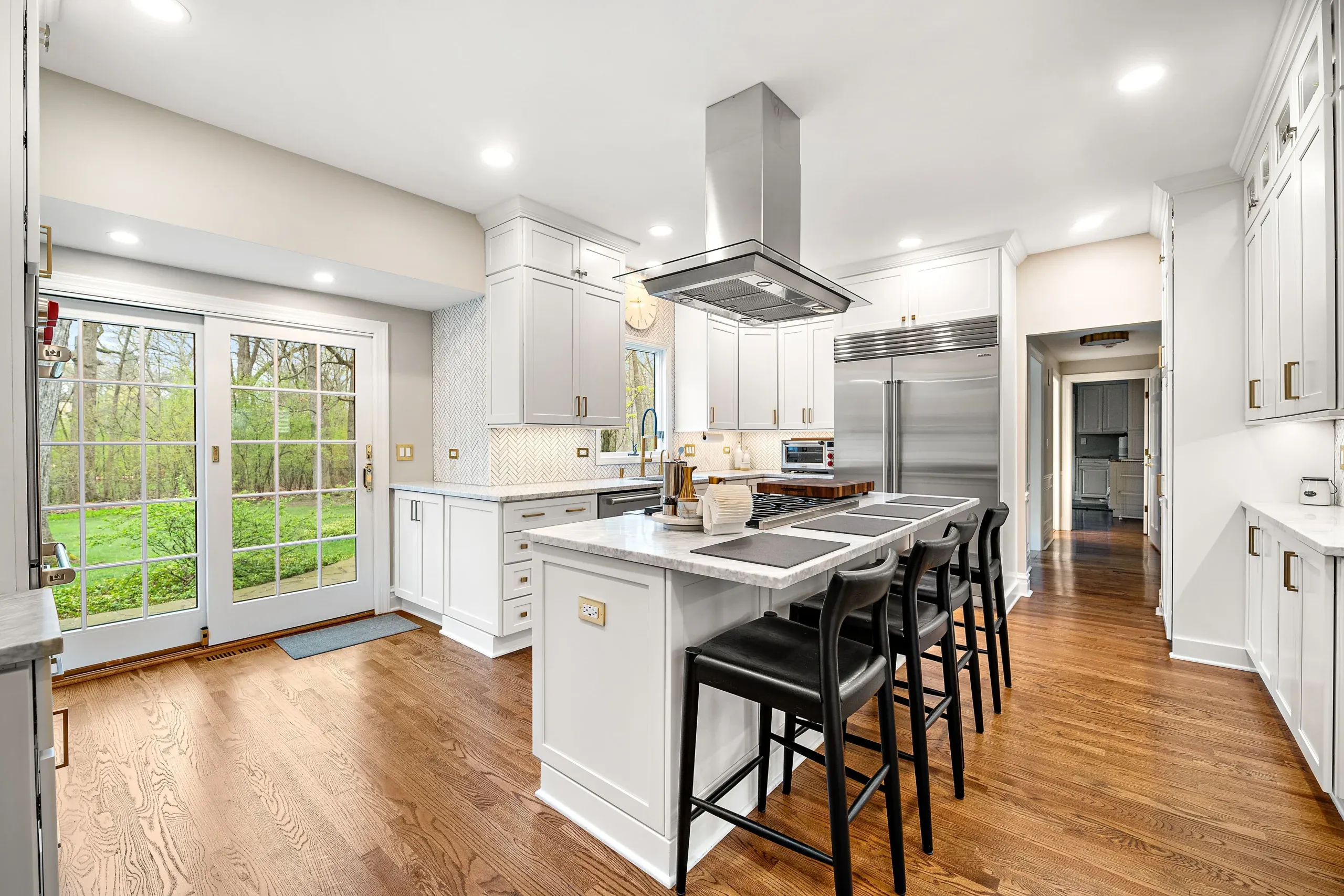
Islands and peninsulas add counter space, storage, and seating, but they require adequate clearance on all working sides. Plan for at least 42 to 48 inches between the island and any adjacent cabinets or appliances. An island that leaves insufficient clearance creates more problems than it solves.
If you’re opening walls or relocating plumbing as part of your remodel, this is when to make those decisions - not after cabinets are specified.
Cabinet Choices: Quality and Configuration Matter More Than Style
Cabinets consume a significant portion of any kitchen budget and are the most visible element of the finished space. If you’re working with existing cabinets, our guide to kitchen cabinet remodel ideas covers update options that avoid full replacement. For new cabinet installations, there are three tiers to choose from:
Stock cabinets come in fixed sizes and limited configurations. They’re the lowest-cost option but require filler strips and may not fit your space efficiently. Configuration options are limited to what the manufacturer produces.
Semi-custom cabinets are built in more size increments and offer a wider range of interior configurations - pull-out trays, built-in organizers, specific drawer depths. They fit most kitchens well and represent good value for most remodel budgets.
Custom cabinets are built to exact specifications. They’re the right choice when the space has unusual dimensions, when specific interior configurations are required, or when a distinct design direction isn’t achievable with semi-custom options. They cost significantly more but eliminate the compromises that come with standard sizing.
Wood species and door style affect cost and appearance, but the box construction quality matters more for longevity. Plywood box construction holds screws better and resists moisture better than particleboard. For kitchens in particular, this distinction matters over time.
For hardware, soft-close hinges and drawer slides are worth the incremental cost. They protect cabinet interiors and are the detail that most distinguishes a well-built kitchen from a basic one.
Countertops: Matching Material to How You Cook
Countertop choice depends on how you use the kitchen. There’s no single best material - there are materials that fit certain habits and trade-offs that fit certain budgets.
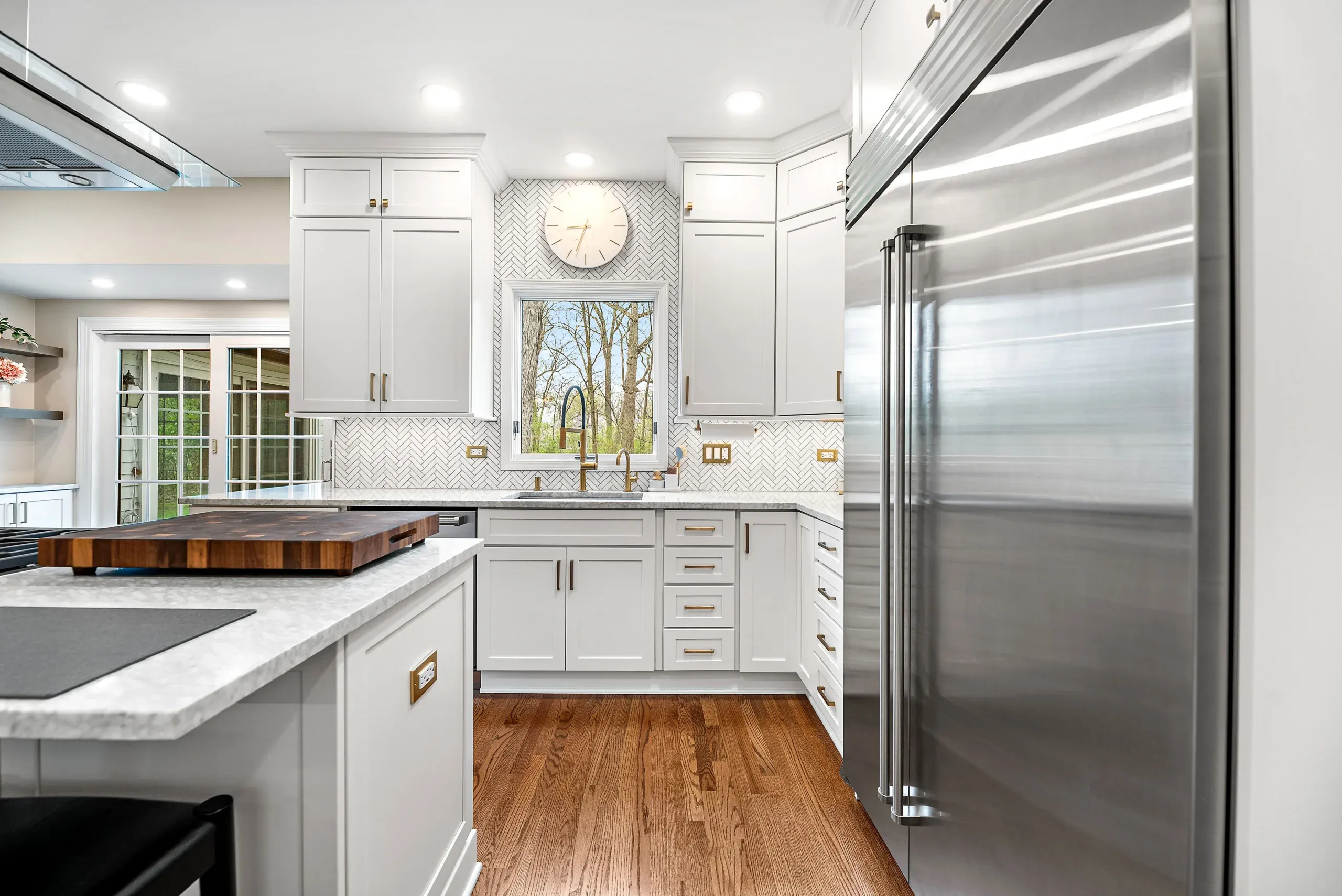
Quartz (engineered stone) is the most practical choice for most households. It’s non-porous, doesn’t require sealing, resists staining, and is consistent in appearance because it’s manufactured rather than quarried. For a detailed look at colors, patterns, and edge profiles, see our quartz countertop design guide. It won’t tolerate high heat directly from pans, but in daily use it holds up well. It’s available in hundreds of colors and patterns including convincing marble looks.
Granite is a natural stone with visible variation between slabs. It requires periodic sealing to prevent staining and is more porous than quartz, but it’s extremely hard and heat-tolerant. Many homeowners prefer the natural variation that comes with stone.
Marble looks like nothing else, but it’s soft and porous. It etches from acidic foods and liquids (citrus, wine, vinegar) and stains more readily than granite. Marble in a working kitchen requires acceptance of patina developing over time. Some homeowners love this; others find it frustrating.
Butcher block adds warmth and is a good work surface near a prep zone. It requires oiling and is susceptible to water damage near sinks. It works well as an accent surface alongside stone or quartz rather than as the primary countertop throughout.
Edge profiles affect the final look. An eased or beveled edge suits modern kitchens. Ogee and cove profiles fit more traditional designs. Mitered edges - where the countertop material continues vertically on the face - create a thick, contemporary look without the weight or cost of a genuinely thick slab.
Cabinetry Style and Finish: What Holds Up and What Dates
Cabinet door style is largely a style decision, but it has practical implications too:
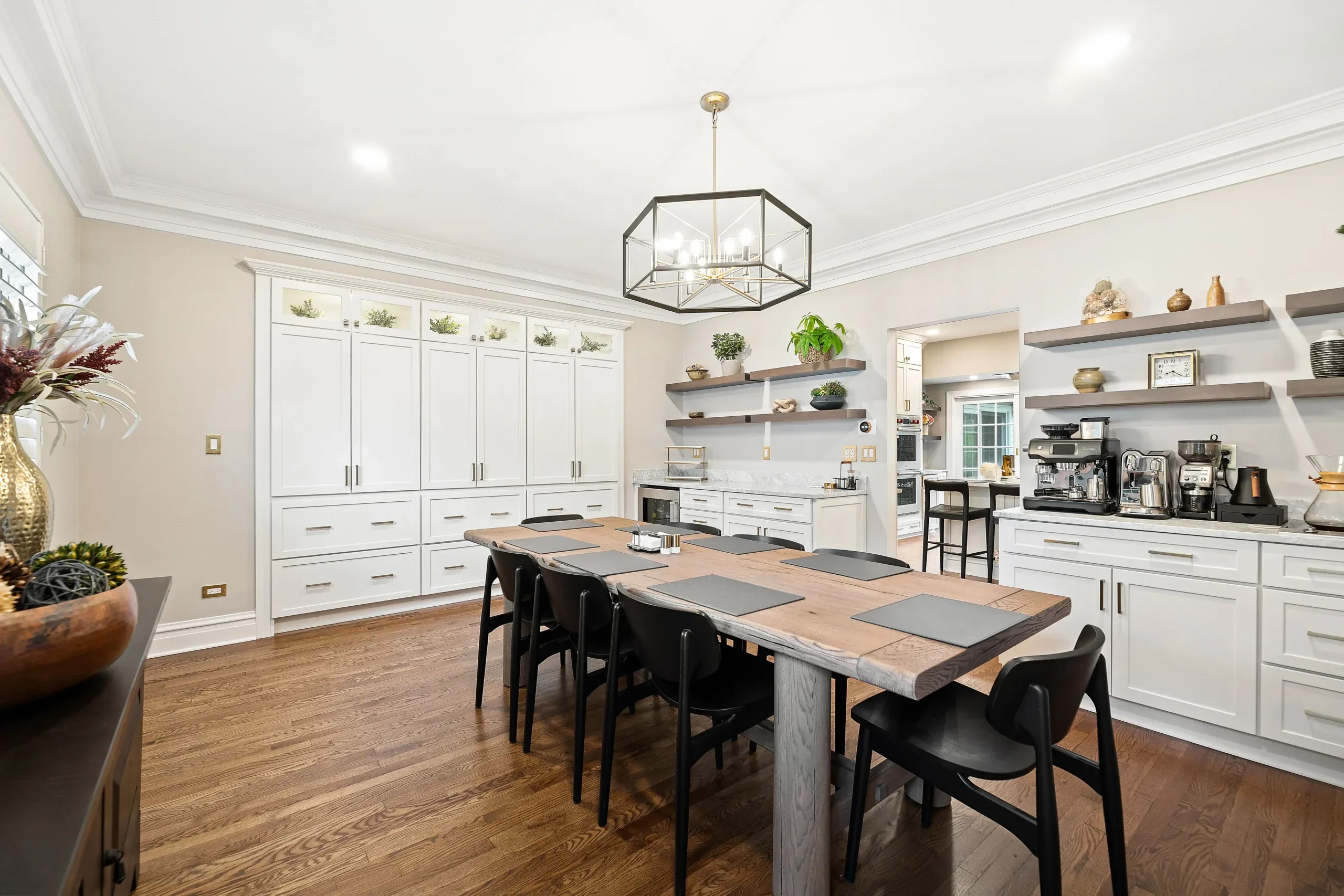
Shaker-style doors (recessed flat center panel with a simple frame) are the most versatile option. They work in both contemporary and traditional kitchens, are easy to clean because there’s no ornate detail to trap grease, and have enough visual interest to avoid looking institutional.
Flat-panel (slab) doors are the contemporary choice. Cleaner-looking, easier to wipe down, but require more precise installation because there’s no frame detail to hide minor misalignment.
Raised-panel doors are the traditional option. They have more visual depth and suit homes with traditional architectural details, but are harder to keep clean around the panel edges.
For finish, painted cabinets (whites, off-whites, soft grays, navy) and wood stains both have long track records. Paint shows wear at edges over time; stained wood conceals minor scratches better. Both are valid choices depending on the kitchen’s design direction.
Glass door inserts in upper cabinets - whether clear, frosted, or ribbed - add visual interest and help upper cabinets feel less heavy in a small space. They require consistent organization of whatever’s visible behind them.
Lighting: Three Layers That Every Kitchen Needs
Lighting in kitchens serves three distinct purposes, and a well-designed kitchen addresses all three:
Ambient lighting illuminates the overall space. Recessed can lights on a dimmer are the standard approach. Position them so they don’t create shadows over the primary work areas.
Task lighting directly illuminates work surfaces. Under-cabinet lighting is the most effective form of task lighting in a kitchen - it puts light directly on countertops without shadows from overhead cabinets. LED strip lights or puck lights both work; hardwired LED strips are cleaner and more consistent than puck lights.
Accent lighting serves aesthetic purposes. Pendant lights over an island or peninsula are the most common application. They define a zone visually and can anchor the kitchen’s design. The scale of pendant fixtures matters - oversized pendants in a low-ceilinged kitchen overwhelm the space.
A fourth consideration is dimmers. Nearly every kitchen lighting circuit benefits from dimmer control. Full-brightness task lighting while cooking is useful; the same level during a casual evening in the kitchen is harsh.
What to Prioritize When the Budget Is Fixed
Every kitchen remodel involves trade-offs. When the budget requires choices, here’s a general prioritization that reflects long-term value:
Spend on: Layout changes (if needed), cabinet quality and configuration, countertop durability, appliances you use daily, and lighting infrastructure. These are the things that determine how well the kitchen functions for the next 20 years. For ideas on maximizing what you get out of your cabinet investment, see our guide to kitchen storage solutions.
Save on: Backsplash tile (durable options exist at all price points), decorative hardware (easy to update later), light fixture styling (function matters more than the fixture), and paint color (the cheapest update of all).
Appliances warrant a separate consideration. A range, refrigerator, and dishwasher that you’ll use every day justify meaningful investment. Built-in appliances like a panel-ready refrigerator or dishwasher create a more unified, high-end look because they disappear into the cabinetry - but they cost more and limit replacement flexibility later.
A kitchen remodel is one of the most involved projects in any home, and the decisions made early in the design process have the longest-lasting impact. If you’re still setting expectations around schedule, our kitchen remodel timeline guide breaks down what drives the schedule at each scope level. Delta Remodels works with homeowners across the North Shore - Lake Forest, Winnetka, Glencoe, Northbrook, and nearby communities - to plan kitchens that function well and hold up over time. Visit our kitchen remodeling page to learn more, or contact us to discuss your project.
Ready to Start Your Project?
Schedule a free consultation. We bring design ideas, material samples, and honest answers.
Get Free Consultation