




Handicap Shower Conversion: What to Know Before You Start
A handicap shower conversion typically means replacing an existing tub or standard shower with a zero-threshold accessible shower that is safe and comfortable for someone with limited mobility, balance issues, or disability. It is one of the most impactful modifications you can make to keep a home livable as needs change.
This covers the key decisions involved in a conversion, what the work actually entails, and the one question most homeowners need to answer before starting.
The First Question: Tub-to-Shower or Shower-to-Shower?
The answer determines the scope of work significantly.
Tub-to-shower conversion is more involved. Your existing tub drain and supply rough-in are in a fixed location based on the tub’s footprint. Converting to a shower requires repositioning the drain, potentially modifying the supply plumbing, and rebuilding the shower base from scratch. Glass enclosure doors or panels replace the shower curtain rod or sliding door that served the tub. The result is a completely new shower in the same footprint.
Shower-to-shower conversion — upgrading an existing shower to be accessible — is generally less disruptive. If the footprint works, the main changes are: removing the threshold, rebuilding the base as curbless with a linear drain, adding a bench, installing grab bars in properly blocked walls, and updating the showerhead to a handheld unit on a slide bar.
Both conversions require opening the walls and floor to some degree. This is not a surface-level project.
What an Accessible Shower Requires
Regardless of whether you are starting from a tub or an existing shower, a properly designed accessible shower includes these elements:
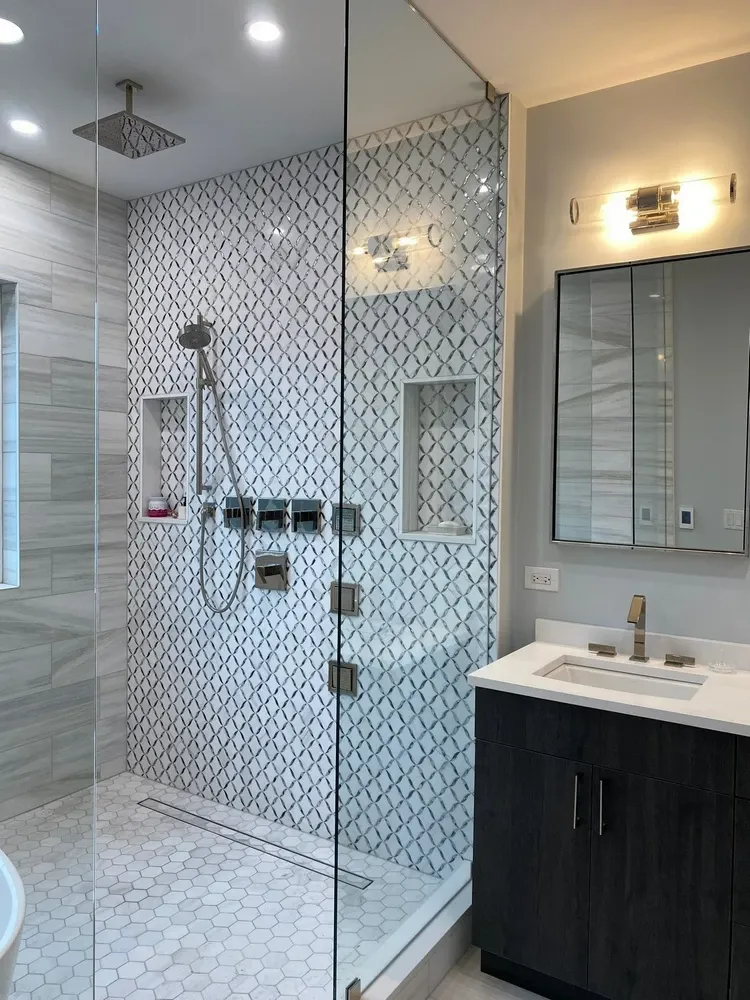
Zero threshold. There should be no curb or step to enter the shower. The bathroom floor transitions directly into the shower floor, with a linear drain (installed flush at one wall) managing water. A doorless shower design uses the same curbless approach and is worth considering if the footprint allows it. A linear drain eliminates the need for a sloped basin — the floor pitches gently toward the drain along its entire length.
Proper dimensions. ANSI A117.1 sets the minimum transfer shower at 36 by 36 inches, but this is a tight space in practice. A 36-by-60-inch or larger shower gives enough room for seated bathing and for an aide if needed. If the footprint allows it, sizing the shower generously costs relatively little more in materials but makes a substantial difference in daily use.
A built-in bench. A solid tile bench is the most durable option. It should be 17-19 inches from the floor (the standard wheelchair seat height per ADA guidelines), 15-18 inches deep, and positioned at the end wall of the shower. The bench needs to support sustained weight — solid tile on a properly blocked substrate, not a folding seat attached to drywall.
Grab bars in the right locations. Grab bars are only useful if they are where you actually need them. A vertical bar near the entry helps with entering and exiting. A horizontal bar at 33-36 inches from the floor along the back wall supports seated bathing. An L-shaped bar near the bench supports the transition between standing and sitting. All bars must anchor into blocking in the wall framing — the walls need to be built or reinforced to support this during rough-in.
Handheld showerhead on a slide bar. A fixed overhead showerhead is not accessible. A handheld unit on a slide bar adjustable from approximately 18 to 72 inches off the floor serves both seated and standing users and allows the person bathing to direct water flow without repositioning.
Storage within reach. Large recessed niches in the shower wall keep shampoo, soap, and accessories within reach while seated. Positioning niches at 18-48 inches from the floor keeps them in the accessible reach range per ANSI A117.1.
The Resale Question
Tub-to-shower conversions come with a question that deserves an honest answer: does removing a bathtub affect home value?
In a hall bathroom that is the only full bath in the home, yes — it can matter to buyers with young children who need a tub. If you are unsure whether your bathroom needs a full conversion or a lighter update, our guide on signs you need a bathroom remodel can help frame that decision. In a primary bath, or in a home with at least one other tub elsewhere, the impact is generally minimal and is often offset by the appeal of a well-designed walk-in shower.
The variables are: how many bathrooms are in the home, who is likely to buy it, and what the local market expects. A realtor who knows your neighborhood is the right person to consult on this specific question before you commit. What we can tell you is that a poorly designed accessible shower that looks like an afterthought will affect value more than the absence of a tub.
What the Conversion Process Looks Like
A typical handicap shower conversion takes 1-2 weeks of active work time, depending on the complexity of the plumbing changes and the size of the project.
The sequence: demo the existing tub or shower, address any subfloor issues found during demo (water damage is common in older bathrooms), rough-in the new drain and any supply plumbing changes, frame and block the walls for the bench and grab bars, waterproof the shower base and walls (this is the most critical step and should not be rushed), install tile on the floor and walls, set the bench, install fixtures, and hang doors or panels.
Waterproofing is the step most worth asking your contractor about specifically. A shower that leaks into the subfloor or wall cavity causes damage that costs far more to repair than the original conversion. Ask what waterproofing system is being used and how the corners and joints are handled.
Independence and Daily Safety
The goal of an accessible shower conversion is not just physical safety — it is reducing the anxiety that comes with daily bathing when the existing setup is not safe. A well-designed accessible shower lets someone bathe independently, without calculating risks or relying on assistance for a private task.
Features like the bench, handheld showerhead, and grab bars work together. None of them alone solves the problem; all of them together create a shower that is actually safe and comfortable to use every day.
If you are thinking about a conversion in Lake Forest, Highland Park, or elsewhere on the North Shore, contact us to schedule an assessment. We can look at your existing bathroom, talk through your needs, and give you a clear picture of what the project would involve. You can also learn more about the full scope of our work on our bathroom remodeling page.
For broader context on accessible bathroom design, see our accessible bathroom design guide.
Delta Remodels serves homeowners across the North Shore including Lake Forest, Lake Bluff, Highland Park, Northbrook, and Glenview.
Ready to Start Your Project?
Schedule a free consultation. We bring design ideas, material samples, and honest answers.
Get Free Consultation